Neuromorphic chip
1344×768 · AVIF · CC BY 4.0
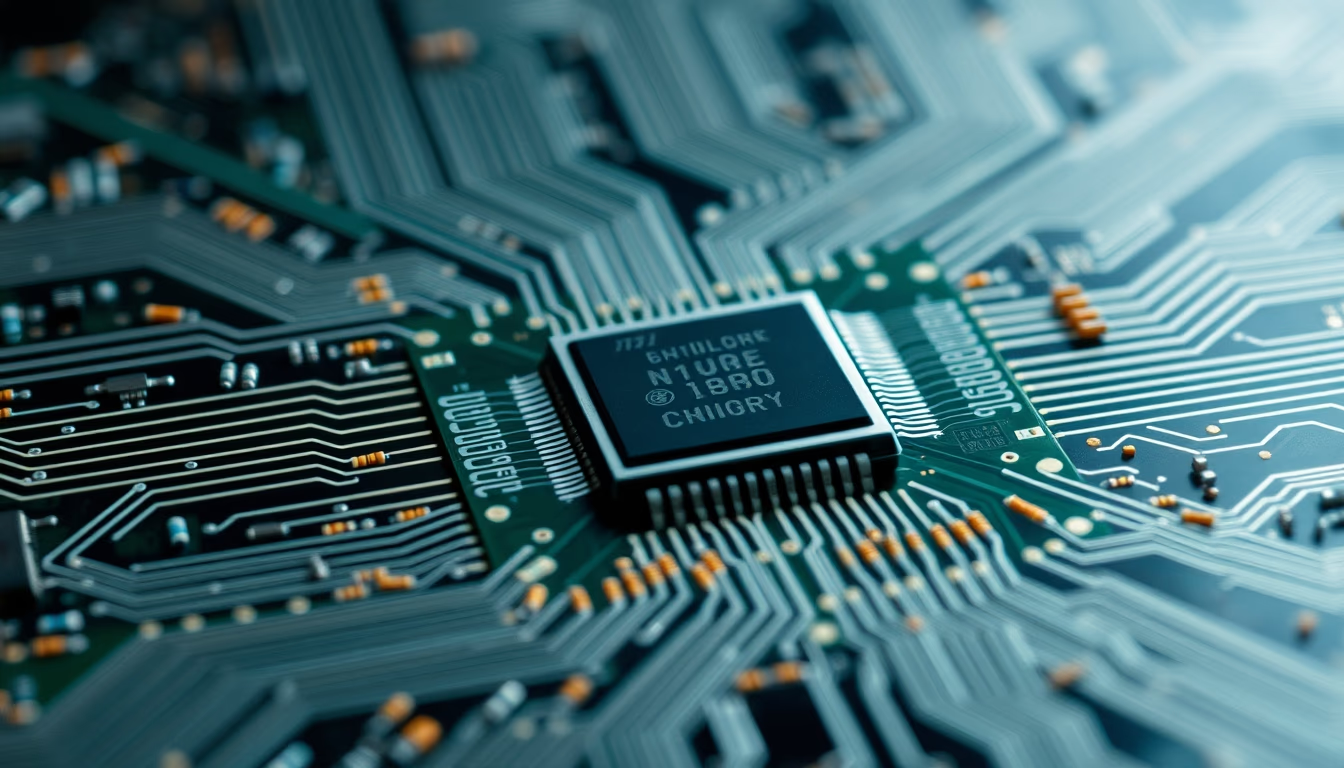
Neuromorphic chips mimic brain structure to process data with high energy efficiency and speed.
About this subject
Neuromorphic chips are processors inspired by the architecture of the human brain. Unlike conventional chips, which use the von Neumann architecture and sequential processing, neuromorphic chips employ networks of artificial neurons and synapses that communicate via sparse electrical impulses called spikes. This enables massively parallel and asynchronous processing, consuming fractions of the energy of a traditional chip.
These devices are especially suited for artificial intelligence tasks such as pattern recognition, computer vision, and real-time sensory processing. Notable examples include Intel's Loihi, IBM's TrueNorth, and BrainChip's Akida. Loihi, for instance, can implement reinforcement learning and neural networks with thousands of neurons while consuming milliwatts.
A key advantage is the ability for continuous learning and local adaptation, without relying on the cloud. This makes neuromorphic chips ideal for edge computing applications, such as autonomous robots, IoT devices, and smart sensors. However, programming these chips remains complex, requiring new software paradigms, and the technology is still in early commercial adoption.
Frequently Asked Questions
How does a neuromorphic chip differ from a traditional chip?
Unlike traditional chips (von Neumann architecture) that process data sequentially, neuromorphic chips operate in a parallel, asynchronous manner, mimicking the brain's spike-based communication, resulting in drastically lower energy consumption.
What are the main applications of neuromorphic chips?
They are used in pattern recognition, computer vision, autonomous robotics, IoT devices, and smart sensors, where fast and energy-efficient processing at the edge is required.
Are neuromorphic chips commercially available?
Yes, examples include Intel's Loihi (research), IBM's TrueNorth (experimental), and BrainChip's Akida (commercial vision and sensing), but the technology is still evolving.
Direct URL
https://pub-c7d6a6ea828543ac903a74a341ccb2e1.r2.dev/imagens/neuromorphic-chip-documentary-photography-p3.avifHow to credit
Include a visible link back to UtilizAí. Copy one of the snippets below:
<a href="https://xn--utiliza-eza.com/en/midia/imagens/neuromorphic-chip-documentary-photography-p3">Neuromorphic chip</a> by <a href="https://xn--utiliza-eza.com">UtilizAí</a>, licensed under <a href="https://creativecommons.org/licenses/by/4.0/">CC BY 4.0</a>.
[Neuromorphic chip](https://xn--utiliza-eza.com/en/midia/imagens/neuromorphic-chip-documentary-photography-p3) by [UtilizAí](https://xn--utiliza-eza.com), CC BY 4.0
License: CC-BY-4.0