Neuromorphic chip
1344×768 · AVIF · CC BY 4.0
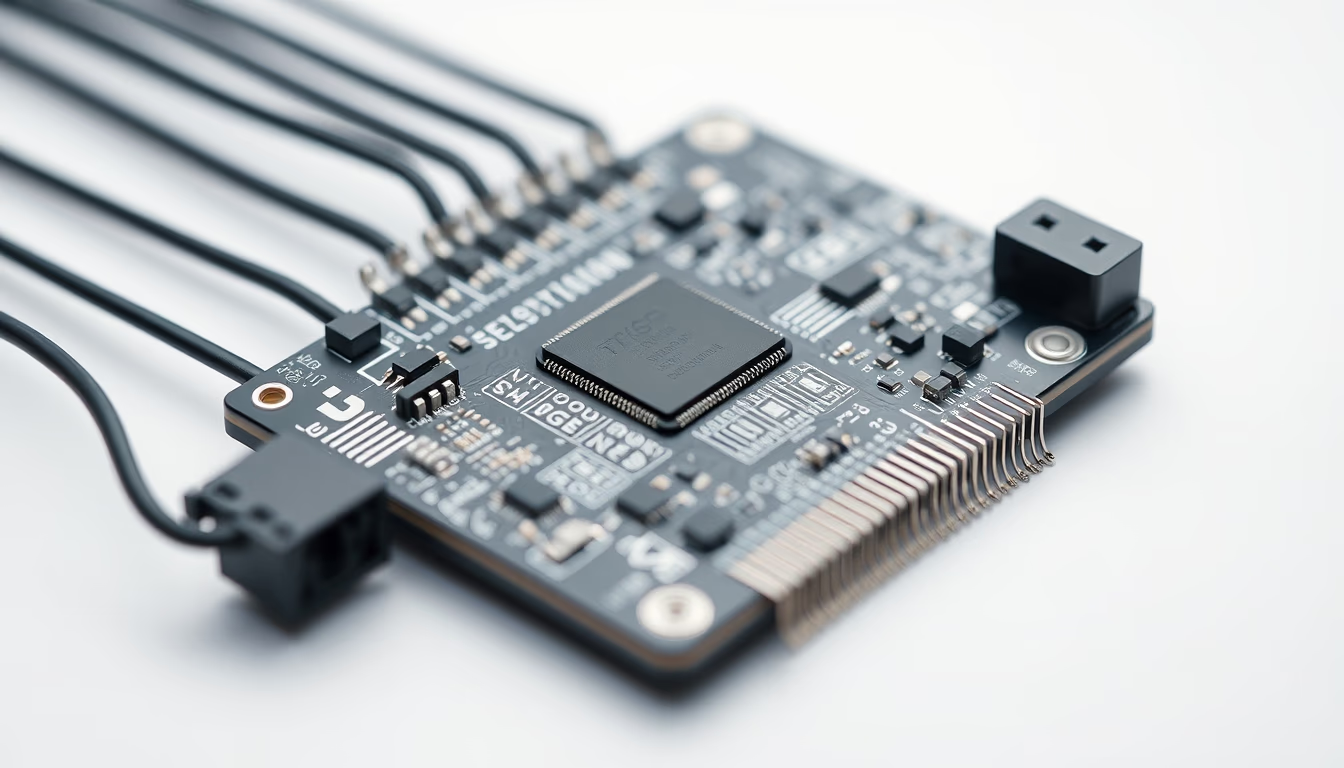
Neuromorphic chips mimic the human brain to process data with far greater energy efficiency than traditional processors.
About this subject
Neuromorphic chips represent a new hardware architecture inspired by the functioning of the human brain. Unlike conventional processors based on the von Neumann architecture, which separate memory and processing, neuromorphic chips integrate memory and computation into artificial neurons and synapses. This allows them to perform tasks such as pattern recognition, learning, and decision-making with drastically reduced energy consumption, on the order of microwatts, while a traditional CPU may consume watts or tens of watts.
The concept originated in the 1980s and 1990s with the work of Carver Mead at Caltech, who coined the term “neuromorphic.” Since then, companies such as IBM (with the TrueNorth chip), Intel (Loihi), and startups like SynSense have advanced commercialization. Intel, for example, released the Loihi 2 in 2021, focused on edge AI applications such as smart sensors, robotics, and IoT devices. These chips are not programmed in the traditional sense; they “learn” through synaptic plasticity mechanisms like spike-timing-dependent plasticity (STDP).
The main advantage of neuromorphic chips lies in tasks that require real-time processing with extremely low power consumption, such as wake-word voice assistants, surveillance cameras that detect anomalies, and implantable medical devices. Additionally, they are naturally fault-tolerant, as the brain also is. However, they still face challenges including programming difficulty, lack of a mature software ecosystem, and the need for new algorithms that exploit their architecture. Current research aims to integrate these chips into hybrid systems, combining them with GPUs and CPUs to accelerate specific workloads.
Interestingly, the global neuromorphic chip market was valued at approximately US$536 million in 2022 and is projected to exceed US$8 billion by 2030, driven by demand for efficient AI and the Internet of Things. Countries such as the United States, China, and Germany are heavily investing in this technology, which could revolutionize everything from cloud computing to neuroprosthetics.
Frequently Asked Questions
What is a neuromorphic chip and how is it different from a regular processor?
A neuromorphic chip is a brain-inspired processor that integrates memory and computation into artificial neurons and synapses. Unlike a traditional CPU (von Neumann architecture), it processes data in parallel and consumes far less power, making it ideal for edge AI.
What are the practical applications of neuromorphic chips today?
They are used in IoT devices for voice recognition, smart cameras, robotics, medical sensors, and automotive systems. Companies like Intel and IBM already have commercial chips (Loihi and TrueNorth) for research and prototyping.
Can neuromorphic chips completely replace CPUs and GPUs?
Not immediately. They are more efficient for specific tasks like machine learning and sensory signal processing, but not for general-purpose computing. The trend is toward hybrid systems that combine both for maximum performance.
Direct URL
https://pub-c7d6a6ea828543ac903a74a341ccb2e1.r2.dev/imagens/neuromorphic-chip-commercial-product-photography-p11.avifHow to credit
Include a visible link back to UtilizAí. Copy one of the snippets below:
<a href="https://xn--utiliza-eza.com/en/midia/imagens/neuromorphic-chip-commercial-product-photography-p11">Neuromorphic chip</a> by <a href="https://xn--utiliza-eza.com">UtilizAí</a>, licensed under <a href="https://creativecommons.org/licenses/by/4.0/">CC BY 4.0</a>.
[Neuromorphic chip](https://xn--utiliza-eza.com/en/midia/imagens/neuromorphic-chip-commercial-product-photography-p11) by [UtilizAí](https://xn--utiliza-eza.com), CC BY 4.0
License: CC-BY-4.0