Neuromorphic chip
1344×768 · AVIF · CC BY 4.0
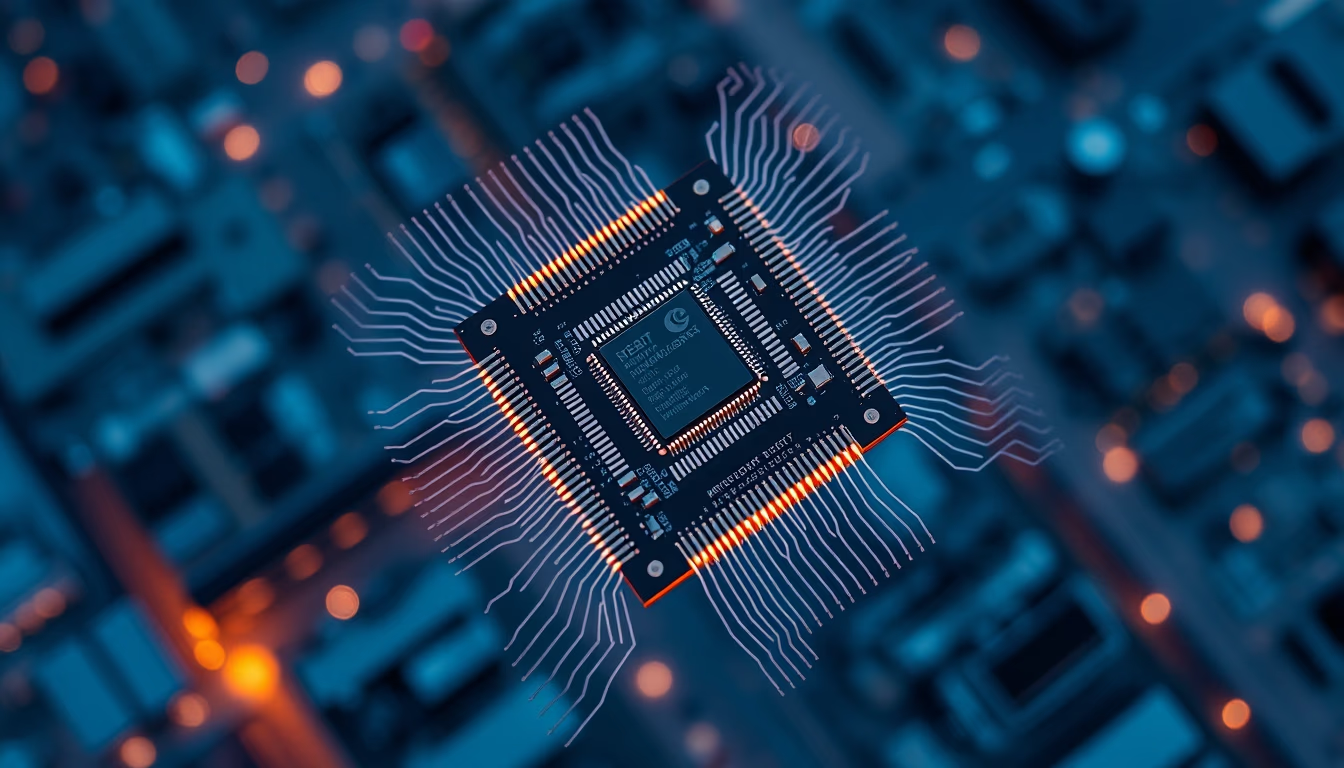
Neuromorphic chip: hardware that mimics the human brain for efficient parallel processing, revolutionizing AI and edge computing.
About this subject
Neuromorphic chips represent a paradigm shift in hardware architecture. Unlike traditional von Neumann processors, they integrate memory and processing into artificial neurons and synapses, eliminating the data transfer bottleneck and enabling drastically lower energy consumption, orders of magnitude less than conventional chips in pattern recognition tasks.
These chips are inspired by the human neocortex, using spikes (electrical pulses) for neuron communication, a concept known as neuromorphic computing. Companies like Intel (with Loihi 2) and IBM (TrueNorth) lead development. Loihi 2 implements circuits that mimic synaptic plasticity, allowing continuous on-chip learning without cloud dependency.
Practical applications include autonomous vehicles requiring millisecond decisions, IoT devices for local sensor data processing, and neural prosthetics. In robotics, these chips enable real-time control with power consumption under one watt. The neuromorphic chip market is projected to reach $8 billion by 2027, fueled by demand for energy-efficient AI.
Challenges persist in programming these systems, requiring spike-based algorithms and new languages. However, frameworks like Nengo and Intel's Lava ease the transition. Neuromorphic computing won't replace all processors, but it will be crucial in applications where energy efficiency outweighs traditional numeric precision needs.
Frequently Asked Questions
What is a neuromorphic chip?
It is a processor that mimics the structure of the human brain, using artificial neurons and synapses to process information in parallel and efficiently, consuming far less energy than traditional chips in AI tasks.
What are the advantages over traditional chips?
Drastic reduction in energy consumption (up to 1000x times in some tasks), real-time processing without cloud latency, continuous on-chip learning, and better performance in pattern recognition.
Where are neuromorphic chips currently used?
In prototypes of autonomous vehicles, IoT devices, neural prosthetics, autonomous robotics, and academic research. Commercial products are still limited, but Intel offers Loihi 2 for developers.
Direct URL
https://pub-c7d6a6ea828543ac903a74a341ccb2e1.r2.dev/imagens/neuromorphic-chip-aerial-drone-shot-p6.avifHow to credit
Include a visible link back to UtilizAí. Copy one of the snippets below:
<a href="https://xn--utiliza-eza.com/en/midia/imagens/neuromorphic-chip-aerial-drone-shot-p6">Neuromorphic chip</a> by <a href="https://xn--utiliza-eza.com">UtilizAí</a>, licensed under <a href="https://creativecommons.org/licenses/by/4.0/">CC BY 4.0</a>.
[Neuromorphic chip](https://xn--utiliza-eza.com/en/midia/imagens/neuromorphic-chip-aerial-drone-shot-p6) by [UtilizAí](https://xn--utiliza-eza.com), CC BY 4.0
License: CC-BY-4.0