Neptune deep blue storms
1344×768 · AVIF · CC BY 4.0

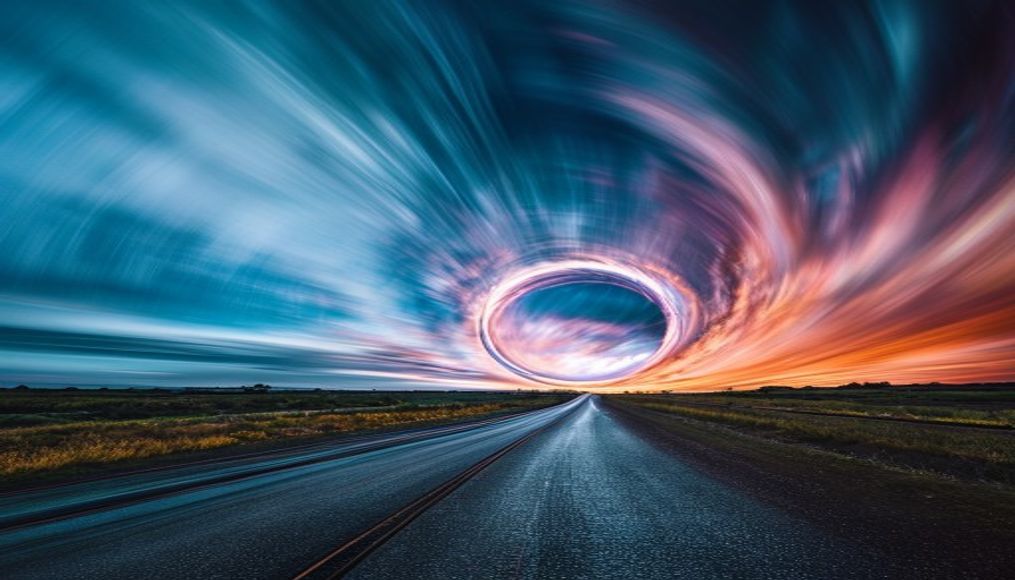
Neptune, the most distant planet in the Solar System, hosts gigantic storms that paint its atmosphere in a deep and mysterious blue.
About this subject
Neptune, the eighth planet from the Sun, is known for its intense blue color, resulting from the absorption of red light by methane in its atmosphere. But what truly captures attention are its dynamic and massive storms, such as the Great Dark Spot, a high-pressure system similar to Jupiter's Red Spot but with unique characteristics.
Discovered by the Voyager 2 spacecraft in 1989, the Great Dark Spot was a massive anticyclonic storm with winds reaching up to 2,100 km/h, the fastest recorded in the Solar System. The storm stretched about 13,000 km in length and 6,600 km in width, larger than Earth. Later observations with the Hubble Space Telescope showed that these storms are ephemeral, appearing and disappearing over years.
Neptune's atmosphere is composed mostly of hydrogen and helium, with traces of methane, water, and ammonia. The deep blue color comes from methane absorbing red light, but the dark spots are likely caused by ice particles or organic compounds forming in the colder regions of the atmosphere. The dynamics of these storms are still under study, as the extreme winds and rapid rotation create complex weather patterns.
Interestingly, Neptune receives only 0.1% of the sunlight that Earth does, yet its atmospheric activity is surprisingly vigorous. It is believed that the planet's internal heat, left over from its formation, drives these storms. With an average temperature of -218°C in the upper atmosphere, Neptune is one of the coldest places in the Solar System, yet it can generate weather phenomena on a global scale.
Frequently Asked Questions
Why is Neptune blue?
Neptune's intense blue color comes from the absorption of red light by methane in its atmosphere. The reflected sunlight is predominantly blue, giving the planet its characteristic hue.
What are the dark storms on Neptune?
They are large high-pressure systems, like the Great Dark Spot, appearing as dark spots in the atmosphere. They are driven by extremely fast winds and can last for months or years.
How do scientists study Neptune's storms?
Mainly through space telescopes like Hubble and the Voyager 2 probe, which provided detailed images. Continuous observations help track the evolution of these storms over time.
Direct URL
https://pub-c7d6a6ea828543ac903a74a341ccb2e1.r2.dev/imagens/neptune-deep-blue-storms-high-fashion-editorial-p10.avifHow to credit
Include a visible link back to UtilizAí. Copy one of the snippets below:
<a href="https://xn--utiliza-eza.com/en/midia/imagens/neptune-deep-blue-storms-high-fashion-editorial-p10">Neptune deep blue storms</a> by <a href="https://xn--utiliza-eza.com">UtilizAí</a>, licensed under <a href="https://creativecommons.org/licenses/by/4.0/">CC BY 4.0</a>.
[Neptune deep blue storms](https://xn--utiliza-eza.com/en/midia/imagens/neptune-deep-blue-storms-high-fashion-editorial-p10) by [UtilizAí](https://xn--utiliza-eza.com), CC BY 4.0
License: CC-BY-4.0