Nebula colorful deep space
1344×768 · AVIF · CC BY 4.0
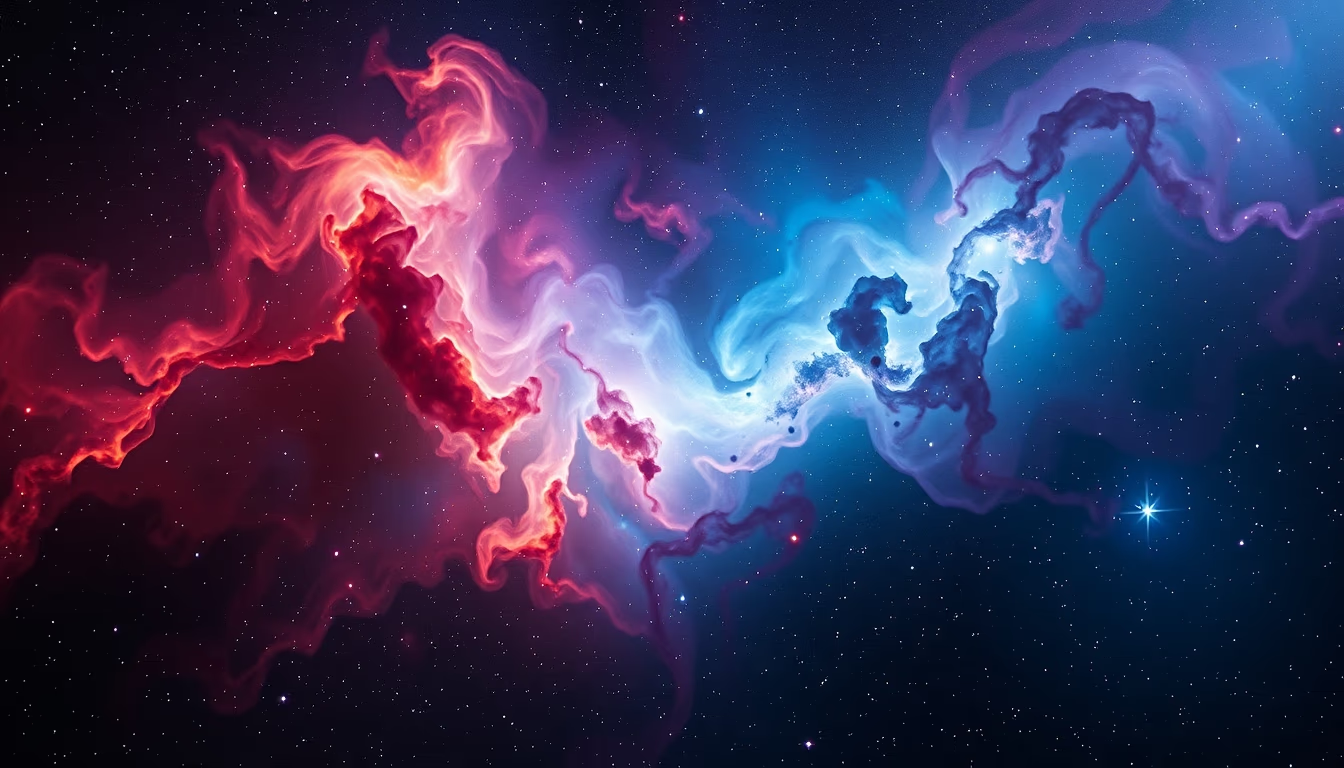
Nebulae are interstellar clouds of gas and dust that can span light-years and give birth to stars.
About this subject
Nebulae are vast clouds of gas and dust in interstellar space. They play a fundamental role in the stellar life cycle, acting as stellar nurseries. The vibrant colors seen in images like this result from the ionization of different elements: hydrogen emits reddish light, oxygen yields green and blue tints, and sulfur produces deep reds. Emission nebulae, such as the Orion Nebula, glow due to radiation from hot, young stars inside them. Reflection nebulae, like the Pleiades, scatter starlight, creating bluish hues.
The Orion Nebula, located about 1,344 light-years from Earth, is one of the most active and studied star-forming regions. Spanning about 24 light-years across, it hosts the Trapezium cluster, a group of massive stars that illuminate the cloud. Another iconic example is the Crab Nebula, the remnant of a supernova observed in 1054 by Chinese astronomers. Its central pulsar still emits regular pulses of radiation.
Planetary nebulae, despite their name, have nothing to do with planets. They form when low- to medium-mass stars, like the Sun, expel their outer layers at the end of their lives. Gas heated by the remaining stellar core creates complex, colorful structures. The Ring Nebula in Lyra is a classic example, with its donut shape visible even in amateur telescopes.
Observing nebulae requires instruments sensitive to infrared and radio wavelengths, as many are obscured by dust. The Hubble Space Telescope revolutionized our understanding by capturing high-resolution images, revealing details previously invisible. These clouds are not just beautiful: they contain the ingredients for planet formation and, potentially, life.
Frequently Asked Questions
What causes the different colors in nebulae?
Colors result from ionization of chemical elements: hydrogen emits red, oxygen produces green and blue, and sulfur yields deep reds. Gas temperature and density also influence the hues.
Which is the most famous nebula and why?
The Orion Nebula is the most famous because it is visible to the naked eye and is one of the closest stellar nurseries to Earth, allowing detailed studies of star formation.
Can nebulae be seen with amateur telescopes?
Yes, many bright nebulae like the Orion Nebula, Ring Nebula, and Trifid Nebula can be observed with medium-sized telescopes, revealing their shapes and colors.
Direct URL
https://pub-c7d6a6ea828543ac903a74a341ccb2e1.r2.dev/imagens/nebula-colorful-deep-space-studio-editorial-portrait-p3.avifHow to credit
Include a visible link back to UtilizAí. Copy one of the snippets below:
<a href="https://xn--utiliza-eza.com/en/midia/imagens/nebula-colorful-deep-space-studio-editorial-portrait-p3">Nebula colorful deep space</a> by <a href="https://xn--utiliza-eza.com">UtilizAí</a>, licensed under <a href="https://creativecommons.org/licenses/by/4.0/">CC BY 4.0</a>.
[Nebula colorful deep space](https://xn--utiliza-eza.com/en/midia/imagens/nebula-colorful-deep-space-studio-editorial-portrait-p3) by [UtilizAí](https://xn--utiliza-eza.com), CC BY 4.0
License: CC-BY-4.0