Nebula colorful deep space
1344×768 · AVIF · CC BY 4.0
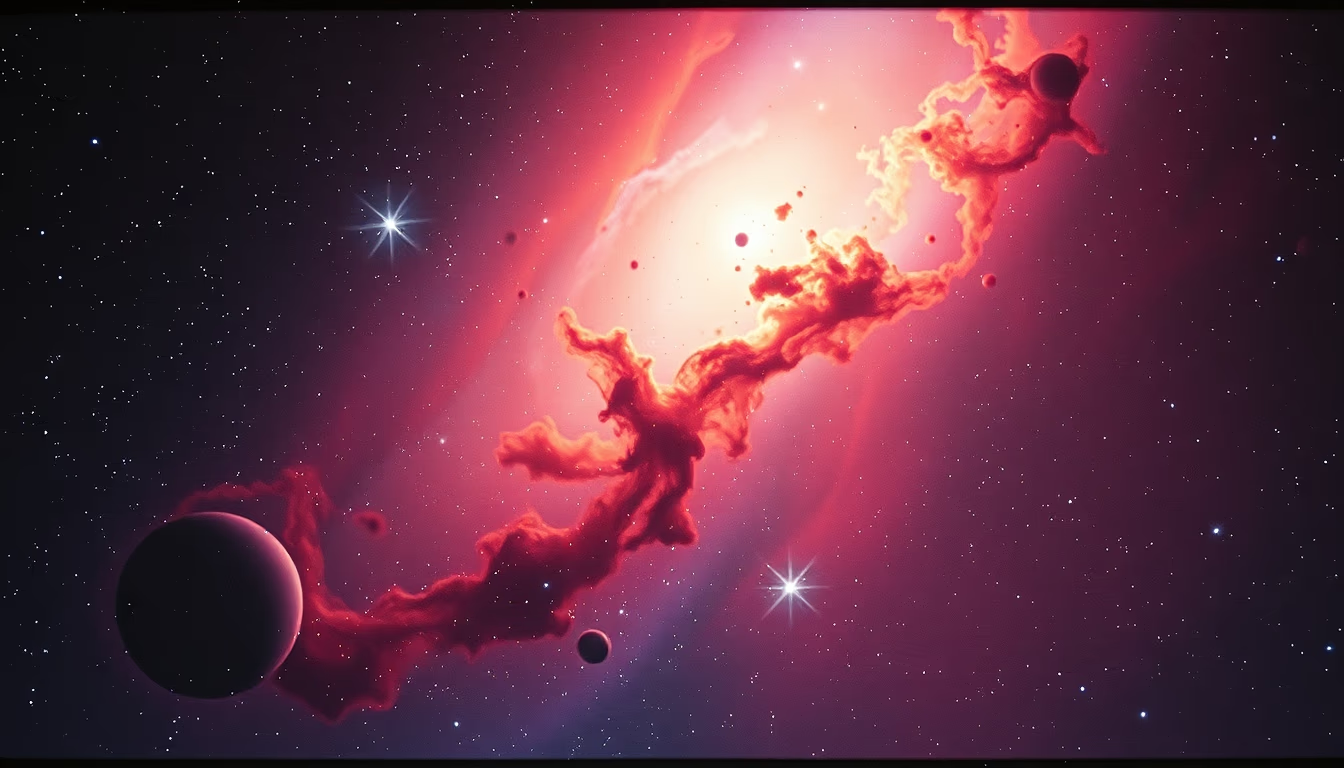
Colorful nebulae are clouds of gas and dust in deep space, stellar nurseries that display vibrant red, blue, and green hues due to ionization of elements like hydrogen and oxygen.
About this subject
Nebulae are structures composed mainly of hydrogen, helium, and cosmic dust, spanning tens of light-years. Their vivid colors come from ultraviolet radiation from young massive stars: hydrogen emits red light (H-alpha line), doubly ionized oxygen produces green and blue tones, and ionized sulfur contributes deep reds. Classic examples include the Orion Nebula (M42), 1,344 light-years away and visible to the naked eye, and the Eagle Nebula (M16), where the famous Pillars of Creation reveal star formation.
The lo-fi disposable camera aesthetic applied to nebula images evokes analog nostalgia, contrasting with the sharp views from the Hubble Space Telescope. This trend, popular in 2026, blends science and art: grain, vignetting, and saturated colors recall 1990s snapshots when disposable cameras were ubiquitous. In amateur astrophotography, this effect can be achieved using high-speed film or digital post-processing.
Nebulae are crucial for galactic evolution, recycling interstellar matter. The James Webb Space Telescope has revealed never-before-seen structures, such as organic dust clusters. Yet, lo-fi photography democratizes space: anyone with a simple camera can capture the night sky and join the visual exploration of the cosmos, celebrating both scientific precision and the imperfect beauty of amateur recording.
Frequently Asked Questions
What is a nebula?
A nebula is an interstellar cloud of gas and dust, where new stars may form. They can be star-forming regions (emission nebulae), supernova remnants, or dark clouds that block light.
Why are nebulae so colorful?
Colors arise from ionization of gases by ultraviolet radiation from hot stars. Each element emits specific wavelengths: hydrogen (red), oxygen (green/blue), sulfur (deep red). Dust also reflects light.
Can you see a colorful nebula with amateur telescopes?
Yes, some nebulae like Orion and the Ring Nebula are visible with small telescopes, but colors are subtler to the eye. Long-exposure photography or modified cameras reveal the vibrant hues.
Direct URL
https://pub-c7d6a6ea828543ac903a74a341ccb2e1.r2.dev/imagens/nebula-colorful-deep-space-lo-fi-disposable-camera-p0.avifHow to credit
Include a visible link back to UtilizAí. Copy one of the snippets below:
<a href="https://xn--utiliza-eza.com/en/midia/imagens/nebula-colorful-deep-space-lo-fi-disposable-camera-p0">Nebula colorful deep space</a> by <a href="https://xn--utiliza-eza.com">UtilizAí</a>, licensed under <a href="https://creativecommons.org/licenses/by/4.0/">CC BY 4.0</a>.
[Nebula colorful deep space](https://xn--utiliza-eza.com/en/midia/imagens/nebula-colorful-deep-space-lo-fi-disposable-camera-p0) by [UtilizAí](https://xn--utiliza-eza.com), CC BY 4.0
License: CC-BY-4.0





