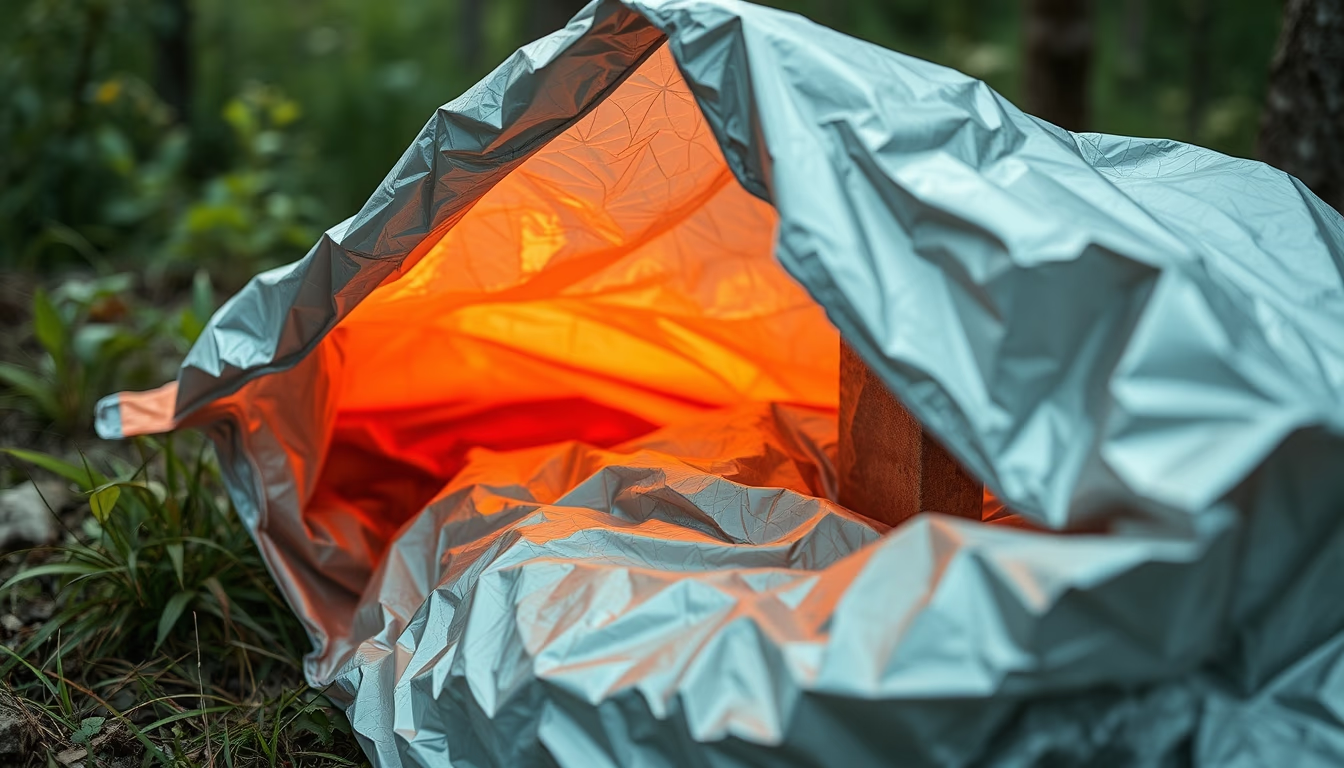
Mylar emergency blanket
1344×768 · AVIF · CC BY 4.0

Mylar emergency blanket, essential in survival kits, reflects body heat and protects against hypothermia in emergency situations.
About this subject
Mylar emergency blankets, also known as space blankets, are made from PET film coated with aluminum. They were originally developed by NASA in the 1960s for space programs like Apollo, to protect equipment and astronauts from solar radiation and heat loss in a vacuum. Today, they are widely used in first aid kits, camping expeditions, long-distance races, and rescue operations.
The working principle is simple: the material reflects up to 90% of radiated body heat, creating a barrier against wind and moisture. This helps prevent hypothermia in harsh conditions by stabilizing core temperature. Additionally, the blanket is extremely lightweight and compact, folding into a pocket-sized package. Its versatility extends to being used as an improvised shelter, ground cover, signaling device due to its reflective surface, or even to collect rainwater or condensation.
In Brazil, it is commonly used in outdoor activities like hiking and camping, especially in mountainous regions with rapid temperature changes. It is important to note that while effective, the Mylar blanket is not breathable, which can lead to internal moisture buildup if used for extended periods. Therefore, it should be combined with proper clothing layers or ventilation. Durability is limited; the blanket can tear easily after use, but with careful handling it can be reused in emergencies.
Frequently Asked Questions
Which side of the Mylar blanket should face the body?
The shiny side should face the body to reflect heat back, while the matte side faces outward to block wind and moisture.
Can a Mylar blanket be reused?
Yes, but with care. It is thin and can tear easily. If handled gently and folded properly, it can be reused multiple times, though it loses effectiveness with creases and dirt.
Does a Mylar blanket generate heat or just conserve it?
It does not generate heat; it conserves existing body heat. It acts as a reflective barrier that reduces heat loss through radiation, convection, and conduction, especially effective against wind.
Direct URL
https://pub-c7d6a6ea828543ac903a74a341ccb2e1.r2.dev/imagens/mylar-emergency-blanket-aerial-drone-shot-fresh11.avifHow to credit
Include a visible link back to UtilizAí. Copy one of the snippets below:
<a href="https://xn--utiliza-eza.com/en/midia/imagens/mylar-emergency-blanket-aerial-drone-shot-fresh11">Mylar emergency blanket</a> by <a href="https://xn--utiliza-eza.com">UtilizAí</a>, licensed under <a href="https://creativecommons.org/licenses/by/4.0/">CC BY 4.0</a>.
[Mylar emergency blanket](https://xn--utiliza-eza.com/en/midia/imagens/mylar-emergency-blanket-aerial-drone-shot-fresh11) by [UtilizAí](https://xn--utiliza-eza.com), CC BY 4.0
License: CC-BY-4.0