Mushroom farm dark
1344×768 · AVIF · CC BY 4.0
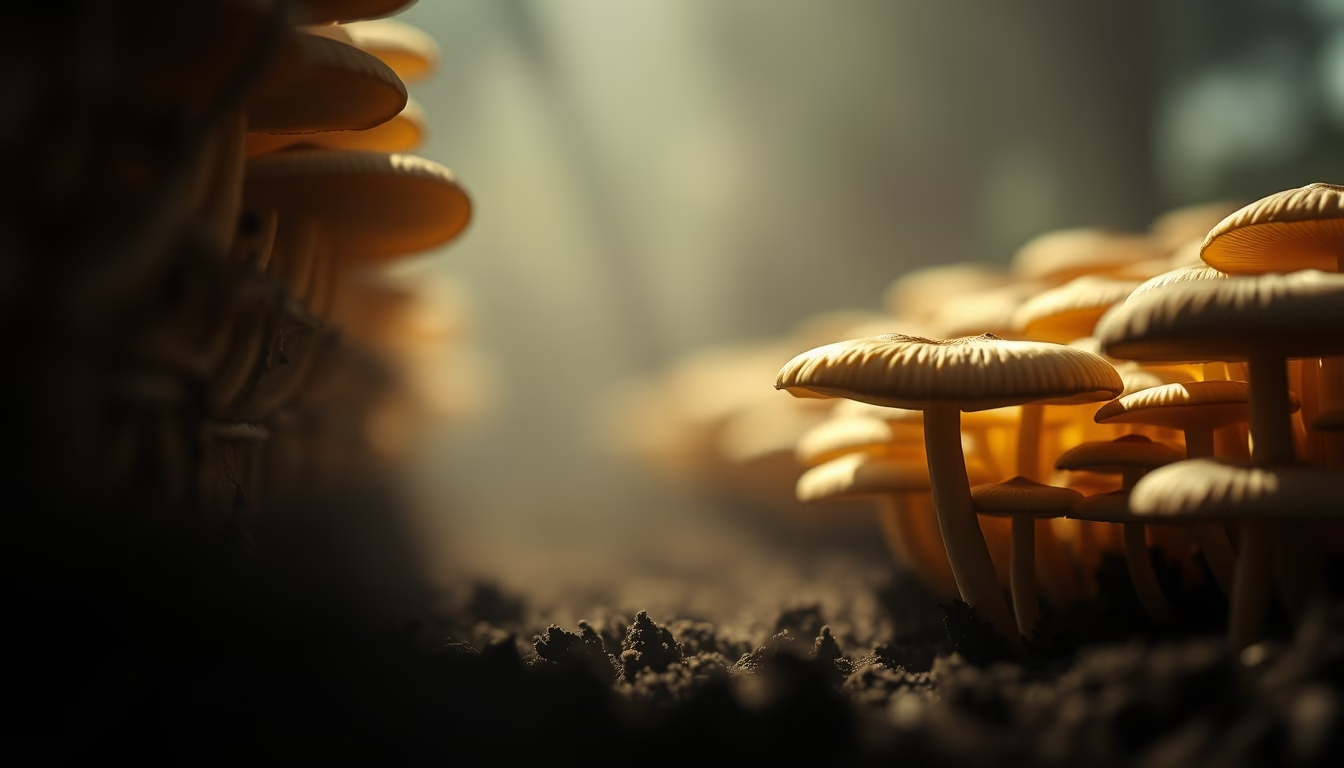
Mushroom cultivation in dark environments mimics natural growth conditions, essential for species like shiitake and oyster mushrooms.
About this subject
Mushroom cultivation in dark environments is a standard practice in modern fungiculture. Unlike green plants, fungi do not perform photosynthesis and thrive in the absence of light, as light can inhibit mycelial growth and affect fruit body quality. Species like shiitake (Lentinula edodes) and oyster mushrooms (Pleurotus ostreatus) are grown in dark chambers with strict control of temperature, humidity, and ventilation.
The cultivation process begins with inoculating sterilized substrates, such as sawdust or straw, with fungal mycelium. During the incubation period, the dark environment promotes rapid and uniform colonization of the substrate. After colonization, specific temperature and humidity conditions induce mushroom formation. The absence of light also prevents discoloration and physiological stress, resulting in higher commercial value products.
Fungiculture has economic and sustainable importance. Mushrooms are sources of protein, vitamins, and fiber, and their cultivation uses agro-industrial residues like sugarcane bagasse and rice husks, promoting a circular economy. Leading producers include China, Japan, and Brazil, with shiitake representing a significant share of the global market.
Interestingly, species like the common button mushroom (Agaricus bisporus) are also grown in darkness but require a casing layer of soil for fruiting. The sun mushroom (Agaricus subrufescens) darkens when exposed to light but retains its nutritional properties. Controlled environment cultivation enables year-round production, independent of external weather conditions.
Frequently Asked Questions
Why are mushrooms grown in the dark?
Mushrooms are grown in the dark because light can inhibit mycelial growth and impair fruit body formation. Dark environments mimic the natural conditions of soil or logs where fungi thrive.
Which mushroom species require dark cultivation?
Species such as shiitake (Lentinula edodes), oyster mushrooms (Pleurotus ostreatus), and button mushrooms (Agaricus bisporus) are commonly grown in total or partial darkness. The absence of light improves texture and color of the final product.
Is mushroom cultivation sustainable?
Yes, because it utilizes agro-industrial residues like sawdust, straw, and bagasse as substrate, reducing waste. Additionally, mushrooms have high productivity per area and low water consumption compared to other crops.
Direct URL
https://pub-c7d6a6ea828543ac903a74a341ccb2e1.r2.dev/imagens/mushroom-farm-dark-magazine-editorial-p6.avifHow to credit
Include a visible link back to UtilizAí. Copy one of the snippets below:
<a href="https://xn--utiliza-eza.com/en/midia/imagens/mushroom-farm-dark-magazine-editorial-p6">Mushroom farm dark</a> by <a href="https://xn--utiliza-eza.com">UtilizAí</a>, licensed under <a href="https://creativecommons.org/licenses/by/4.0/">CC BY 4.0</a>.
[Mushroom farm dark](https://xn--utiliza-eza.com/en/midia/imagens/mushroom-farm-dark-magazine-editorial-p6) by [UtilizAí](https://xn--utiliza-eza.com), CC BY 4.0
License: CC-BY-4.0