Museum gallery white walls
1344×768 · AVIF · CC BY 4.0
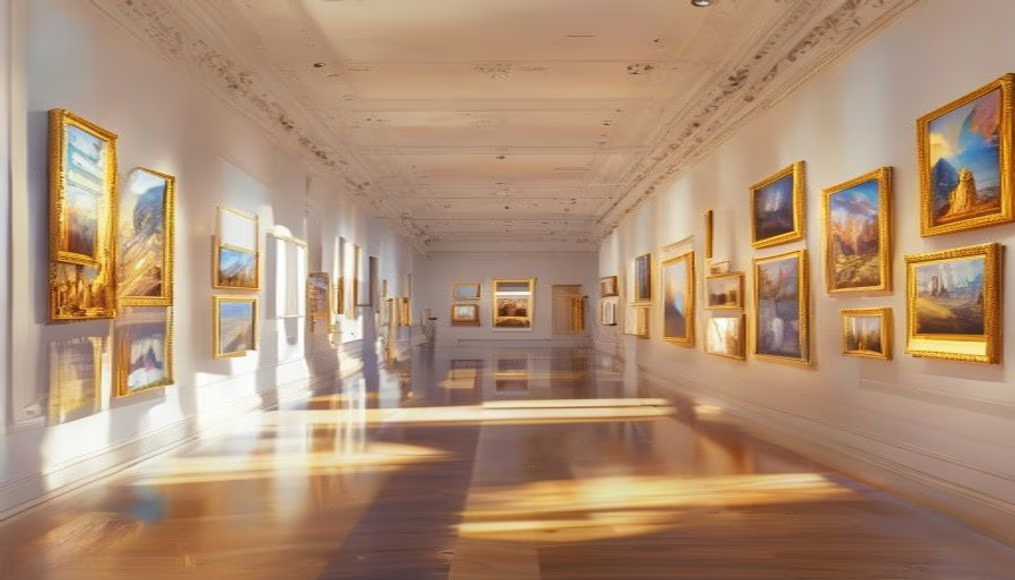
Museum gallery with white walls: an icon of modern exhibition architecture that enhances art by eliminating visual distractions.
About this subject
White walls in museum galleries are not a random aesthetic choice but an architectural convention consolidated in the 20th century. The "white cube" concept emerged in the 1930s with MoMA in New York and spread globally, arguing that the exhibition space should be neutral so as not to compete with the artworks. This approach contrasts with the ornate salons of the 19th century, where paintings were hung on colored walls and tapestries. In Brazil, the São Paulo Museum of Art (MASP) adopted white walls in its iconic building designed by Lina Bo Bardi, inaugurated in 1968, creating a dialogue between art and modernist architecture. Beyond aesthetics, white surfaces reflect artificial and natural light better, facilitating controlled illumination of artworks. Studies in environmental psychology indicate that light backgrounds increase visitor focus on the art, reducing visual fatigue. Currently, many curators question the hegemony of the white cube, proposing temporary chromatic interventions to contextualize exhibitions. However, the white wall remains the dominant standard in commercial and institutional galleries worldwide, symbolizing a space dedicated exclusively to artistic appreciation.
Frequently Asked Questions
Why are museum walls usually white?
White walls provide a neutral background that does not visually compete with artworks. They reflect light better, enabling precise illumination control, and help visitors focus on the displayed objects.
What is the 'white cube' concept in galleries?
The white cube is an exhibition space model that favors a neutral environment with white walls, smooth flooring, and controlled lighting. It emerged in modernism to isolate art from external influences, making the space itself a frame for the works.
Do all museums use white walls today?
No. While the white cube is dominant, many contemporary museums experiment with colors and textures to dialogue with artworks or create specific atmospheres. For instance, MASP uses glass easels that suspend the art, but the background walls remain white.
Direct URL
https://pub-c7d6a6ea828543ac903a74a341ccb2e1.r2.dev/imagens/museum-gallery-white-walls-travel-photography-v10.avifHow to credit
Include a visible link back to UtilizAí. Copy one of the snippets below:
<a href="https://xn--utiliza-eza.com/en/midia/imagens/museum-gallery-white-walls-travel-photography-v10">Museum gallery white walls</a> by <a href="https://xn--utiliza-eza.com">UtilizAí</a>, licensed under <a href="https://creativecommons.org/licenses/by/4.0/">CC BY 4.0</a>.
[Museum gallery white walls](https://xn--utiliza-eza.com/en/midia/imagens/museum-gallery-white-walls-travel-photography-v10) by [UtilizAí](https://xn--utiliza-eza.com), CC BY 4.0
License: CC-BY-4.0