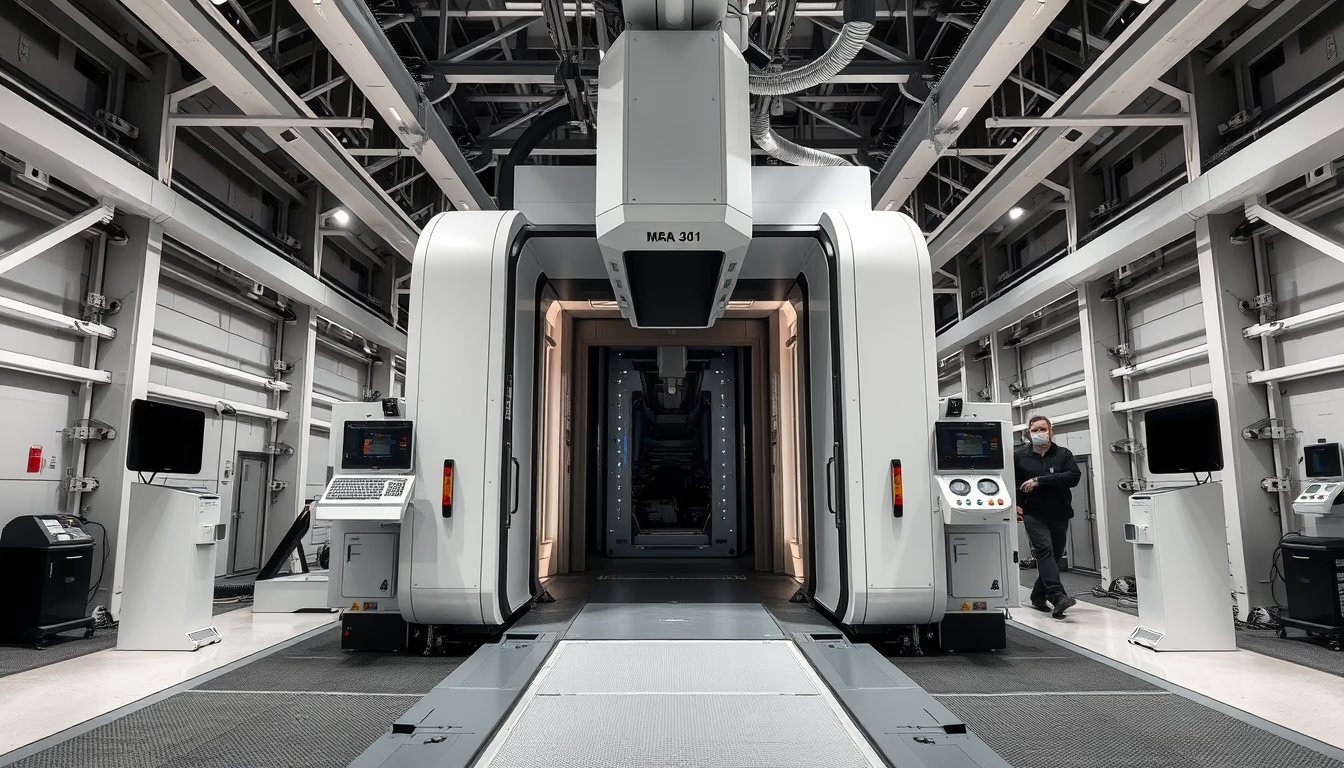
Mri machine gantry
1344×768 · AVIF · CC BY 4.0
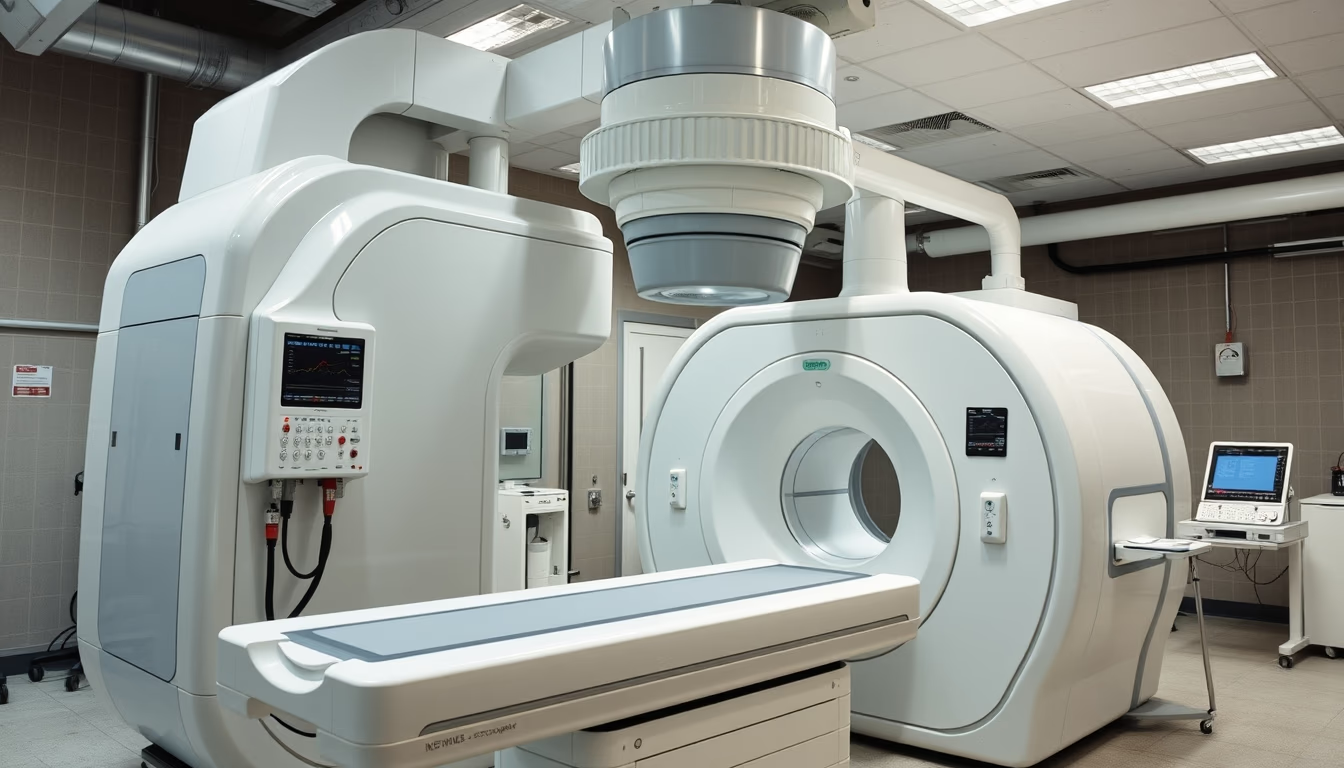
The gantry of an MRI machine houses the superconducting magnet and gradient coils, serving as the core component for generating high-resolution medical images.
About this subject
The gantry is the cylindrical structure forming the tunnel of an MRI machine. Inside, it houses a superconducting magnet that creates an extremely powerful magnetic field, typically between 1.5 and 3 Tesla, capable of aligning the hydrogen protons in the human body. Gradient coils within the gantry enable spatial encoding of the signal, while radiofrequency (RF) coils excite the protons and capture the relaxation signal to reconstruct images.
Gantry design has evolved to reduce patient claustrophobia: newer models feature larger bores (70 cm diameter) and shorter lengths, plus internal lighting and ventilation. Precision of this component is crucial for diagnostic quality; minute variations in the magnetic field can distort images. Therefore, the gantry is magnetically shielded and requires cryogenic cooling to maintain superconductivity of the magnets.
Historically, the first MRI scanners in the 1980s had gantries with fields of 0.2 to 0.5 Tesla and very narrow openings. Technological advances allowed for higher fields and more comfortable designs, such as open scanners for patients with anxiety or obesity. The gantry also houses safety systems like motion sensors and emergency buttons, and is acoustically insulated against the noise generated by gradient coil vibrations during the scan.
Maintenance of the gantry requires specialized technicians, as any failure in the cooling system or magnet can shut down the equipment. In Brazil, both public and private hospitals invest in state-of-the-art devices to offer high-complexity exams, reducing wait times in the unified health system (SUS). MRI is essential for neurological, orthopedic, and oncological diagnoses, with the advantage of not using ionizing radiation.
Frequently Asked Questions
What is the main function of the gantry in an MRI machine?
The gantry houses the superconducting magnet, gradient coils, and RF coils. Its role is to generate a stable magnetic field and encode the signal to produce detailed images of the human body.
How has gantry design evolved to improve patient experience?
Newer models feature larger bores (up to 70 cm) and shorter lengths, plus internal lighting and ventilation to reduce claustrophobia. Open systems that do not fully enclose the patient are also available.
Why does the gantry require cryogenic cooling?
To maintain superconductivity of the magnet wires, which must be kept near absolute zero (about -269°C). This allows electrical current to flow without resistance, generating an intense and stable magnetic field.
Direct URL
https://pub-c7d6a6ea828543ac903a74a341ccb2e1.r2.dev/imagens/mri-machine-gantry-national-geographic-style-p4.avifHow to credit
Include a visible link back to UtilizAí. Copy one of the snippets below:
<a href="https://xn--utiliza-eza.com/en/midia/imagens/mri-machine-gantry-national-geographic-style-p4">Mri machine gantry</a> by <a href="https://xn--utiliza-eza.com">UtilizAí</a>, licensed under <a href="https://creativecommons.org/licenses/by/4.0/">CC BY 4.0</a>.
[Mri machine gantry](https://xn--utiliza-eza.com/en/midia/imagens/mri-machine-gantry-national-geographic-style-p4) by [UtilizAí](https://xn--utiliza-eza.com), CC BY 4.0
License: CC-BY-4.0