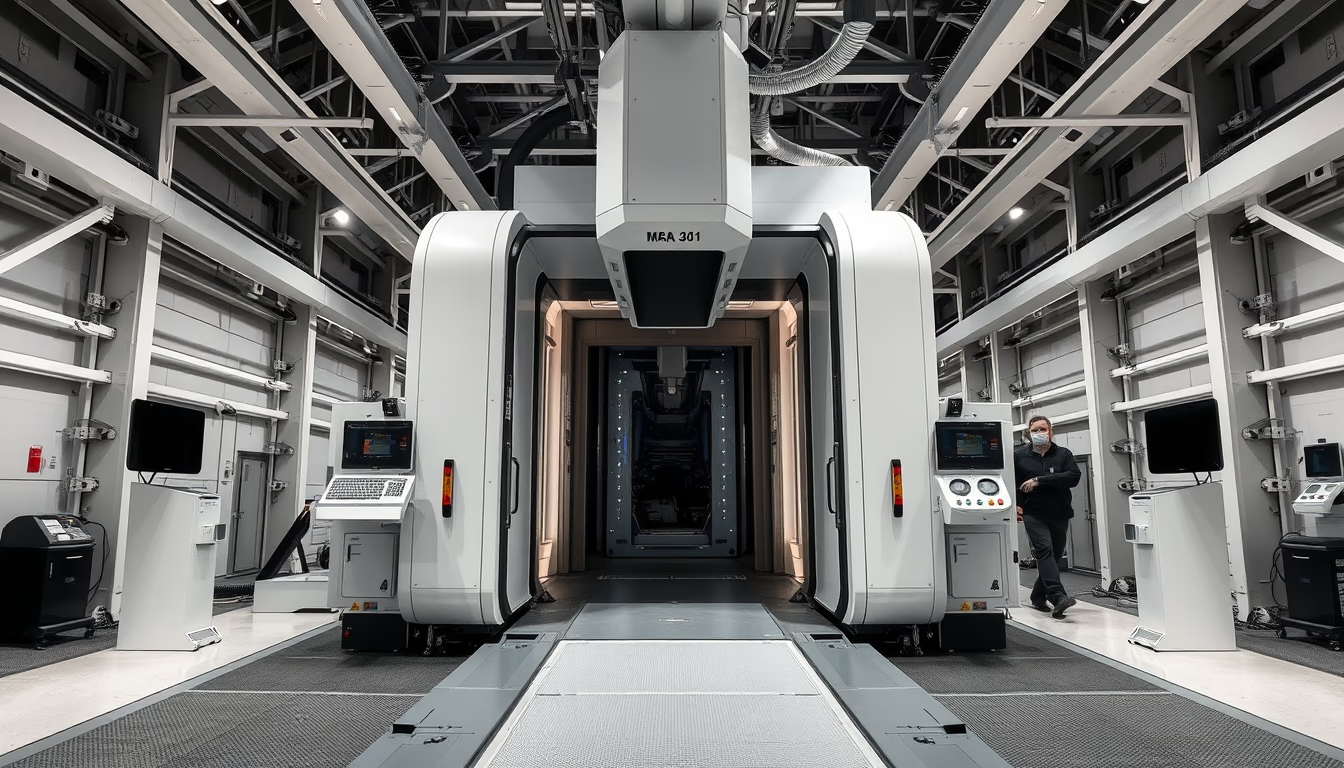
Mri machine gantry
1344×768 · AVIF · CC BY 4.0
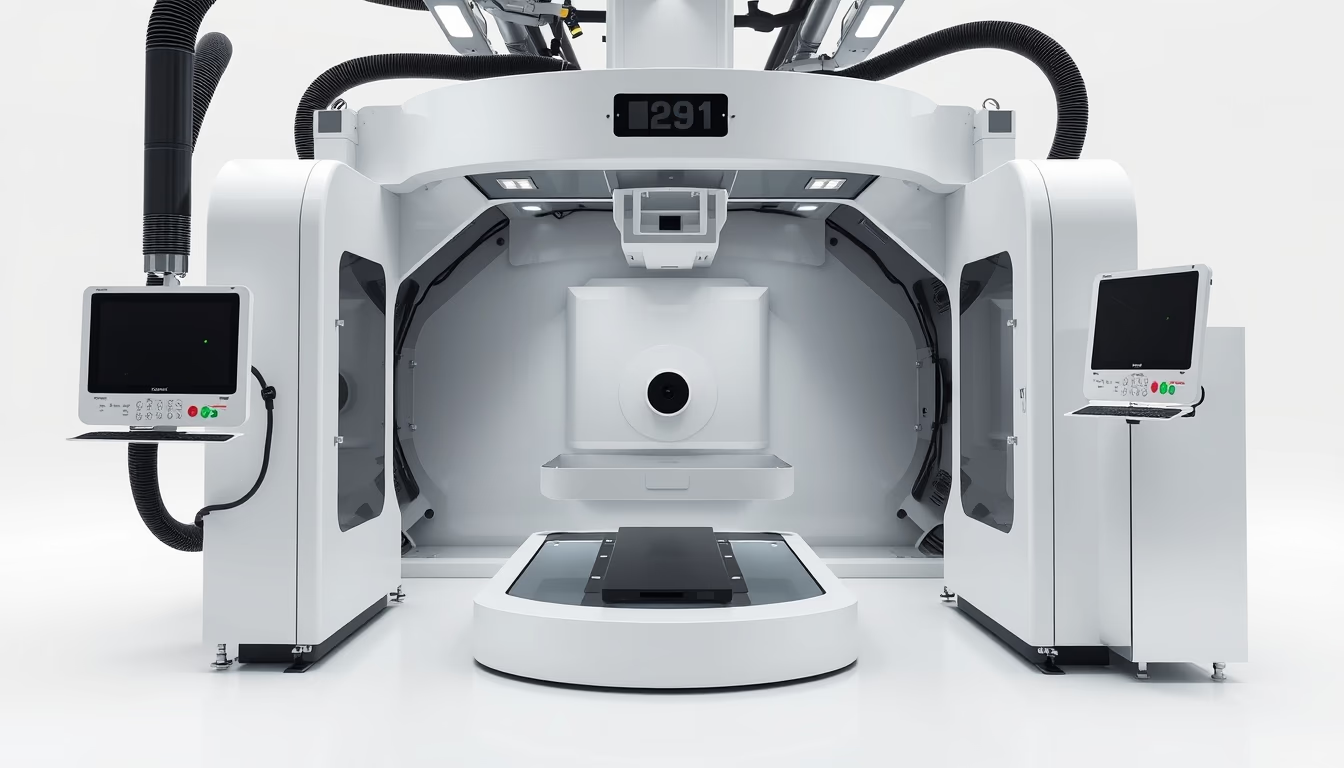
The MRI machine gantry houses the superconducting magnet and gradient coils, serving as the core component for high-resolution medical imaging.
About this subject
The gantry is the tunnel-shaped structure that forms the heart of an MRI machine. Its main component is a superconducting magnet, typically made of niobium-titanium, cooled to near absolute zero by liquid helium, capable of generating stable magnetic fields from 1.5 Tesla (T) to 7 T in advanced models. This field aligns protons in the human body, enabling detailed imaging of soft tissues such as the brain, muscles, and joints.
In addition to the magnet, the gantry contains gradient coils that create spatial variations in the magnetic field, allowing precise localization of signals emitted by protons. Radiofrequency (RF) coils transmit pulses that excite protons and receive relaxation signals, which are converted into images by complex algorithms. The combination of these elements makes magnetic resonance an indispensable tool for diagnosing tumors, neurological lesions, and vascular diseases, without ionizing radiation exposure.
Historically, the first clinical MRI machines appeared in the 1980s with field strengths of 0.15 T. Today, technological evolution enables faster and quieter machines with bore diameters up to 70 cm for patient comfort. Open MRI systems use permanent or resistive magnets but offer lower image quality compared to closed superconducting designs. Safety is critical: the magnetic field can attract ferromagnetic objects with lethal force, requiring rigorous screening of patients and staff.
Leading manufacturers like GE Healthcare, Siemens Healthineers, and Philips continue innovating with systems that integrate artificial intelligence to reduce scan time and improve resolution. In clinical trials, 7 T scanners already allow visualization of brain structures at submillimeter scale, opening new frontiers in neuroscience.
Frequently Asked Questions
What is the function of the gantry in an MRI machine?
The gantry houses the superconducting magnet, gradient coils, and radiofrequency coils. It generates the main magnetic field and controls spatial gradients, enabling the formation of medical images.
How does the magnetic field generated by the gantry work?
The superconducting magnet produces a stable, intense field (typically 1.5 T or 3 T) that aligns hydrogen protons in the body. Radiofrequency pulses excite these protons; as they relax, they emit signals captured by coils and converted into images by a computer.
Are there risks associated with the gantry's magnetic field?
Yes. The magnetic field can attract ferromagnetic objects (e.g., chairs, portable oxygen tanks, credit cards) with great force, causing accidents. Additionally, patients with pacemakers, aneurysm clips, or metal implants cannot undergo the scan unless the devices are MRI-compatible.
Direct URL
https://pub-c7d6a6ea828543ac903a74a341ccb2e1.r2.dev/imagens/mri-machine-gantry-commercial-product-photography-p2.avifHow to credit
Include a visible link back to UtilizAí. Copy one of the snippets below:
<a href="https://xn--utiliza-eza.com/en/midia/imagens/mri-machine-gantry-commercial-product-photography-p2">Mri machine gantry</a> by <a href="https://xn--utiliza-eza.com">UtilizAí</a>, licensed under <a href="https://creativecommons.org/licenses/by/4.0/">CC BY 4.0</a>.
[Mri machine gantry](https://xn--utiliza-eza.com/en/midia/imagens/mri-machine-gantry-commercial-product-photography-p2) by [UtilizAí](https://xn--utiliza-eza.com), CC BY 4.0
License: CC-BY-4.0