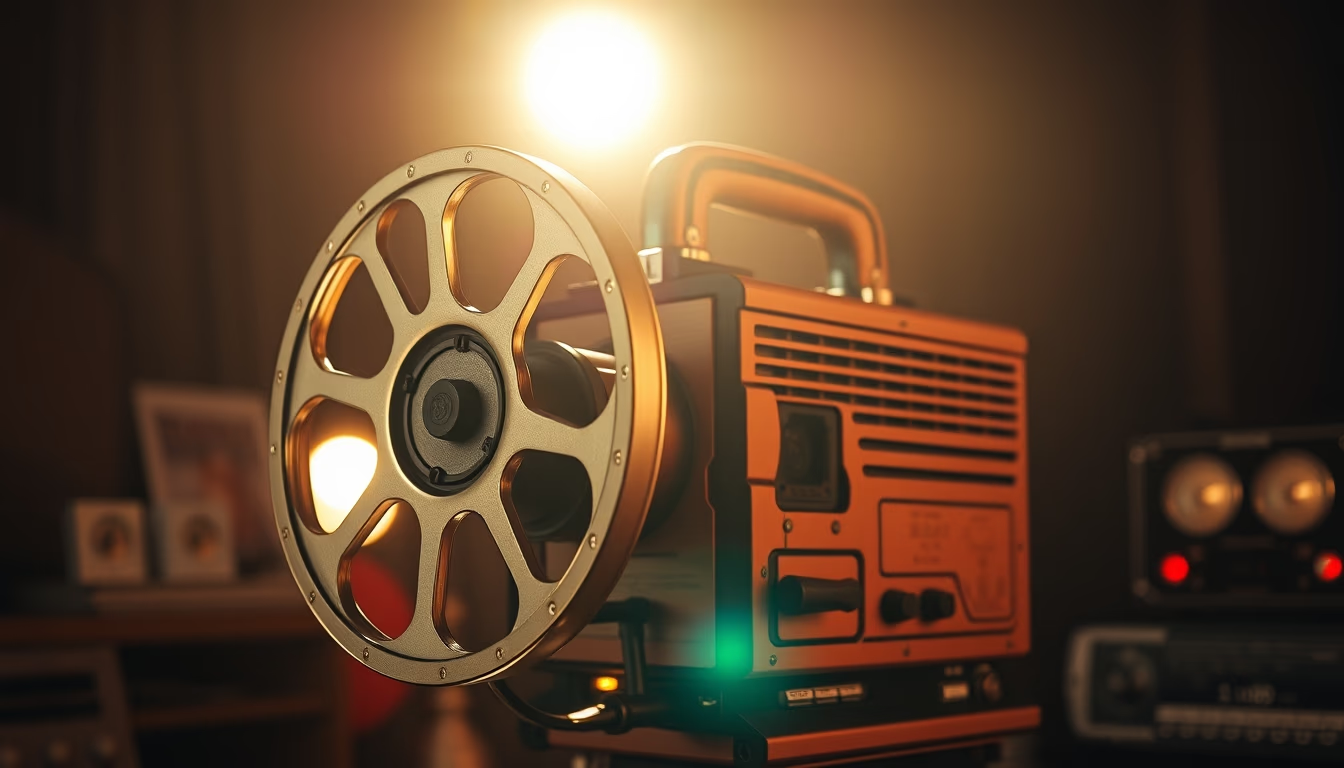
Movie projector running 8mm
1344×768 · AVIF · CC BY 4.0
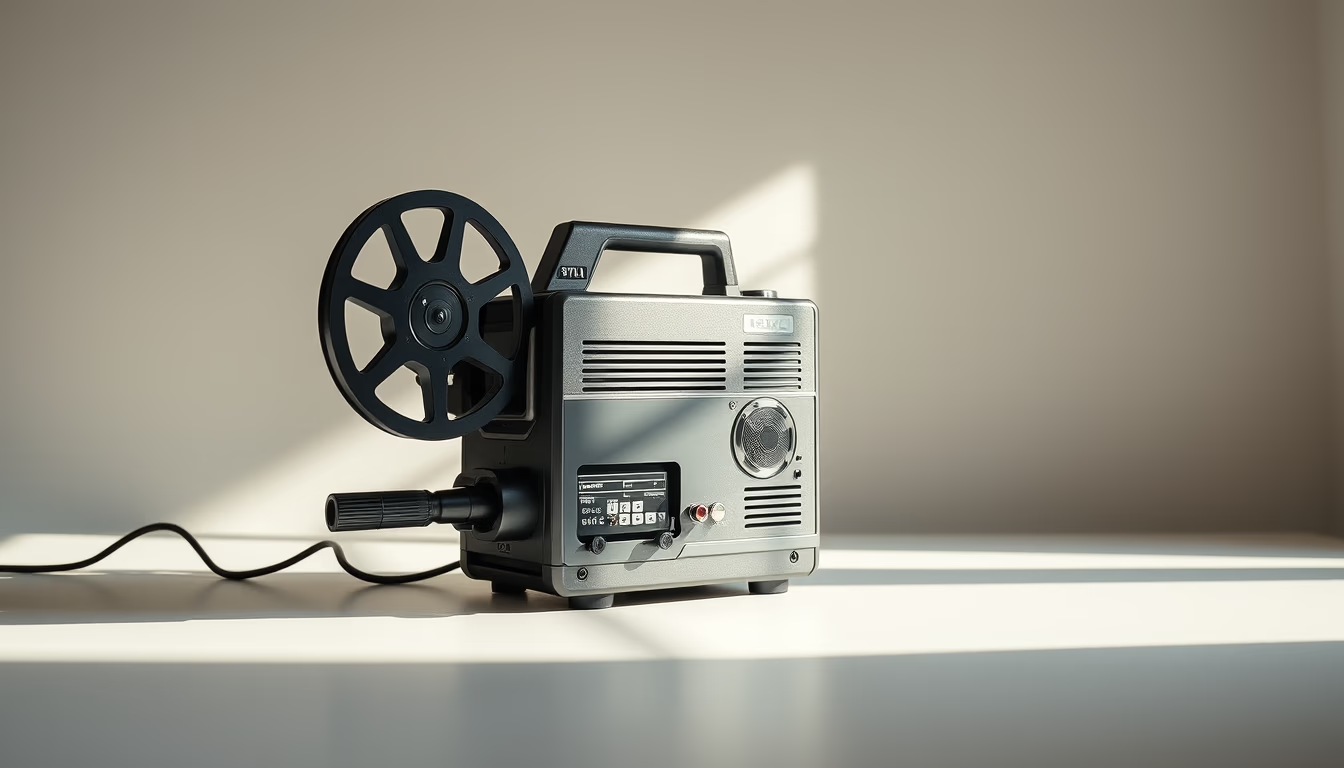
Home movie projector for 8mm film, the equipment that popularized amateur cinematography in the 20th century.
About this subject
The 8mm movie projector was the heart of home entertainment from the 1930s to the 1970s. Developed by Kodak in 1932, the 8mm format (originally Standard 8 or Regular 8) used 16mm film with double perforations, exposed in two passes, one on each half of the width, cutting the cost in half. This allowed ordinary families to record birthdays, vacations, and parties with portable cameras, then project the images onto screens in their living rooms.
The projector operated with powerful incandescent lamps (such as tungsten-halogen) and a synchronous or induction motor, pulling the film frame by frame at a typical speed of 16 to 24 frames per second. Advanced models offered reverse, pause, and manual focus adjustment. The 8mm film was silent or later sound-equipped with a magnetic stripe. Sound was reproduced by a magnetic reading head synchronized with the film's advance.
Culturally, the 8mm projector represents the pre-digital era of visual memory. Film cans full of reels were family treasures, and projection sessions involved setting up the screen, darkening the room, and dealing with occasional film breaks or overheating. Though now obsolete, the 8mm format inspired amateur filmmakers and documentarians, such as in Jonathan Caouette's film "Tarnation" (2003), entirely assembled from Super 8 home movies.
Super 8, introduced in 1965 by Kodak, simplified film loading (using plastic cartridges) and improved image quality with a larger usable frame area. Projectors compatible with both formats were common. Today, collectors and cinephiles restore 8mm projectors for seasonal screenings or themed parties. The mechanical sound of the shutter and the smell of ozone still evoke nostalgia in those who lived through the era of analog home movies.
Frequently Asked Questions
What is the difference between 8mm and Super 8 film?
Standard 8mm uses 16mm film exposed in two passes, while Super 8 uses a plastic cartridge, larger image area, and no need to flip the film. Super 8 also offers better quality and optional magnetic sound.
Can I still find working 8mm projectors?
Yes, many vintage projectors still work, but they require maintenance and specific bulbs (some halogen types are still produced). They are common at thrift stores, antique fairs, or specialty cinema equipment shops.
What was the projection quality of 8mm film?
The projection was low-definition by modern standards but reasonably sharp for its time. Brightness depended on the lamp and lens, and colors faded over time. Well-preserved films can still provide a pleasant nostalgic experience.
Direct URL
https://pub-c7d6a6ea828543ac903a74a341ccb2e1.r2.dev/imagens/movie-projector-running-8mm-minimalist-composition-p5.avifHow to credit
Include a visible link back to UtilizAí. Copy one of the snippets below:
<a href="https://xn--utiliza-eza.com/en/midia/imagens/movie-projector-running-8mm-minimalist-composition-p5">Movie projector running 8mm</a> by <a href="https://xn--utiliza-eza.com">UtilizAí</a>, licensed under <a href="https://creativecommons.org/licenses/by/4.0/">CC BY 4.0</a>.
[Movie projector running 8mm](https://xn--utiliza-eza.com/en/midia/imagens/movie-projector-running-8mm-minimalist-composition-p5) by [UtilizAí](https://xn--utiliza-eza.com), CC BY 4.0
License: CC-BY-4.0