Monorail elevated
1344×768 · AVIF · CC BY 4.0
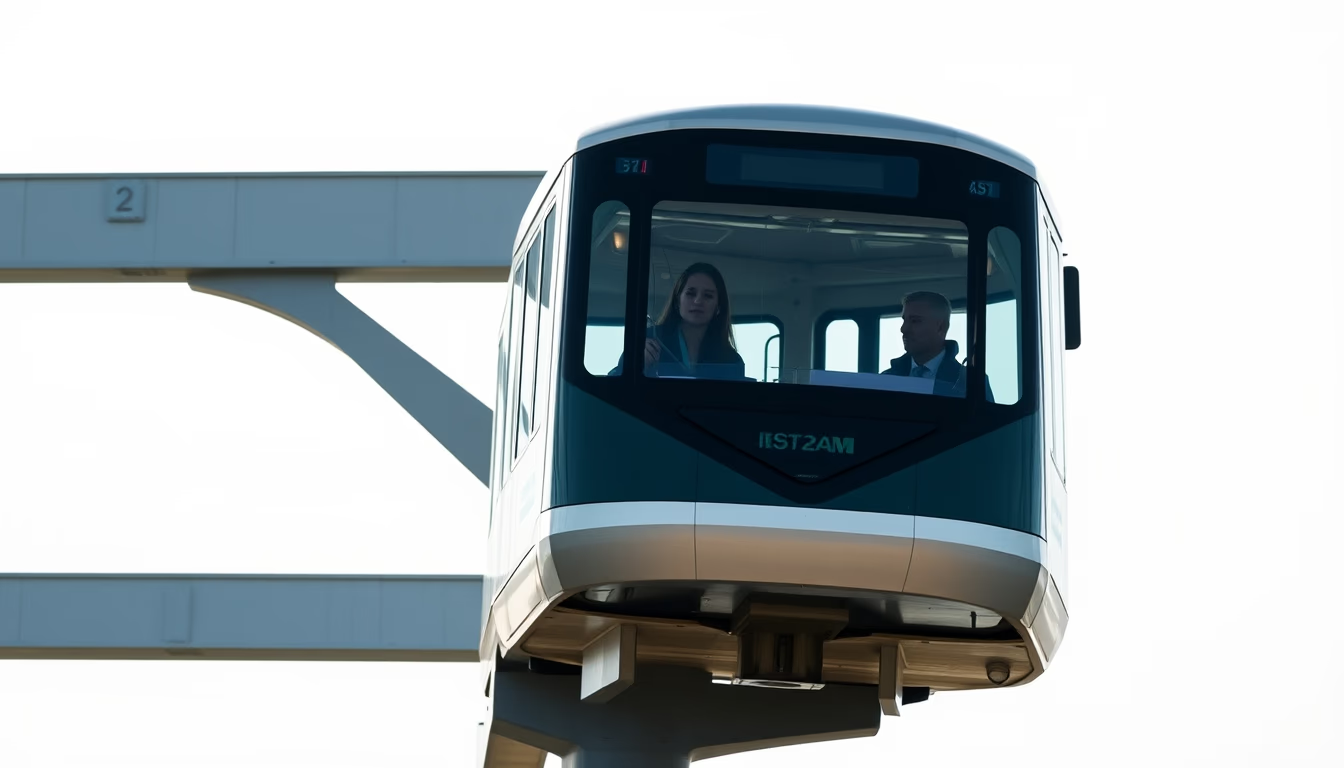
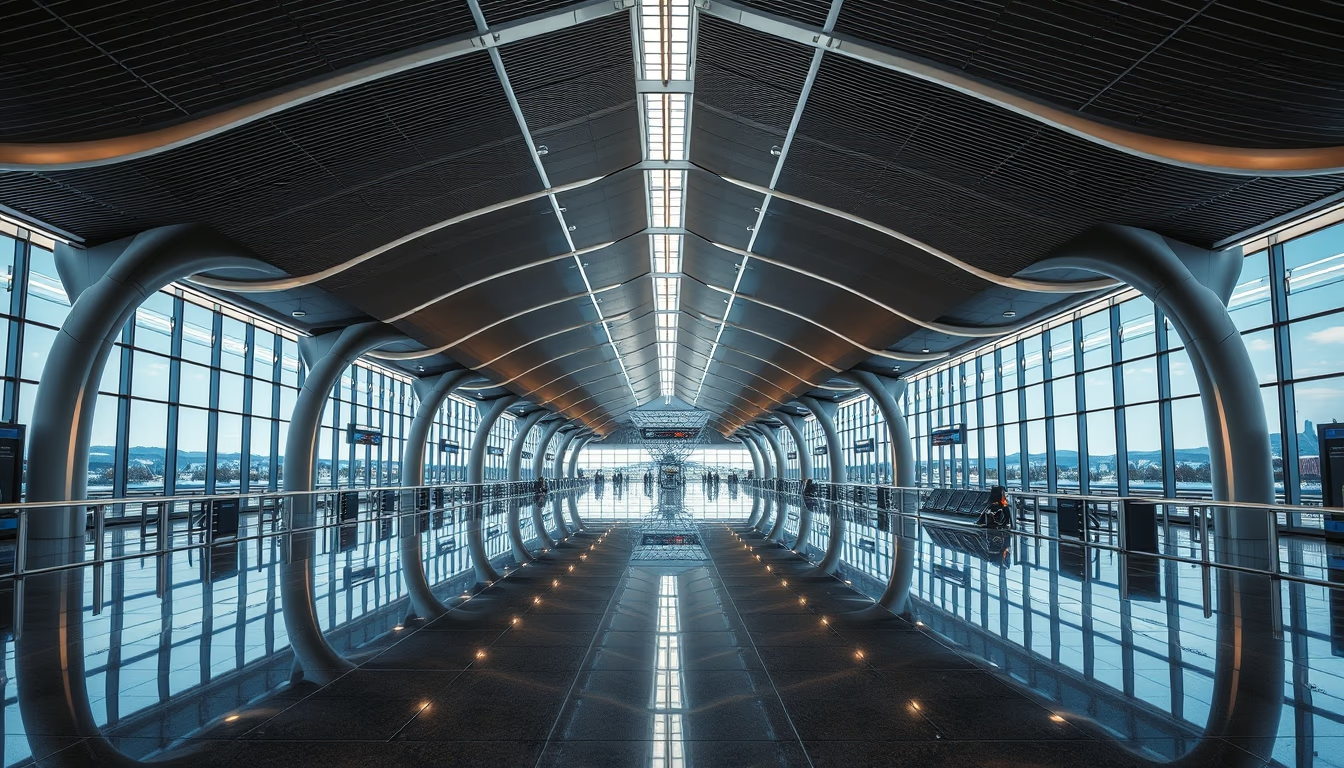
Elevated monorails combine urban transport efficiency with minimalist design, reducing congestion without occupying ground space.
About this subject
An elevated monorail is a transit system with a single rail serving as both track and support, typically raised on pillars above street level. Unlike conventional trains, it uses a single beam for guidance, support, and propulsion, enabling lighter and narrower infrastructure. The modern concept was pioneered by the Wuppertal Schwebebahn (1901) in Germany, which still operates as one of the world's oldest suspended monorails.
Most contemporary systems use rubber-tired wheels on a concrete beam, a design popularized by the Alweg system in the 1950s. This design was adopted by Disney theme parks and later by cities. Notable examples include São Paulo's Line 15 (Monorail), Tokyo Monorail connecting Haneda Airport, and Kuala Lumpur Monorail winding through the business district. Chongqing Monorail in China carries millions daily, navigating mountainous terrain where subways would be impractical.
The minimalist aesthetic is a key advantage: elevated guideways and stations have a slim footprint, blending into urban landscapes. They are quieter, produce fewer emissions, and can be built faster than subways. However, maintenance costs and capacity constraints remain challenges. Advances in lightweight materials and automation are making elevated monorails increasingly viable for medium-demand corridors, especially in cities seeking rapid transit with minimal visual intrusion.
Frequently Asked Questions
How does an elevated monorail work?
An elevated monorail runs on a single concrete beam that serves as both track and support. Rubber-tired wheels roll on top, while guide wheels stabilize the train, allowing tight curves and steep gradients.
Which cities have elevated monorails?
Notable examples include São Paulo (Line 15), Tokyo (Haneda Monorail), Kuala Lumpur, Chongqing, Las Vegas (MGM-Monorail), and Mumbai (Line 1). Historic systems like Wuppertal Schwebebahn and Seattle Monorail are also iconic.
What are the advantages of elevated monorails?
They require minimal ground space, are faster to build than subways, produce low noise, and offer scenic views. Their lightweight structures allow integration into urban areas with less property acquisition.
Direct URL
https://pub-c7d6a6ea828543ac903a74a341ccb2e1.r2.dev/imagens/monorail-elevated-minimalist-composition-p2.avifHow to credit
Include a visible link back to UtilizAí. Copy one of the snippets below:
<a href="https://xn--utiliza-eza.com/en/midia/imagens/monorail-elevated-minimalist-composition-p2">Monorail elevated</a> by <a href="https://xn--utiliza-eza.com">UtilizAí</a>, licensed under <a href="https://creativecommons.org/licenses/by/4.0/">CC BY 4.0</a>.
[Monorail elevated](https://xn--utiliza-eza.com/en/midia/imagens/monorail-elevated-minimalist-composition-p2) by [UtilizAí](https://xn--utiliza-eza.com), CC BY 4.0
License: CC-BY-4.0