Monorail elevated
1344×768 · AVIF · CC BY 4.0
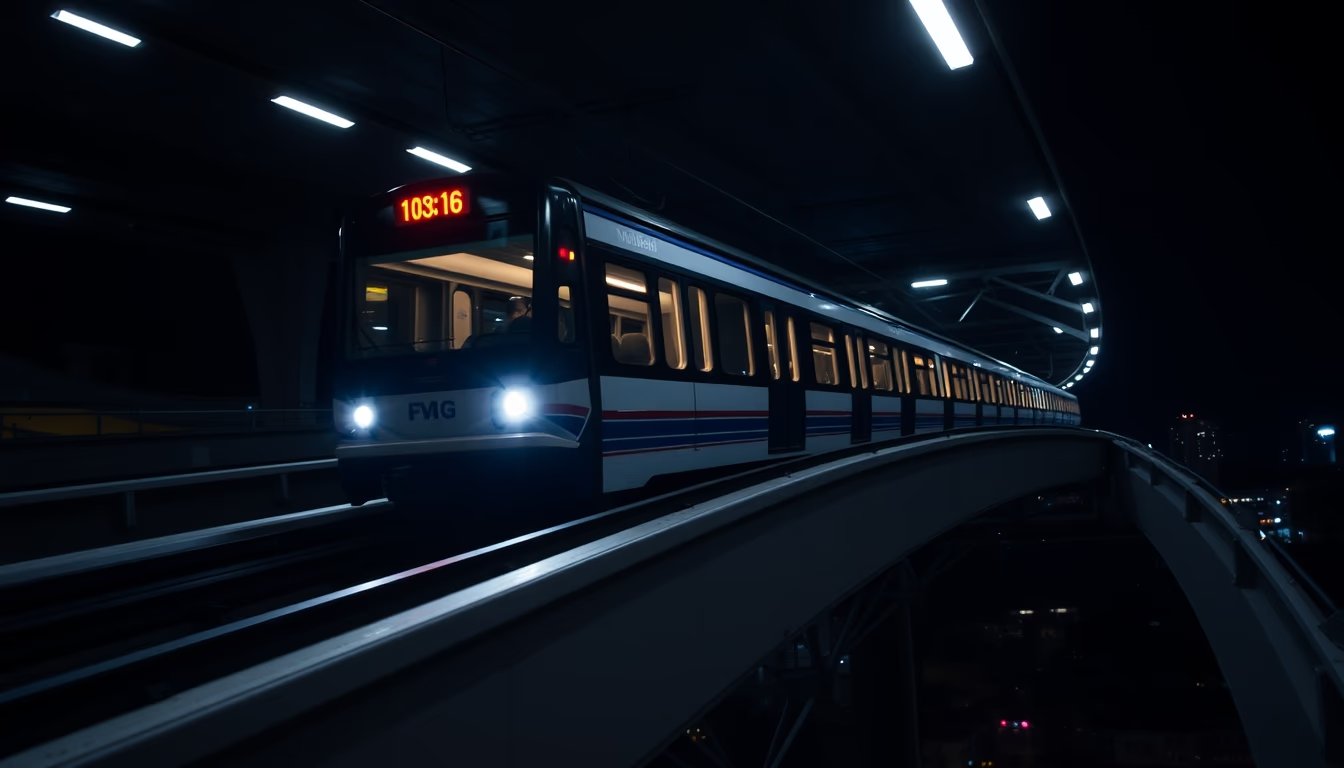
The elevated monorail is a single-rail transit system found in cities like São Paulo and Tokyo.
About this subject
An elevated monorail is a transportation system that uses a single rail as both support and guideway, typically in a straddle-beam configuration (the train straddles the beam) or a suspended configuration (the train hangs below the rail). The modern concept gained traction in the 1950s with the German Alweg prototype, which inspired many systems worldwide, including the iconic Disney monorail. In Brazil, the elevated monorail became prominent with São Paulo's Line 15-Silver, opened in 2014 and now the longest monorail line in the world at over 27 km, running through the city's east side.
A key advantage of elevated monorails is their minimal ground footprint, as the elevated structure leaves streets and sidewalks free. They also offer panoramic views to passengers and can be built in areas with difficult terrain or underground restrictions. However, monorails face challenges such as complex switching mechanisms and lower passenger capacity per train compared to traditional metros.
Internationally, the most famous elevated monorail is the Tokyo Monorail, connecting Haneda Airport to central Tokyo since 1964. Other notable examples include the Kuala Lumpur Monorail in Malaysia and the Chongqing Monorail in China, which operates one of the busiest monorail lines in the world. The technology continues to evolve, with new systems planned in cities like Mumbai and Cairo.
Maintenance of an elevated monorail requires special attention to the guideway (concrete or steel) and the rubber tires of the trains. Although less common than metro systems, monorails have proven effective for medium-demand corridors and for integrating suburban areas into urban centers.
Frequently Asked Questions
What is the difference between a monorail and a conventional metro?
A monorail uses a single rail, usually elevated, while a traditional metro uses two rails and is mostly underground. Monorails have lower capacity but offer more flexibility in space-constrained areas.
Are elevated monorails safe?
Yes, modern monorails have redundant signaling and braking systems. The risk of head-on collisions is low because they run on dedicated guideways. Regular maintenance ensures operational safety.
Which Brazilian cities have an elevated monorail?
Currently, São Paulo operates Line 15-Silver (monorail) and Line 17-Gold (under construction). Other cities like Rio de Janeiro and Brasília have studied projects but not yet implemented them.
Direct URL
https://pub-c7d6a6ea828543ac903a74a341ccb2e1.r2.dev/imagens/monorail-elevated-fine-art-photography-p3.avifHow to credit
Include a visible link back to UtilizAí. Copy one of the snippets below:
<a href="https://xn--utiliza-eza.com/en/midia/imagens/monorail-elevated-fine-art-photography-p3">Monorail elevated</a> by <a href="https://xn--utiliza-eza.com">UtilizAí</a>, licensed under <a href="https://creativecommons.org/licenses/by/4.0/">CC BY 4.0</a>.
[Monorail elevated](https://xn--utiliza-eza.com/en/midia/imagens/monorail-elevated-fine-art-photography-p3) by [UtilizAí](https://xn--utiliza-eza.com), CC BY 4.0
License: CC-BY-4.0