Monorail elevated
1344×768 · AVIF · CC BY 4.0
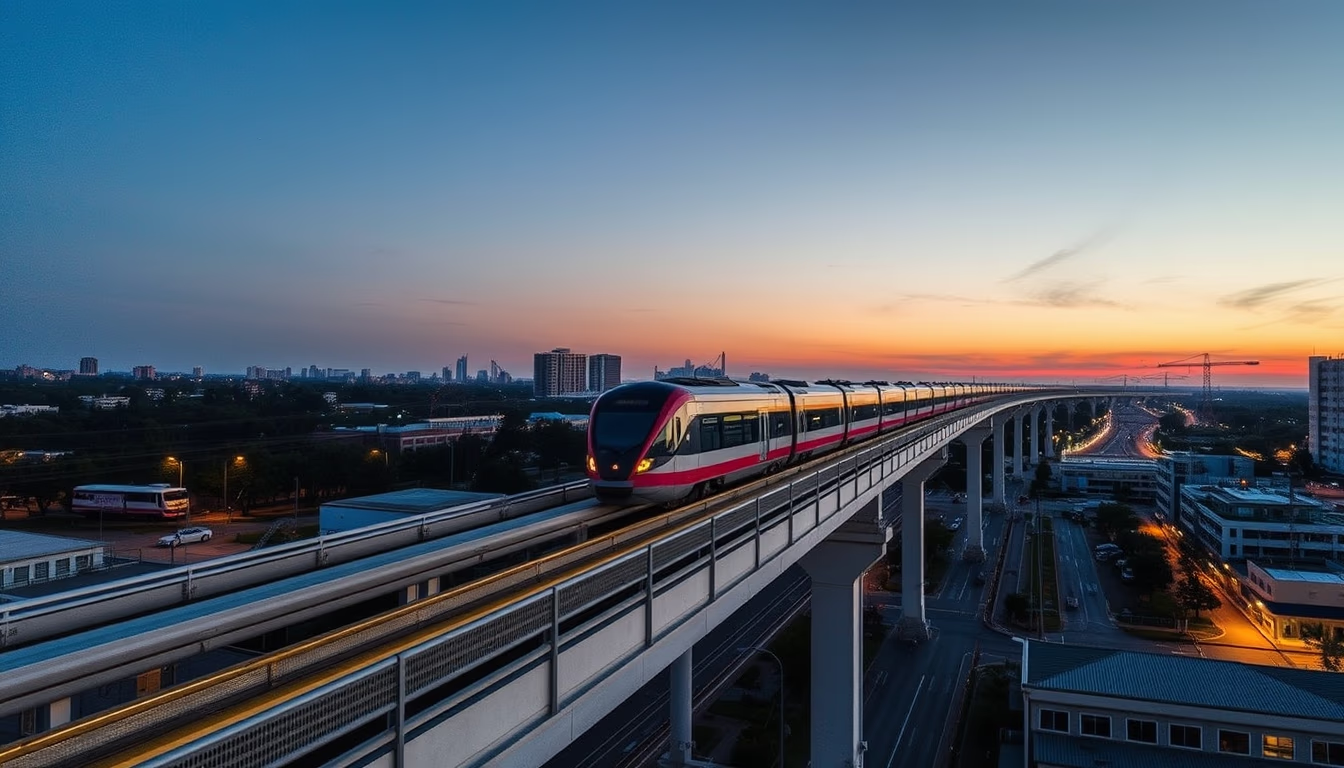
An aerial drone shot of an elevated monorail showcases the elegance and efficiency of this urban transport system that defies city geography.
About this subject
The elevated monorail is a type of rail transport distinguished by its single track, usually suspended or supported on elevated beams. Unlike conventional trains that run on two parallel rails, the monorail uses a single support structure, significantly reducing the space needed for its installation. This system is especially useful in densely populated areas where land is scarce or where underground metro construction is impractical due to geological or cost issues.
Modern monorails emerged in the early 20th century but gained prominence with the development of technologies such as rubber tires and linear propulsion. Notable examples include the São Paulo Monorail, connecting the southern and eastern zones of the city, and the famous Tokyo Monorail, which has been operating since 1964 and carries millions of passengers annually. In Brazil, the São Paulo monorail was inaugurated in 2014 and is part of the metropolitan train system, offering a fast alternative for high-demand regions.
One of the main advantages of the elevated monorail is its ability to be built over existing avenues or developed areas without requiring large-scale expropriations. Moreover, because it is elevated, it does not interfere with vehicle and pedestrian traffic at street level. On the other hand, installation costs can be high, and maintenance of the elevated track requires constant attention. Still, cities like Kuala Lumpur, Las Vegas, and Chongqing have adopted monorails as a mobility solution, combining cutting-edge technology with innovative urban design.
The future of monorails looks promising, especially with the advancement of automated systems and integration with other transport modes. By 2026, new lines are expected to open around the world, reinforcing the global trend toward sustainable and efficient mobility. The elevated monorail, with its characteristic silhouette seen from above, represents not only a means of transport but an icon of modern engineering and urban adaptation.
Frequently Asked Questions
How does a monorail differ from a conventional train?
A monorail uses a single track, while a conventional train uses two parallel rails. This allows the monorail to be narrower and elevated, taking up less ground space.
What are the major monorails in the world?
Notable monorails include the Tokyo Monorail (Japan), KL Monorail in Kuala Lumpur (Malaysia), Las Vegas Monorail (USA), and São Paulo Monorail (Brazil). Each meets specific urban mobility demands.
Is a monorail safe compared to other transport modes?
Yes, monorails are considered safe with low accident rates. Their elevated design avoids collisions with vehicles and pedestrians. Rigorous maintenance and automated systems contribute to reliability.
Direct URL
https://pub-c7d6a6ea828543ac903a74a341ccb2e1.r2.dev/imagens/monorail-elevated-aerial-drone-shot-p0.avifHow to credit
Include a visible link back to UtilizAí. Copy one of the snippets below:
<a href="https://xn--utiliza-eza.com/en/midia/imagens/monorail-elevated-aerial-drone-shot-p0">Monorail elevated</a> by <a href="https://xn--utiliza-eza.com">UtilizAí</a>, licensed under <a href="https://creativecommons.org/licenses/by/4.0/">CC BY 4.0</a>.
[Monorail elevated](https://xn--utiliza-eza.com/en/midia/imagens/monorail-elevated-aerial-drone-shot-p0) by [UtilizAí](https://xn--utiliza-eza.com), CC BY 4.0
License: CC-BY-4.0