Minimalist japanese house
1344×768 · AVIF · CC BY 4.0
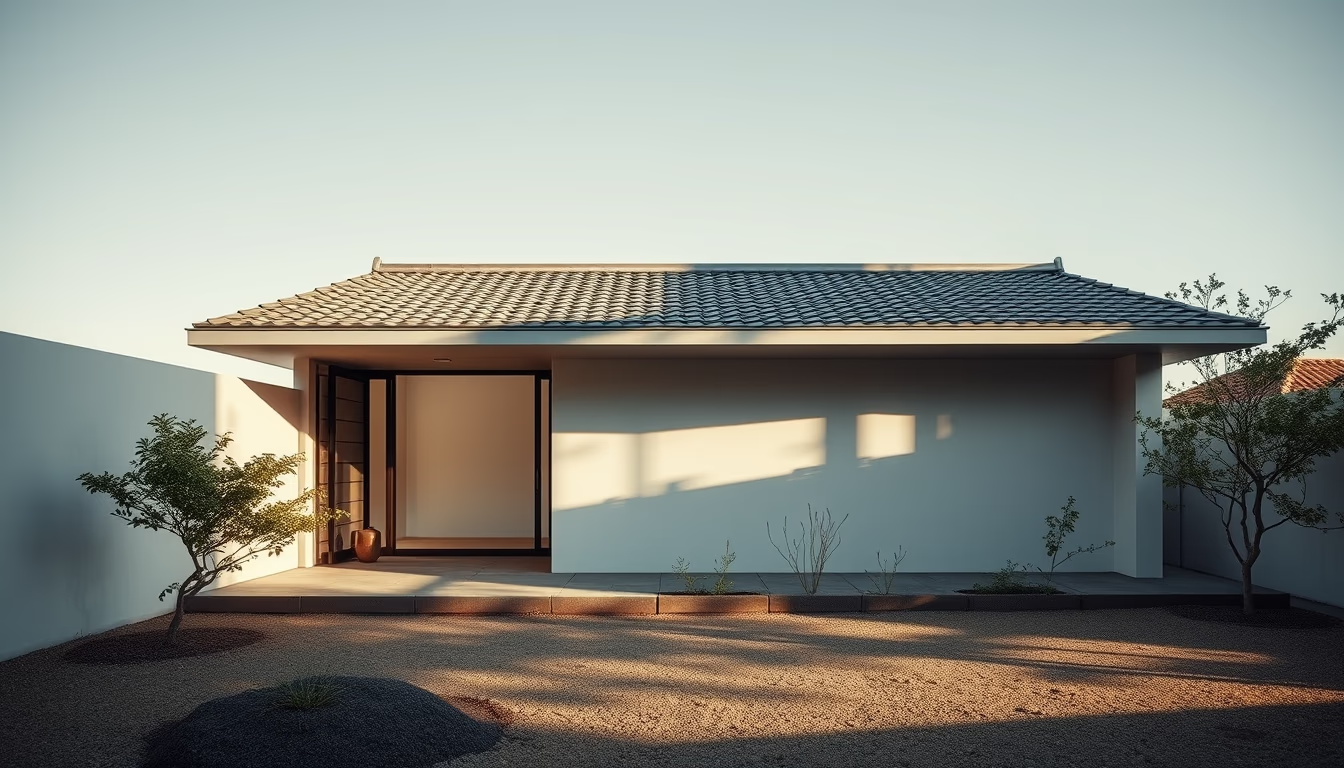
The minimalist Japanese house blends tradition and modernity, prioritizing empty spaces, natural materials, and integration with nature.
About this subject
Japanese minimalist architecture is deeply rooted in cultural concepts such as ma (negative space) and wabi-sabi (beauty in imperfection). These houses often employ natural materials like wood, rice paper (washi), and bamboo, with sliding doors (shoji) that allow flexible room configurations. The traditional layout features modular tatami mats that determine room sizes and a strong connection to the outdoors through inner gardens and verandas (engawa).
Minimalist Japanese design is not merely aesthetic but functional. The absence of unnecessary furniture and the emphasis on straight lines and clean surfaces help create a sense of calm and order. Construction techniques such as post-and-beam structures (mokuzō) enable large open spans, while natural ventilation and diffused light are prioritized. Contemporary architects like Tadao Ando and Kengo Kuma have brought these principles to a global audience, adapting Japanese minimalism to various climates and cultures.
Interestingly, Japanese minimalist aesthetics have influenced Western movements such as modernism and American minimalism. In Japan, the minimalist house also reflects cultural values like mottainai (avoiding waste) and the pursuit of harmony with the environment. Many of these residences are designed to evolve over time, aging gracefully, in contrast to a throwaway culture.
Frequently Asked Questions
What defines minimalism in Japanese architecture?
Japanese minimalism is defined by simplicity, use of natural materials, empty spaces (ma), and a strong connection to nature, prioritizing functionality and serenity.
What materials are common in minimalist Japanese houses?
Materials such as wood, bamboo, rice paper (washi), clay, and stone are typical, chosen for their natural texture and ability to age gracefully.
How does the concept of 'ma' influence interior design?
'Ma' values emptiness as an active element, encouraging spacious layouts, minimal furniture, and fluid circulation that allows visual pauses and contemplation.
Direct URL
https://pub-c7d6a6ea828543ac903a74a341ccb2e1.r2.dev/imagens/minimalist-japanese-house-magazine-editorial-p1.avifHow to credit
Include a visible link back to UtilizAí. Copy one of the snippets below:
<a href="https://xn--utiliza-eza.com/en/midia/imagens/minimalist-japanese-house-magazine-editorial-p1">Minimalist japanese house</a> by <a href="https://xn--utiliza-eza.com">UtilizAí</a>, licensed under <a href="https://creativecommons.org/licenses/by/4.0/">CC BY 4.0</a>.
[Minimalist japanese house](https://xn--utiliza-eza.com/en/midia/imagens/minimalist-japanese-house-magazine-editorial-p1) by [UtilizAí](https://xn--utiliza-eza.com), CC BY 4.0
License: CC-BY-4.0