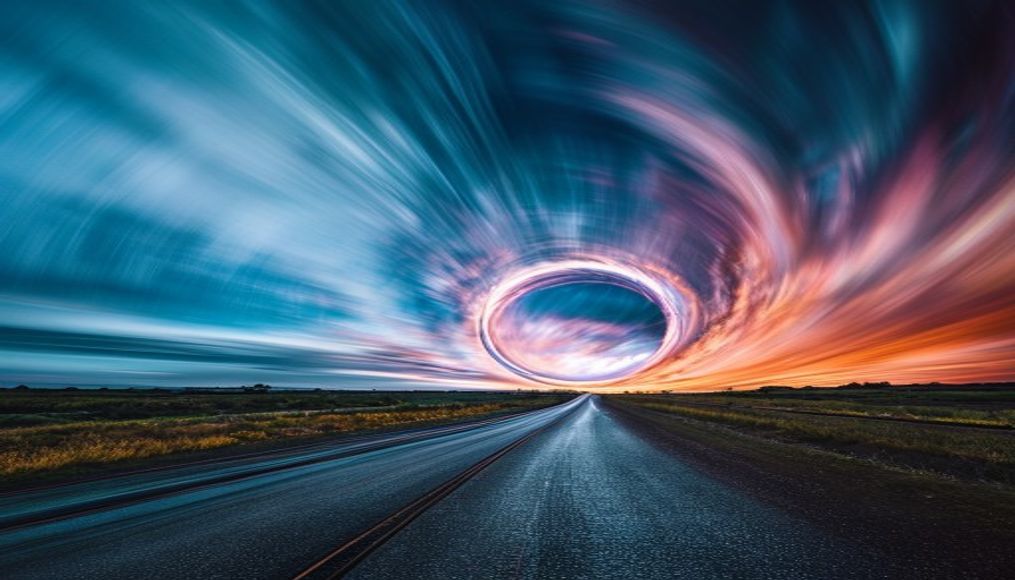
Milky way galaxy long exposure
1344×768 · AVIF · CC BY 4.0
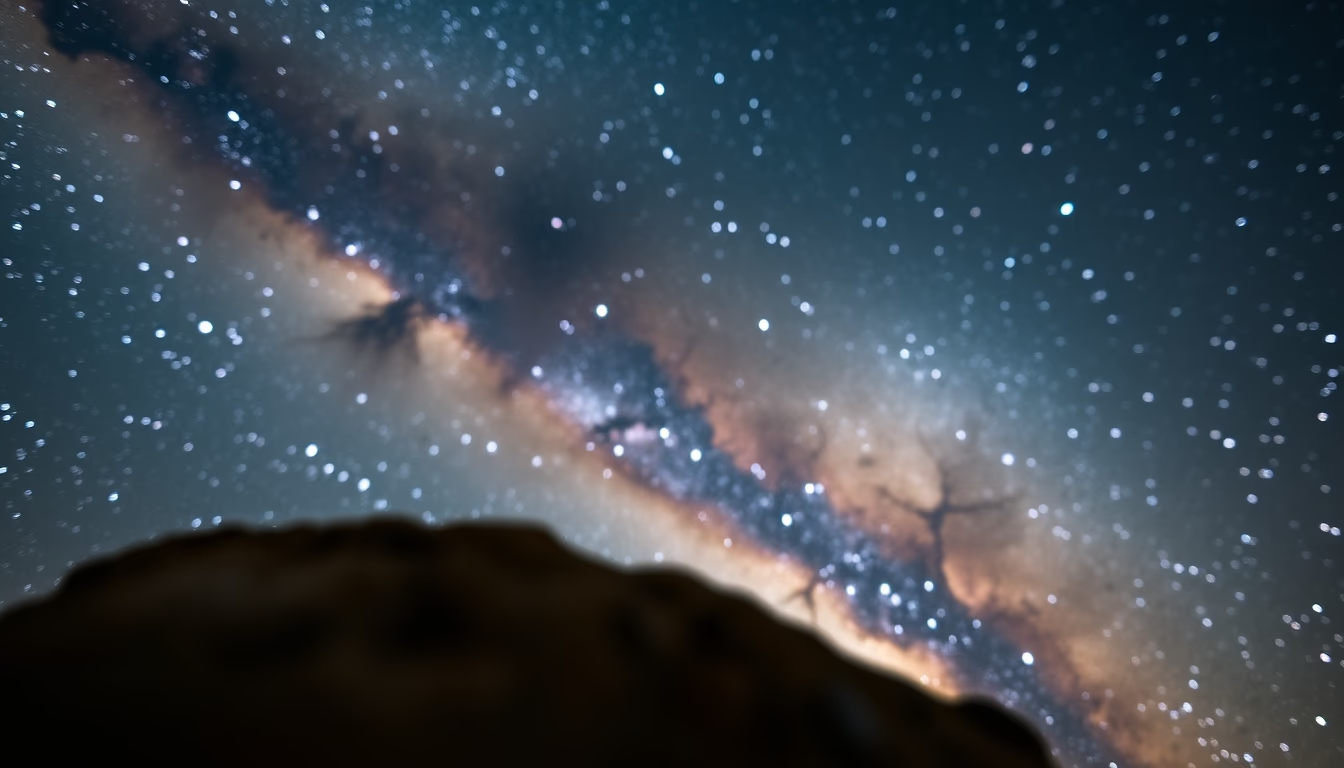
The Milky Way, our home galaxy, reveals its spiral structure and millions of stars in long-exposure photography, a technique that captures details invisible to the naked eye.
About this subject
The Milky Way is a barred spiral galaxy that houses the Solar System. It is estimated to contain between 100 and 400 billion stars, along with gas, dust, and dark matter. Its name comes from the Greek 'galaxias kyklos' (milky circle), referring to its diffuse, milky appearance in the night sky. The structure of the Milky Way consists of a central bulge, spiral arms, and a halo, with the bulge dominated by old stars and a supermassive black hole (Sagittarius A*).
Long-exposure photography is essential for capturing the Milky Way in its full glory. Cameras with sensitive sensors and wide-angle lenses, mounted on tripods or trackers, gather faint starlight over seconds to minutes. This technique reveals the stellar density and dark nebulae that compose the galaxy. Locations with low light pollution, such as deserts, mountains, or rural areas, are ideal for such images.
Culturally, the Milky Way has inspired mythologies and sciences. Ancient Greeks saw it as milk spilled by Hera, while the Tupi-Guarani associated it with a celestial river. Today, it is a subject of astrophysical study, mapping its shape and evolution. The European Space Agency's Gaia mission has contributed to a more precise understanding of galactic structure.
Fun fact: the Milky Way and the Andromeda Galaxy are on a collision course in about 4 billion years, eventually forming a new elliptical galaxy. This event will not directly affect the Solar System due to the vast stellar distances involved.
Frequently Asked Questions
What is the Milky Way?
The Milky Way is the barred spiral galaxy containing our Solar System. It has billions of stars and spans about 100,000 light-years in diameter.
How do photographers capture the Milky Way with long exposure?
They use cameras with high-ISO sensors, wide-angle lenses, and tripods. Exposures last several seconds (typically 15-30 seconds) to gather starlight. Dark sites with no light pollution are essential.
Why is the Milky Way important in astronomy history?
Since antiquity, cultures observed its milky band. In the 17th century, Galileo confirmed it was made of stars. Today, studying it helps understand galaxy formation and evolution.
Direct URL
https://pub-c7d6a6ea828543ac903a74a341ccb2e1.r2.dev/imagens/milky-way-galaxy-long-exposure-macro-closeup-p6.avifHow to credit
Include a visible link back to UtilizAí. Copy one of the snippets below:
<a href="https://xn--utiliza-eza.com/en/midia/imagens/milky-way-galaxy-long-exposure-macro-closeup-p6">Milky way galaxy long exposure</a> by <a href="https://xn--utiliza-eza.com">UtilizAí</a>, licensed under <a href="https://creativecommons.org/licenses/by/4.0/">CC BY 4.0</a>.
[Milky way galaxy long exposure](https://xn--utiliza-eza.com/en/midia/imagens/milky-way-galaxy-long-exposure-macro-closeup-p6) by [UtilizAí](https://xn--utiliza-eza.com), CC BY 4.0
License: CC-BY-4.0