Milky way galaxy long exposure
1344×768 · AVIF · CC BY 4.0
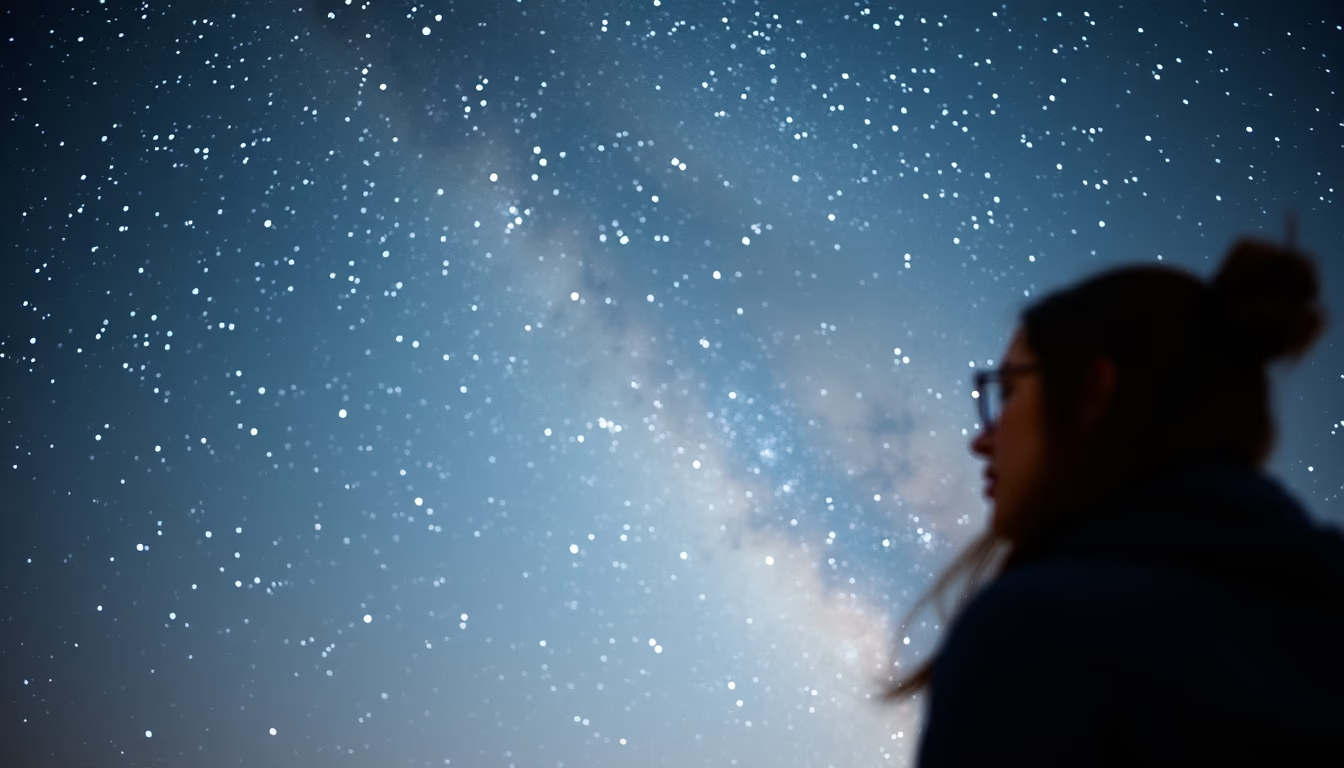
The Milky Way, our spiral galaxy, reveals its details in long exposure photos, showing arms of stars and cosmic dust.
About this subject
The Milky Way is a barred spiral galaxy that houses the Solar System. It is estimated to contain between 100 and 400 billion stars, along with vast clouds of gas and dust. Its diameter is approximately 100,000 light years. Observed from Earth, it appears as a milky band in the night sky, hence the name derived from Latin "via lactea".
Long exposure photography is essential to capture details of the Milky Way that the naked eye cannot perceive, such as dark nebulae and star clusters. Common techniques include the use of tripods, star trackers, and wide aperture lenses. Locations with low light pollution, like deserts or mountains, are ideal for these records.
Culturally, the Milky Way holds great importance in various mythologies. For ancient Greeks, it was the spilled milk of Hera. In Brazil, Tupi-Guarani indigenous people call it "Tapiirape" or "Tapir's Path". In modern astronomy, studying its structure helped understand galaxy formation and the universe.
Amateur astrophotography has grown significantly with digital cameras and stacking software. One technical challenge is grain noise, which gives an authentic look to the image, as in the "film grain authentic" style mentioned in the tags. Each long exposure photograph of the Milky Way is a unique record of the apparent motion of stars due to Earth's rotation.
Frequently Asked Questions
What is the best time of year to photograph the Milky Way?
In the Southern Hemisphere, the core of the Milky Way is most visible from March to October, peaking in June and July. In the Northern Hemisphere, the best window is from April to September.
What equipment is needed for long exposure photos of the Milky Way?
A camera with manual controls, a wide-angle lens with an aperture of f/2.8 or faster, a sturdy tripod, and a remote shutter release are essential. Star trackers help avoid star trails.
What causes the grain effect in Milky Way photos?
Grain or digital noise is caused by high ISOs used in long exposures. In astrophotography, it is often accepted as part of the authentic style, reminiscent of traditional photographic films.
Direct URL
https://pub-c7d6a6ea828543ac903a74a341ccb2e1.r2.dev/imagens/milky-way-galaxy-long-exposure-film-grain-authentic-p0.avifHow to credit
Include a visible link back to UtilizAí. Copy one of the snippets below:
<a href="https://xn--utiliza-eza.com/en/midia/imagens/milky-way-galaxy-long-exposure-film-grain-authentic-p0">Milky way galaxy long exposure</a> by <a href="https://xn--utiliza-eza.com">UtilizAí</a>, licensed under <a href="https://creativecommons.org/licenses/by/4.0/">CC BY 4.0</a>.
[Milky way galaxy long exposure](https://xn--utiliza-eza.com/en/midia/imagens/milky-way-galaxy-long-exposure-film-grain-authentic-p0) by [UtilizAí](https://xn--utiliza-eza.com), CC BY 4.0
License: CC-BY-4.0