Metro station underground modern
1344×768 · AVIF · CC BY 4.0

Modern underground metro stations combine functional design, advanced technology, and sustainability to serve millions of passengers daily.
About this subject
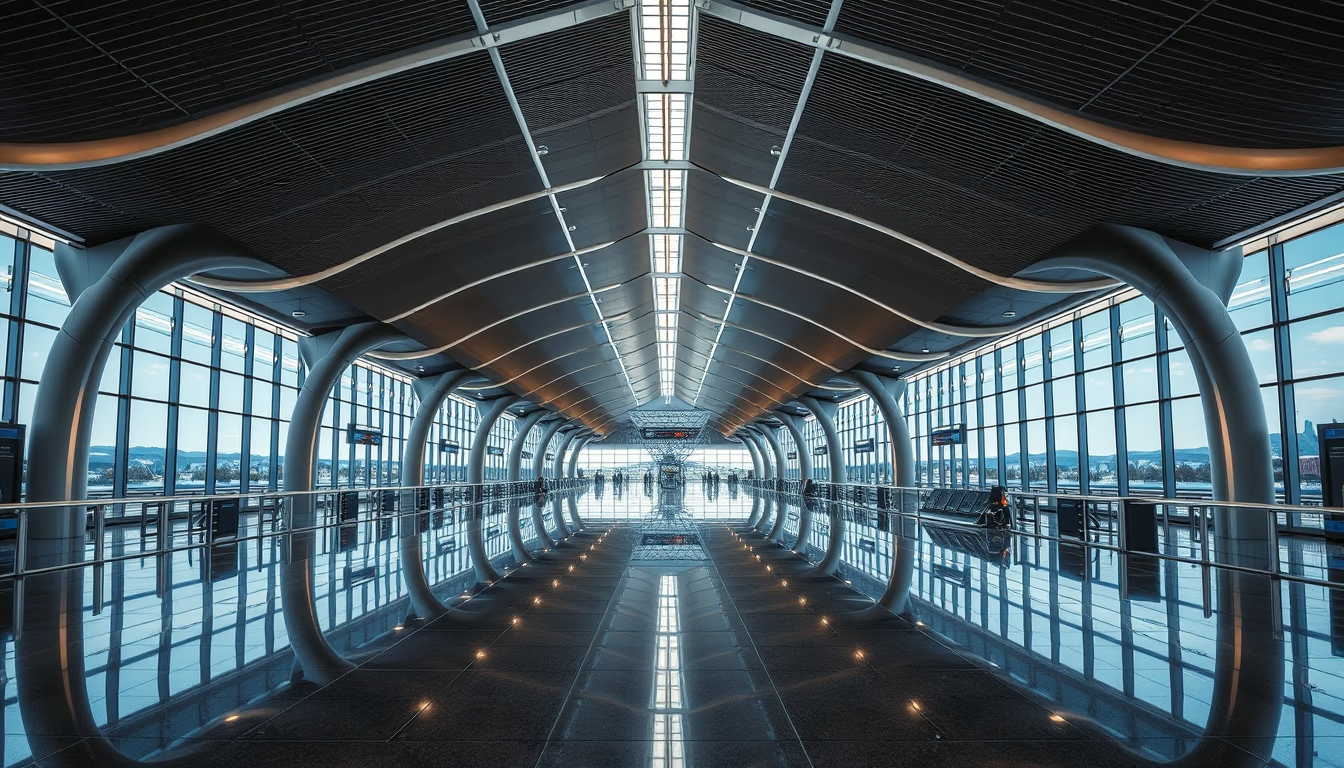
Modern underground metro stations have evolved beyond mere boarding points. They are designed as integrated transport hubs, with architecture that prioritizes passenger flow, natural lighting, and materials like glass and steel. Platform screen doors (as seen on São Paulo's Line 4) enhance safety and efficiency. Dynamic digital signage displays real-time schedule information, while ventilation and cooling are optimized by sensors.
The importance of modern stations extends beyond transport: they often become urban landmarks. Examples include Dubai's Al Safa Station with its curved concrete canopy, or London's Crossrail Paddington Station, featuring spacious underground halls and integration with surface trains. In Asia, Hong Kong's Tsim Sha Tsui Station has an underground tunnel network connecting directly to malls and hotels.
From a technical perspective, modern stations are built for sustainability. Rainwater harvesting systems, solar panels on access areas, and low-energy LED lighting are common. High-capacity escalators and glass elevators ensure universal accessibility. Many also incorporate public art, such as mosaics and sculptures, to humanize the underground environment.
Interesting facts include Kiev's Arsenalna Station, the deepest in the world at 105 meters, requiring a 5-minute escalator ride to reach the surface. London's Canary Wharf Station on the Jubilee Line won awards for its innovative design featuring a glass atrium admitting natural light. These examples demonstrate how engineering and architecture combine to create functional and inspiring spaces.
Frequently Asked Questions
What is the most modern underground metro station in the world?
There is no single most modern, but highlights include Dubai's Al Safa Station (futuristic design), London's Canary Wharf Station on the Jubilee Line (large glass atrium), and São Paulo's Line 4 Station (platform screen doors and integration).
How are modern underground stations designed for safety?
They employ platform screen doors to prevent falls onto tracks, surveillance cameras with video analytics, smoke sensors, and slip-resistant flooring. Uniform lighting and clear signage are also priorities.
What technological innovations are common in modern metro stations?
Contactless ticketing, real-time information panels, free Wi-Fi, USB charging ports, smart air conditioning, and integration with urban mobility apps for multimodal routes.
Direct URL
https://pub-c7d6a6ea828543ac903a74a341ccb2e1.r2.dev/imagens/metro-station-underground-modern-documentary-photography-p2.avifHow to credit
Include a visible link back to UtilizAí. Copy one of the snippets below:
<a href="https://xn--utiliza-eza.com/en/midia/imagens/metro-station-underground-modern-documentary-photography-p2">Metro station underground modern</a> by <a href="https://xn--utiliza-eza.com">UtilizAí</a>, licensed under <a href="https://creativecommons.org/licenses/by/4.0/">CC BY 4.0</a>.
[Metro station underground modern](https://xn--utiliza-eza.com/en/midia/imagens/metro-station-underground-modern-documentary-photography-p2) by [UtilizAí](https://xn--utiliza-eza.com), CC BY 4.0
License: CC-BY-4.0