Mercury surface craters
1344×768 · AVIF · CC BY 4.0
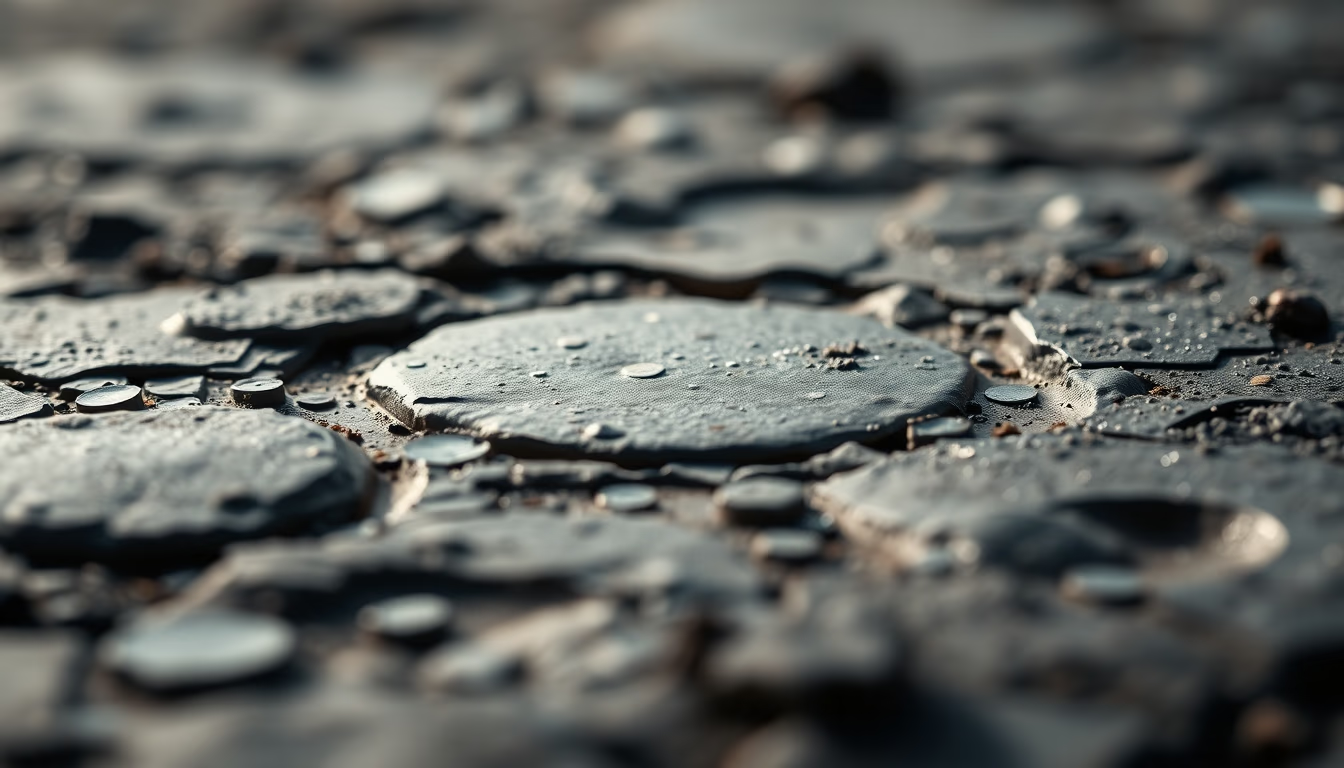
Mercury's surface is scarred by countless impact craters, some hundreds of kilometers wide, revealing the geological history of the innermost planet.
About this subject
Mercury, the smallest planet in the Solar System and the closest to the Sun, has a surface heavily pockmarked with impact craters, rivaling that of the Moon. This characteristic stems from its lack of a substantial atmosphere and the absence of recent geological activity that could erase or obscure impact marks. Mercury's craters range from small pits to vast basins such as Caloris Planitia, approximately 1,550 km in diameter, formed by a massive impact about 3.8 billion years ago. The Caloris Basin, one of the largest impact structures in the Solar System, features a lava-filled interior and is surrounded by concentric mountain rings.
Naming conventions for Mercury's craters are set by the International Astronomical Union: they are named after deceased artists, musicians, painters, and writers recognized for their cultural contributions. Examples include Beethoven, Bach, and Hemingway craters. This tradition sets Mercury apart from other bodies, where craters are typically named after scientists or explorers. NASA's MESSENGER mission, which orbited Mercury from 2011 to 2015, mapped nearly the entire surface, revealing unprecedented details about impact history and composition.
One of the most intriguing features is the presence of 'smooth plains' between craters, formed by ancient volcanic activity. These plains, such as those surrounding Caloris Basin, are younger than the heavily cratered regions and indicate that Mercury experienced intense volcanism in its past. Additionally, spacecraft observations showed that the mercurian regolith contains sulfur and potassium, volatile elements not expected so close to the Sun, suggesting the planet formed from materials rich in these elements. Thus, Mercury's craters are not mere scars but valuable records of the inner Solar System's evolution.
Frequently Asked Questions
Why does Mercury's surface have so many craters?
Mercury has virtually no atmosphere to slow down or burn up meteoroids, and its crust is ancient and geologically stable, preserving impacts. The lack of erosion and recent tectonic or volcanic activity keeps craters visible for billions of years.
What is the largest crater on Mercury?
The largest crater is the Caloris Basin, about 1,550 km in diameter. It was formed by a giant impact and features a ring of mountains around it, as well as volcanic plains inside.
How are Mercury's craters named?
Mercury's craters are named after deceased artists, musicians, painters, and writers, such as Beethoven, Bach, and Hemingway. This convention is set by the International Astronomical Union and honors cultural contributions.
Direct URL
https://pub-c7d6a6ea828543ac903a74a341ccb2e1.r2.dev/imagens/mercury-surface-craters-macro-closeup-p9.avifHow to credit
Include a visible link back to UtilizAí. Copy one of the snippets below:
<a href="https://xn--utiliza-eza.com/en/midia/imagens/mercury-surface-craters-macro-closeup-p9">Mercury surface craters</a> by <a href="https://xn--utiliza-eza.com">UtilizAí</a>, licensed under <a href="https://creativecommons.org/licenses/by/4.0/">CC BY 4.0</a>.
[Mercury surface craters](https://xn--utiliza-eza.com/en/midia/imagens/mercury-surface-craters-macro-closeup-p9) by [UtilizAí](https://xn--utiliza-eza.com), CC BY 4.0
License: CC-BY-4.0