Mercury surface craters
1344×768 · AVIF · CC BY 4.0
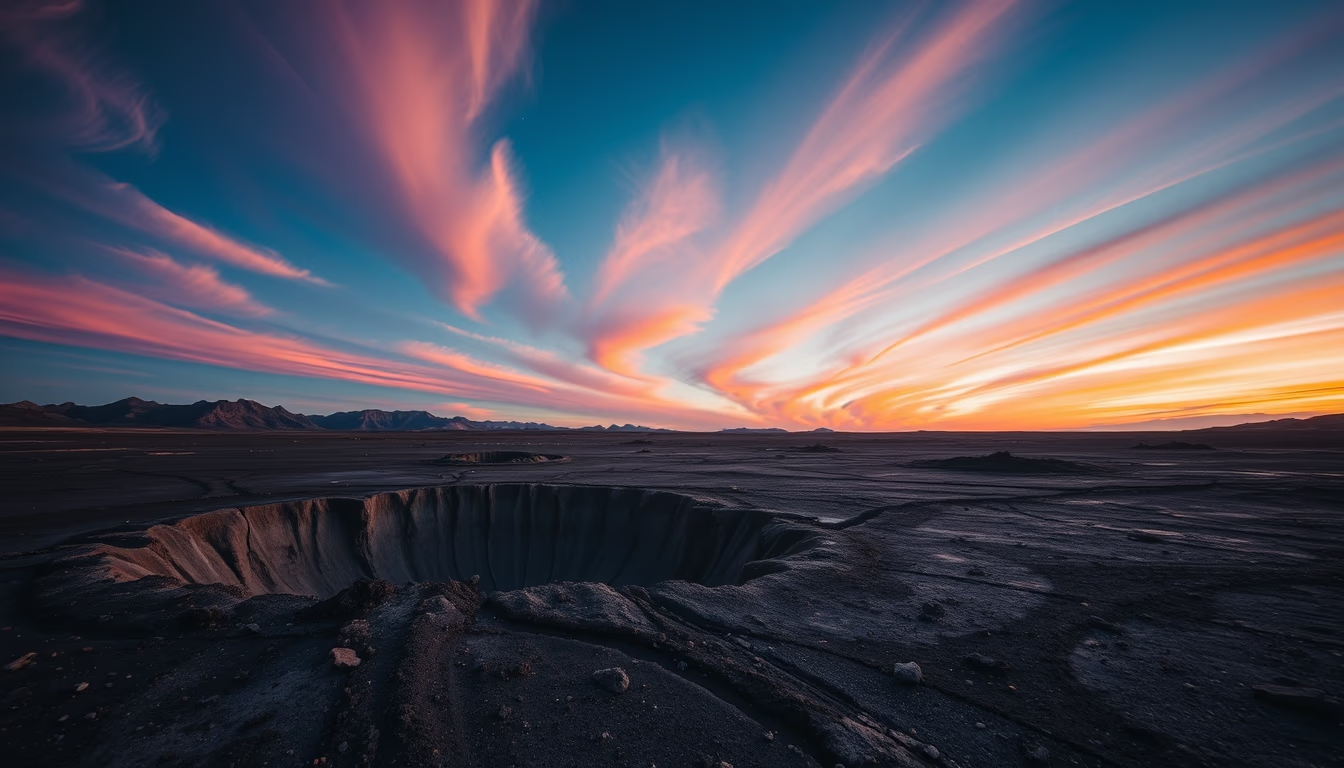
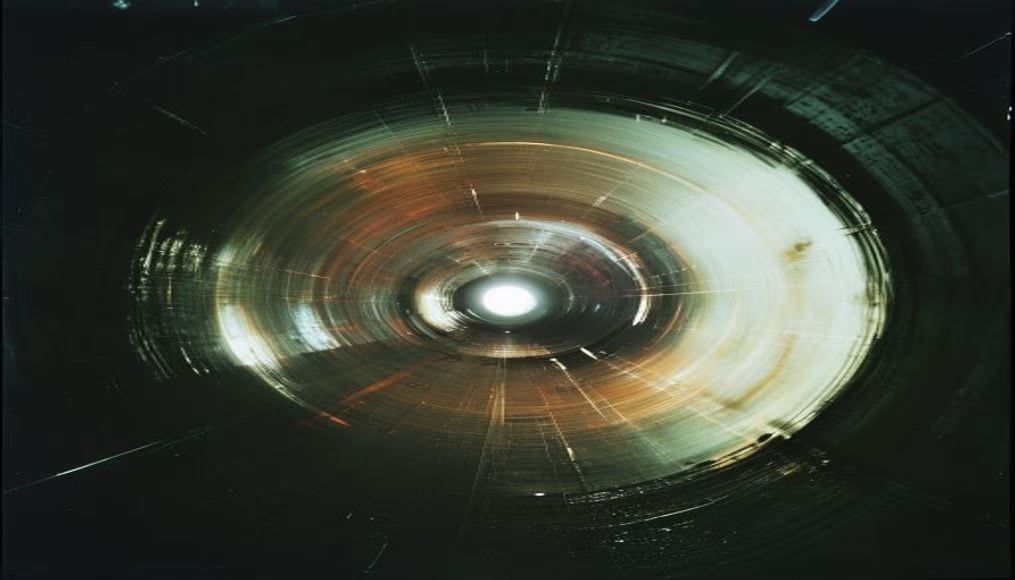
Mercury's surface is scarred by thousands of impact craters, some hundreds of kilometers in diameter, revealing an ancient and intense geological history.
About this subject
Mercury, the closest planet to the Sun, has a surface densely covered with impact craters that bear witness to billions of years of cosmic bombardment. Unlike Earth, which has an atmosphere and tectonic activity that erase such marks, Mercury has retained most of its impact scars since its formation. The lack of significant erosion and a thin exosphere allow craters of all ages to coexist, offering an almost complete record of the inner solar system's history.
The largest crater on Mercury is the Caloris Basin, about 1,550 km in diameter. Formed by a colossal impact roughly 3.8 billion years ago, it is surrounded by concentric rings and solidified lava plains. Besides Caloris, notable craters include Beethoven, Tolstoj, and Degas, named after artists and writers. Many craters feature central peaks and ejecta blankets, typical of impacts on airless rocky bodies.
Mercury's craters resemble those on the Moon, but there are key differences. Mercury's stronger gravity (0.38 g) causes ejected material to spread over smaller areas, resulting in more compact halos. Additionally, the surface has smooth plains between craters, likely formed by ancient volcanism. Studies from the MESSENGER probe revealed a crust rich in sulfur and potassium, influencing crater color and texture.
Understanding Mercury's craters is vital for reconstructing the solar system's evolution. They help date geological events, such as the end of the Late Heavy Bombardment. Analysis of their rims and depths also provides clues about subsurface composition. Future missions like BepiColombo promise to map these structures in detail, unlocking secrets held for billions of years.
Frequently Asked Questions
Why does Mercury have so many craters?
Mercury lacks a significant atmosphere to break apart meteoroids and has no recent geological activity to resurface its terrain. Thus, craters accumulate over billions of years.
What is the largest crater on Mercury?
The Caloris Basin, about 1,550 km in diameter, is the largest impact structure on Mercury. It was formed by a giant impact roughly 3.8 billion years ago.
How do Mercury's craters differ from those on the Moon?
Due to Mercury's stronger gravity, ejecta from craters spreads over smaller areas, creating more compact halos. Additionally, the mercurian crust, rich in sulfur and potassium, gives craters distinct colors.
Direct URL
https://pub-c7d6a6ea828543ac903a74a341ccb2e1.r2.dev/imagens/mercury-surface-craters-long-exposure-p1.avifHow to credit
Include a visible link back to UtilizAí. Copy one of the snippets below:
<a href="https://xn--utiliza-eza.com/en/midia/imagens/mercury-surface-craters-long-exposure-p1">Mercury surface craters</a> by <a href="https://xn--utiliza-eza.com">UtilizAí</a>, licensed under <a href="https://creativecommons.org/licenses/by/4.0/">CC BY 4.0</a>.
[Mercury surface craters](https://xn--utiliza-eza.com/en/midia/imagens/mercury-surface-craters-long-exposure-p1) by [UtilizAí](https://xn--utiliza-eza.com), CC BY 4.0
License: CC-BY-4.0