Mercury surface craters
1344×768 · AVIF · CC BY 4.0
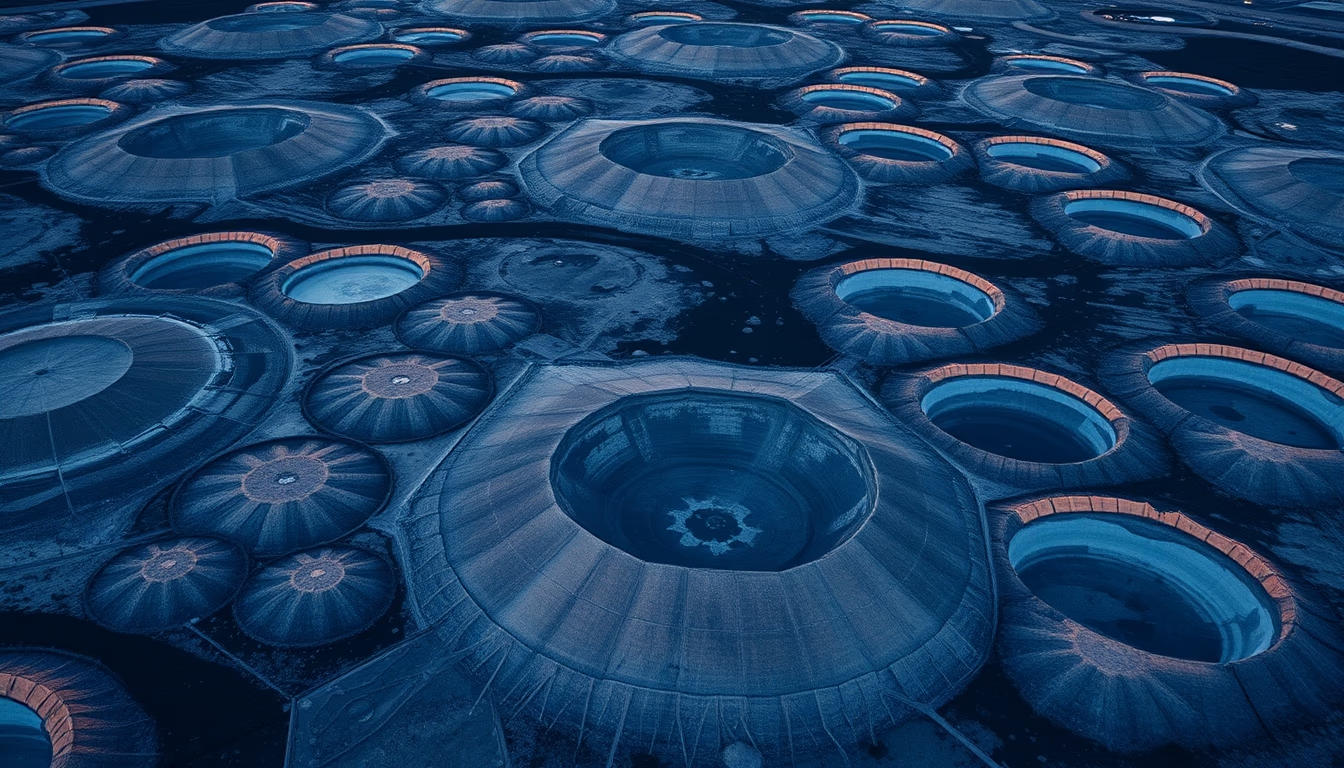
Craters on Mercury's surface reveal billions of years of impacts, with the Caloris Basin being the largest known structure on the planet.
About this subject
Mercury, the smallest planet in the solar system and the closest to the Sun, has a surface densely cratered, telling the story of intense bombardments. Unlike the Moon, which has vast volcanic plains, Mercury's crust is heavily scarred by impacts, notably the Caloris Basin, about 1,550 km in diameter. This basin was formed by an asteroid or comet about 3.9 billion years ago during the Late Heavy Bombardment that affected the entire inner solar system.
Mercury's craters range from small pits to immense impact basins. The MESSENGER spacecraft, which orbited the planet from 2011 to 2015, mapped its topography in detail and revealed unique features such as “hollows”, shallow, bright depressions typical of Mercury. The lack of a significant atmosphere means craters are preserved for long periods without erosion from wind or water, keeping clear records of ancient impacts.
Interestingly, Mercury underwent global shrinkage due to internal cooling, producing thrust faults that cut across craters, indicating tectonic activity after impacts. The region around the north pole has permanently shadowed craters where water ice has been detected, confirmed by MESSENGER. Ongoing studies of Mercury's surface help understand the evolution of rocky planets and the cratering processes in the solar system.
Frequently Asked Questions
What is the largest crater on Mercury?
The largest crater is the Caloris Basin, about 1,550 km in diameter, formed by a massive impact about 3.9 billion years ago.
Why does Mercury have so many craters?
Mercury has a very thin atmosphere, which does not shield its surface from meteoroid impacts. Additionally, the lack of significant erosive processes preserves craters for billions of years.
Is there ice on Mercury?
Yes, permanently shadowed craters at Mercury's poles contain water ice deposits, confirmed by the MESSENGER spacecraft.
Direct URL
https://pub-c7d6a6ea828543ac903a74a341ccb2e1.r2.dev/imagens/mercury-surface-craters-aerial-drone-shot-p8.avifHow to credit
Include a visible link back to UtilizAí. Copy one of the snippets below:
<a href="https://xn--utiliza-eza.com/en/midia/imagens/mercury-surface-craters-aerial-drone-shot-p8">Mercury surface craters</a> by <a href="https://xn--utiliza-eza.com">UtilizAí</a>, licensed under <a href="https://creativecommons.org/licenses/by/4.0/">CC BY 4.0</a>.
[Mercury surface craters](https://xn--utiliza-eza.com/en/midia/imagens/mercury-surface-craters-aerial-drone-shot-p8) by [UtilizAí](https://xn--utiliza-eza.com), CC BY 4.0
License: CC-BY-4.0