Mercedes 300sl gullwing
1344×768 · AVIF · CC BY 4.0
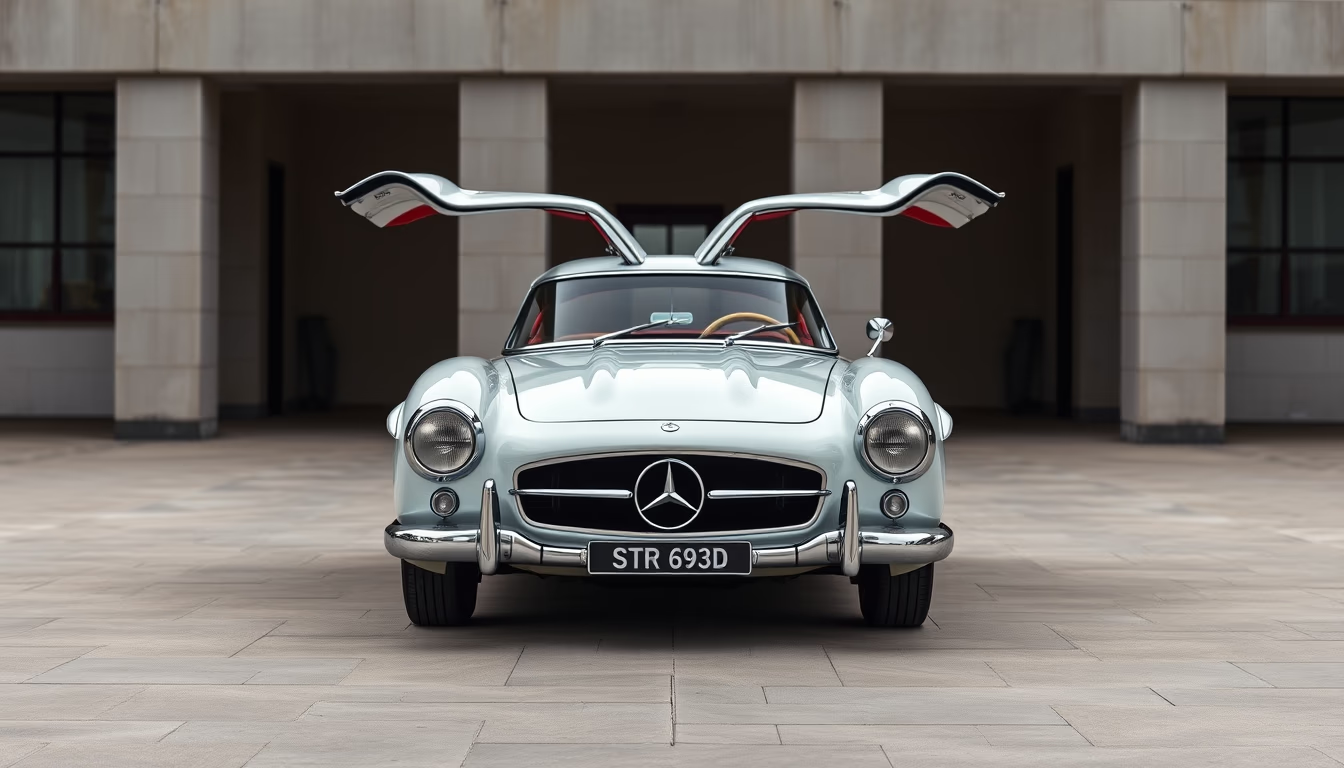
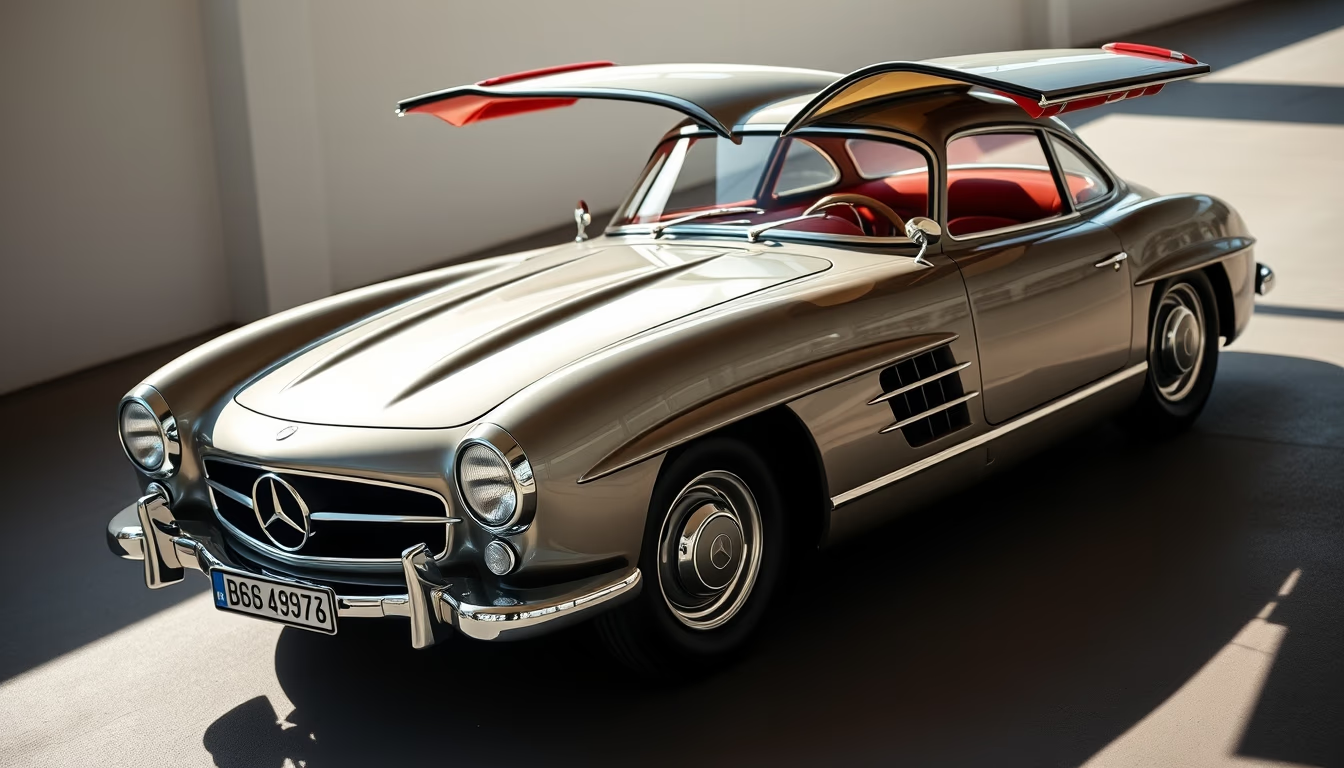
The Mercedes-Benz 300SL Gullwing, launched in 1954, was the fastest production car of its time, revolutionizing automotive design with its gull-wing doors and direct fuel injection.
About this subject
The Mercedes-Benz 300SL (W198) is an automotive icon that defined the 1950s. First unveiled at the 1954 New York Auto Show, it was originally conceived as a race car, but its road-going version quickly became a symbol of status and cutting-edge engineering. The name "300" refers to its 3-liter engine (2996 cc), while "SL" stands for "Sport Leicht" (Sport Light). Its most striking feature is the upward-opening doors hinged at the roof, resembling a seagull's wings, hence the nickname "Gullwing." This design was necessary because the tubular space-frame chassis made the side sills too high for conventional doors.
Mercedes-Benz introduced the first production car application of direct fuel injection on the 300SL, a technology derived from aviation. This allowed the inline-six engine to produce 215 horsepower, pushing the car to a top speed of 260 km/h (162 mph), phenomenal for its time. Total production reached approximately 1,400 units between 1954 and 1957, making it an extremely valuable collector's item. The aerodynamic design, penned by Karl Wilfert, contributed to its exceptional performance.
Beyond performance, the 300SL Gullwing was a pioneer in safety: it featured large-area drum brakes, and from 1955, disc brakes on the front wheels (one of the first production cars to do so). The luxurious interior combined high-quality leather and a full set of instruments. Although a sports car, it offered a trunk and some comfort, but access to the rear seats was nearly impractical. The model influenced generations of supercars and remains one of the most celebrated designs in automotive history.
Interestingly, the 300SL Gullwing also competed successfully in events such as the 24 Hours of Le Mans and the Carrera Panamericana, winning in 1952 with the racing version (W194). This racing heritage cemented its image as a capable car both on track and on the road. Today, well-preserved examples fetch millions at auctions, coveted by collectors worldwide.
Frequently Asked Questions
How many Mercedes 300SL Gullwings were built?
Approximately 1,400 units of the Mercedes 300SL Gullwing were produced between 1954 and 1957.
Why does the Mercedes 300SL have gull-wing doors?
The doors open upward because the tubular space-frame chassis made the side sills too high for conventional doors.
What was the top speed of the Mercedes 300SL Gullwing?
The car reached about 260 km/h (162 mph), making it the fastest production car of its time.
Direct URL
https://pub-c7d6a6ea828543ac903a74a341ccb2e1.r2.dev/imagens/mercedes-300sl-gullwing-architectural-photography-fresh2.avifHow to credit
Include a visible link back to UtilizAí. Copy one of the snippets below:
<a href="https://xn--utiliza-eza.com/en/midia/imagens/mercedes-300sl-gullwing-architectural-photography-fresh2">Mercedes 300sl gullwing</a> by <a href="https://xn--utiliza-eza.com">UtilizAí</a>, licensed under <a href="https://creativecommons.org/licenses/by/4.0/">CC BY 4.0</a>.
[Mercedes 300sl gullwing](https://xn--utiliza-eza.com/en/midia/imagens/mercedes-300sl-gullwing-architectural-photography-fresh2) by [UtilizAí](https://xn--utiliza-eza.com), CC BY 4.0
License: CC-BY-4.0