Meeting room glass
1344×768 · AVIF · CC BY 4.0
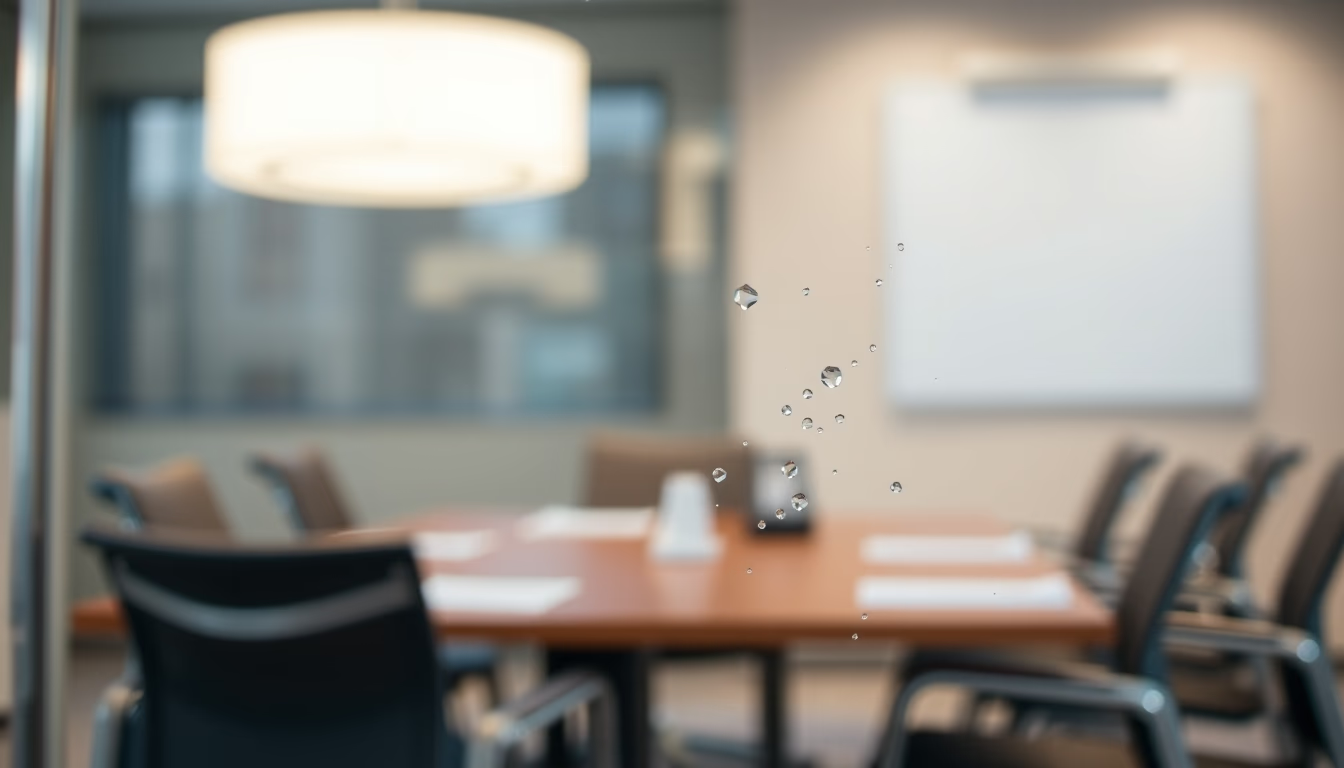
Acoustic and smart glass transforms modern meeting rooms, offering privacy, sound insulation, and energy efficiency in corporate offices.
About this subject
The glass used in meeting rooms is far from ordinary. In modern corporate architecture, it serves critical roles in acoustics, privacy, and aesthetics. Laminated acoustic glass, made with PVB (polyvinyl butyral) layers, reduces sound transmission by up to 40 dB, ensuring confidential conversations stay within the room. Smart glass technologies like electrochromic or PDLC (Polymer Dispersed Liquid Crystal) can switch between transparent and opaque at the flip of a switch, eliminating the need for blinds or curtains.
These glasses also contribute to LEED certification by improving thermal insulation and optimizing natural light. In business hubs like São Paulo and New York, double-glazed units with argon gas have become standard in glass-walled meeting rooms. Panel thickness ranges from 6 mm to 12 mm, and solar control coatings further enhance energy efficiency. The demand for flexible and sustainable workspaces has pushed the global smart glass market to grow at 15% annually since the 2010s.
A fascinating detail visible even in macro close-ups: in PDLC glass, tiny liquid crystal droplets scatter light when the material turns opaque. This micro-engineering is what enables instant privacy without compromising natural light. Invented by Kent Displays in the 1980s, PDLC only became affordable for offices decades later. Today, meeting room glass is a blend of science and design, where even a millimeter of material can mean the difference between a noisy open plan and a focused, private discussion.
Frequently Asked Questions
How does acoustic glass help with meeting room privacy?
Laminated acoustic glass uses PVB layers to absorb and dissipate sound waves, reducing sound transmission by up to 40 dB. This prevents conversations from being heard in open office areas.
What is smart glass and how does it work?
Smart glass such as PDLC contains liquid crystal droplets in a film. When an electric current is applied, the crystals align and the glass turns transparent. Without current, they scatter randomly, making the glass opaque.
Does meeting room glass improve energy efficiency?
Yes. Double-glazed units with argon gas and solar control coatings reduce heat transfer, lowering air conditioning usage. Smart glass can also adjust its transparency to optimize natural light.
Direct URL
https://pub-c7d6a6ea828543ac903a74a341ccb2e1.r2.dev/imagens/meeting-room-glass-macro-closeup-p0.avifHow to credit
Include a visible link back to UtilizAí. Copy one of the snippets below:
<a href="https://xn--utiliza-eza.com/en/midia/imagens/meeting-room-glass-macro-closeup-p0">Meeting room glass</a> by <a href="https://xn--utiliza-eza.com">UtilizAí</a>, licensed under <a href="https://creativecommons.org/licenses/by/4.0/">CC BY 4.0</a>.
[Meeting room glass](https://xn--utiliza-eza.com/en/midia/imagens/meeting-room-glass-macro-closeup-p0) by [UtilizAí](https://xn--utiliza-eza.com), CC BY 4.0
License: CC-BY-4.0