Medical syringe vials
1344×768 · AVIF · CC BY 4.0

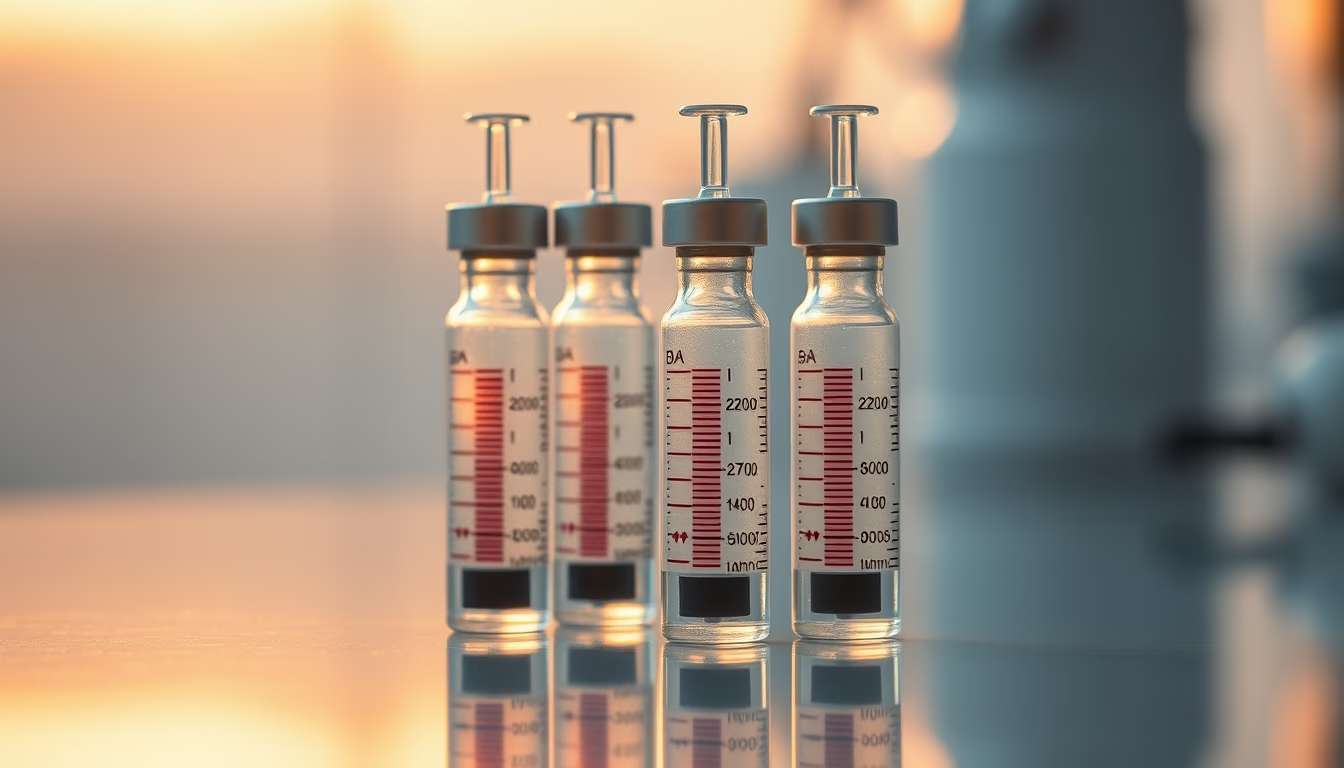
Medical syringe vials: essential containers for storing and administering injectable medications, critically important in global healthcare.
About this subject
Medical vials and syringes are fundamental components of healthcare supply chains. A vial is a sealed container, typically made of glass or plastic, that holds liquid or lyophilized medications. The syringe is the device used to aspirate and inject the contents. Together, they form the most common system for parenteral drug administration, ranging from vaccines and insulin to anesthetics and chemotherapy drugs.
Historically, syringes and vials evolved from rudimentary hollow needles in the 19th century to modern sterile disposable systems. Charles Pravaz invented the metal hypodermic syringe in 1851, and from the 1950s, mass production of disposable plastic syringes revolutionized medicine by reducing cross-infections. Vials also advanced with rubber stoppers and aluminum seals that allow safe multiple withdrawals.
Current trends include prefilled syringes, which reduce dosing errors and improve logistics in emergencies. During the COVID-19 pandemic, demand for glass vials and syringes reached historic highs, exposing bottlenecks in global medical glass production. Strict disposal regulations (e.g., sharps collection) are essential to prevent accidents and environmental contamination.
In aesthetics and culture, syringes and vials appear in fashion editorials as symbols of purity, science, or dystopia. The image accompanying this text, for example, uses dramatic lighting and careful composition to transform clinical objects into impactful visual elements, reflecting the growing intersection between medicine and contemporary art.
Frequently Asked Questions
What is the difference between a vial and an ampoule?
A vial is a glass or plastic container with a rubber stopper that allows multiple withdrawals using a needle. An ampoule is a glass container sealed by melting, opened by snapping, and typically holds a single dose.
How should used syringes and vials be disposed?
They are considered sharps waste and must be discarded in rigid, puncture-proof containers. Regulations vary by country; in many places, pharmacies or health centers accept them.
Why are some vials amber-colored?
Amber glass protects light-sensitive medications from UV radiation, preventing degradation. It is commonly used for vitamins, antibiotics, and certain chemotherapy drugs.
Direct URL
https://pub-c7d6a6ea828543ac903a74a341ccb2e1.r2.dev/imagens/medical-syringe-vials-high-fashion-editorial-p1.avifHow to credit
Include a visible link back to UtilizAí. Copy one of the snippets below:
<a href="https://xn--utiliza-eza.com/en/midia/imagens/medical-syringe-vials-high-fashion-editorial-p1">Medical syringe vials</a> by <a href="https://xn--utiliza-eza.com">UtilizAí</a>, licensed under <a href="https://creativecommons.org/licenses/by/4.0/">CC BY 4.0</a>.
[Medical syringe vials](https://xn--utiliza-eza.com/en/midia/imagens/medical-syringe-vials-high-fashion-editorial-p1) by [UtilizAí](https://xn--utiliza-eza.com), CC BY 4.0
License: CC-BY-4.0