Mclaren p1 hybrid
1344×768 · AVIF · CC BY 4.0
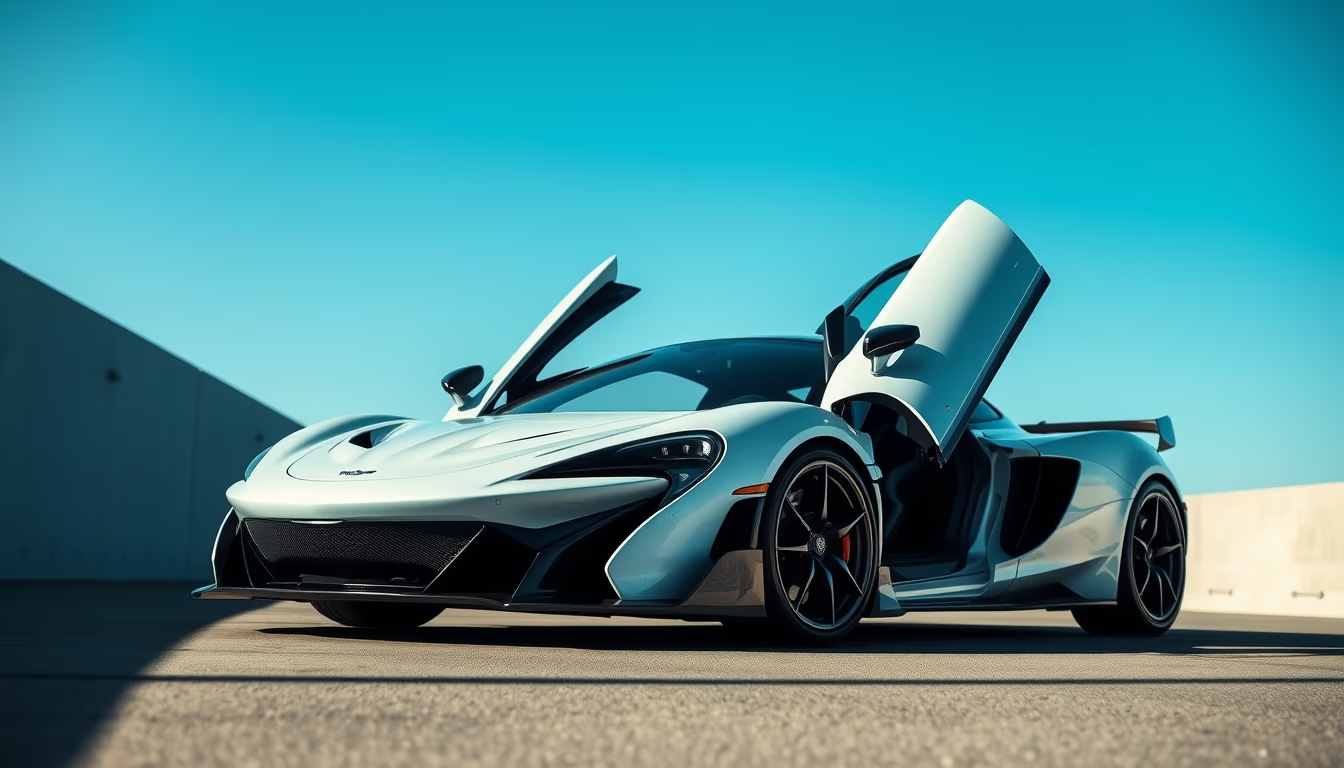
The McLaren P1 is a plug-in hybrid supercar that pairs a twin-turbo V8 with electric propulsion, delivering 916 hp and Formula 1-level performance.
About this subject
The McLaren P1 was launched in 2013 as the spiritual successor to the legendary McLaren F1, representing the pinnacle of hybrid high-performance engineering. Its hybrid system, called IPAS (Instant Power Assist System), combines a twin-turbocharged 3.8-liter V8 gasoline engine producing 737 hp with a 179 hp electric motor, yielding a total of 916 hp. Peak torque is 900 Nm, enabling 0-60 mph in 2.8 seconds and a top speed electronically limited to 217 mph (350 km/h).
Production was capped at 375 units, all sold before manufacturing began, making the P1 an extremely rare collector's item. The original price was around €1.15 million, but today used examples can exceed $2 million at auction. The body is built around a carbon fiber monocoque, weighing just 1,395 kg (dry), resulting in an exceptional power-to-weight ratio. The kinetic energy recovery system (KERS) is directly derived from McLaren's Formula 1 technology, charging a 4.7 kWh battery that allows up to 19 miles (31 km) of pure electric driving.
Beyond raw performance, the P1 pioneered active aerodynamics: an adjustable rear wing and front flaps alter downforce based on speed and driving mode. In Race mode, the car lowers by 50 mm and the suspension stiffens, maximizing track grip. McLaren also developed an adaptive traction control system that allows the driver to explore limits safely. The design by Frank Stephenson features dihedral doors and a teardrop silhouette optimized to minimize drag.
Interestingly, the P1 was one of the first supercars to aggressively adopt hybrid propulsion, paving the way for rivals like the Ferrari LaFerrari and Porsche 918 Spyder. The model also served as the basis for the McLaren Speedtail, which later broke speed records. Although the P1 did not directly compete in motorsports, its powertrain technology was adapted for the McLaren GT3 and for Formula E's hypercar project. To this day, the P1 is regarded as a milestone in automotive history, proving that electrification can enhance, not compromise, the supercar driving experience.
Frequently Asked Questions
What is the electric range of the McLaren P1?
The McLaren P1 can travel up to 31 kilometers (about 19 miles) in pure electric mode, thanks to a 4.7 kWh lithium-ion battery. This range is enough for short urban trips with zero emissions.
How many McLaren P1 units were produced?
Exactly 375 units of the McLaren P1 were produced, all sold before production began. This rarity contributes to its high resale value and collector status.
Does the McLaren P1 use Formula 1 technology?
Yes, the P1 features the KERS (Kinetic Energy Recovery System) derived directly from McLaren's Formula 1 program, which recovers energy during braking to recharge the battery and provide instant power boosts.
Direct URL
https://pub-c7d6a6ea828543ac903a74a341ccb2e1.r2.dev/imagens/mclaren-p1-hybrid-minimalist-composition-fresh13.avifHow to credit
Include a visible link back to UtilizAí. Copy one of the snippets below:
<a href="https://xn--utiliza-eza.com/en/midia/imagens/mclaren-p1-hybrid-minimalist-composition-fresh13">Mclaren p1 hybrid</a> by <a href="https://xn--utiliza-eza.com">UtilizAí</a>, licensed under <a href="https://creativecommons.org/licenses/by/4.0/">CC BY 4.0</a>.
[Mclaren p1 hybrid](https://xn--utiliza-eza.com/en/midia/imagens/mclaren-p1-hybrid-minimalist-composition-fresh13) by [UtilizAí](https://xn--utiliza-eza.com), CC BY 4.0
License: CC-BY-4.0