Maya temple chichen
1344×768 · AVIF · CC BY 4.0
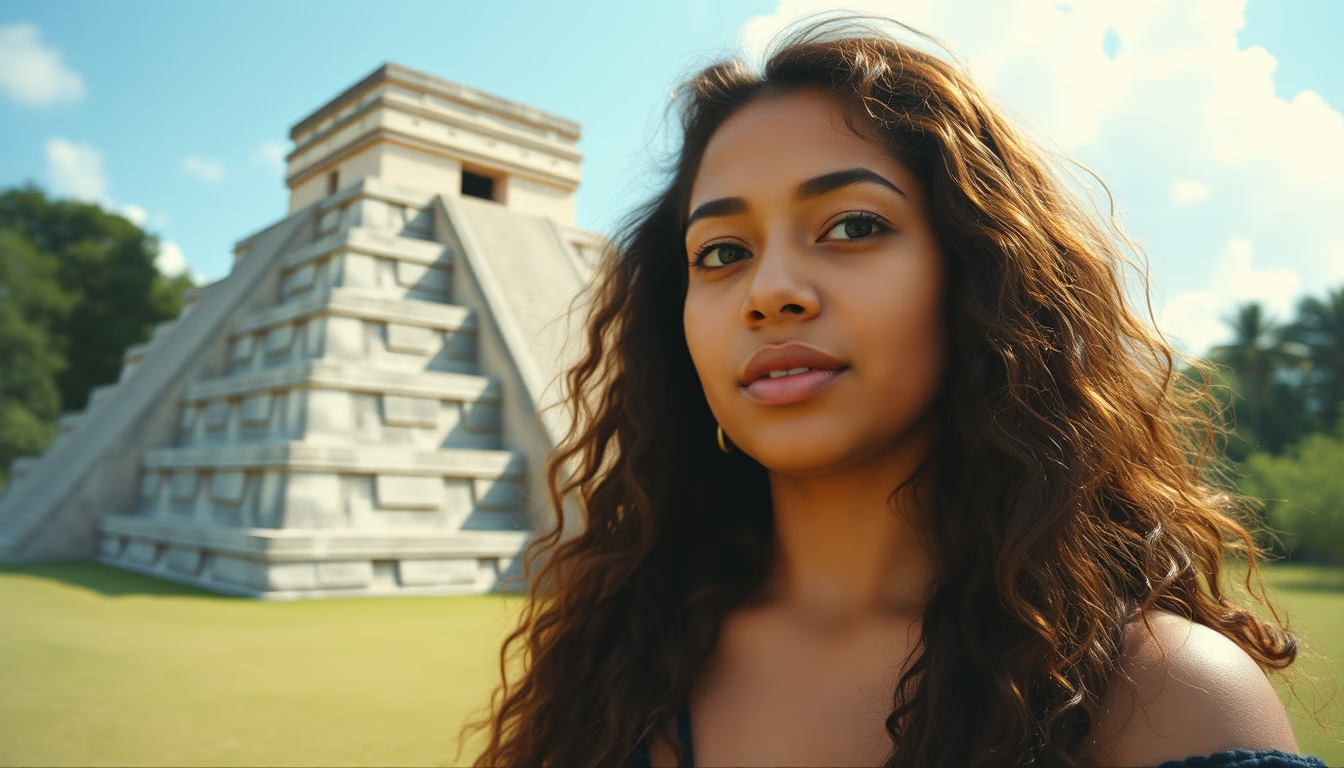
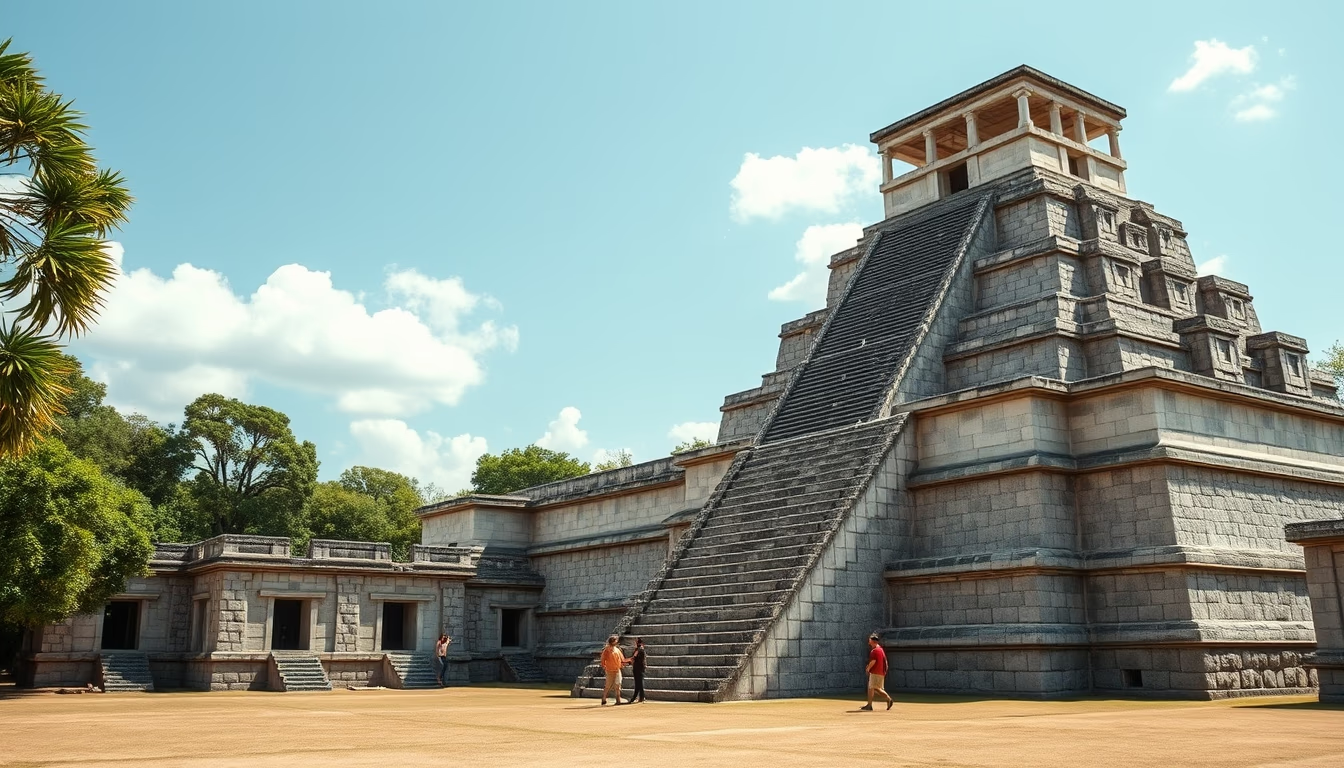
The Temple of Kukulcán at Chichén Itzá, also known as El Castillo, is an iconic Maya pyramid that showcases advanced astronomical knowledge.
About this subject
Chichén Itzá, located on the Yucatán Peninsula in Mexico, was one of the largest Maya cities and a religious, political, and economic center. The main temple, dedicated to Kukulcán (the feathered serpent), is a four-sided pyramid with staircases on each face. Each staircase has 91 steps, totaling 364, plus the top platform, making 365 steps, corresponding to the days of the solar year.
During the spring and autumn equinoxes, sunlight casts shadows that form the silhouette of a serpent descending the north staircase, a phenomenon that attracts visitors from around the world. This effect is a testament to the Maya's mathematical and astronomical precision, integrating architecture and cosmology.
The pyramid was built between the 9th and 12th centuries AD, with successive layers superimposed. Excavations have revealed earlier structures within the current pyramid, including a jaguar throne with jade inlays and a Chac Mool statue. Additionally, the temple is aligned with other buildings on the site, such as the Observatory (Caracol), indicating urban planning based on celestial events.
In 2007, Chichén Itzá was elected one of the New Seven Wonders of the Modern World, cementing its global importance. The site has been a UNESCO World Heritage site since 1988 and receives millions of tourists annually, who seek to understand the grandeur of the Maya civilization.
Frequently Asked Questions
What is the significance of the Temple of Kukulcán?
The temple was dedicated to Kukulcán, the feathered serpent, a central deity in Maya mythology. It represented the union of heaven and earth and was associated with rain, wind, and knowledge.
How did the Maya build the pyramid without modern technology?
They used advanced engineering techniques such as inclined planes, pulleys, and collective labor. Local limestone was quarried with obsidian and stone tools, and transportation involved hundreds of workers.
Does the serpent of light phenomenon only occur on equinoxes?
The effect is most visible during the spring and fall equinoxes in March and September, but it can also be observed on nearby days, depending on weather conditions and the sun's angle.
Direct URL
https://pub-c7d6a6ea828543ac903a74a341ccb2e1.r2.dev/imagens/maya-temple-chichen-lo-fi-disposable-camera-p0.avifHow to credit
Include a visible link back to UtilizAí. Copy one of the snippets below:
<a href="https://xn--utiliza-eza.com/en/midia/imagens/maya-temple-chichen-lo-fi-disposable-camera-p0">Maya temple chichen</a> by <a href="https://xn--utiliza-eza.com">UtilizAí</a>, licensed under <a href="https://creativecommons.org/licenses/by/4.0/">CC BY 4.0</a>.
[Maya temple chichen](https://xn--utiliza-eza.com/en/midia/imagens/maya-temple-chichen-lo-fi-disposable-camera-p0) by [UtilizAí](https://xn--utiliza-eza.com), CC BY 4.0
License: CC-BY-4.0