Maya temple chichen
1344×768 · AVIF · CC BY 4.0
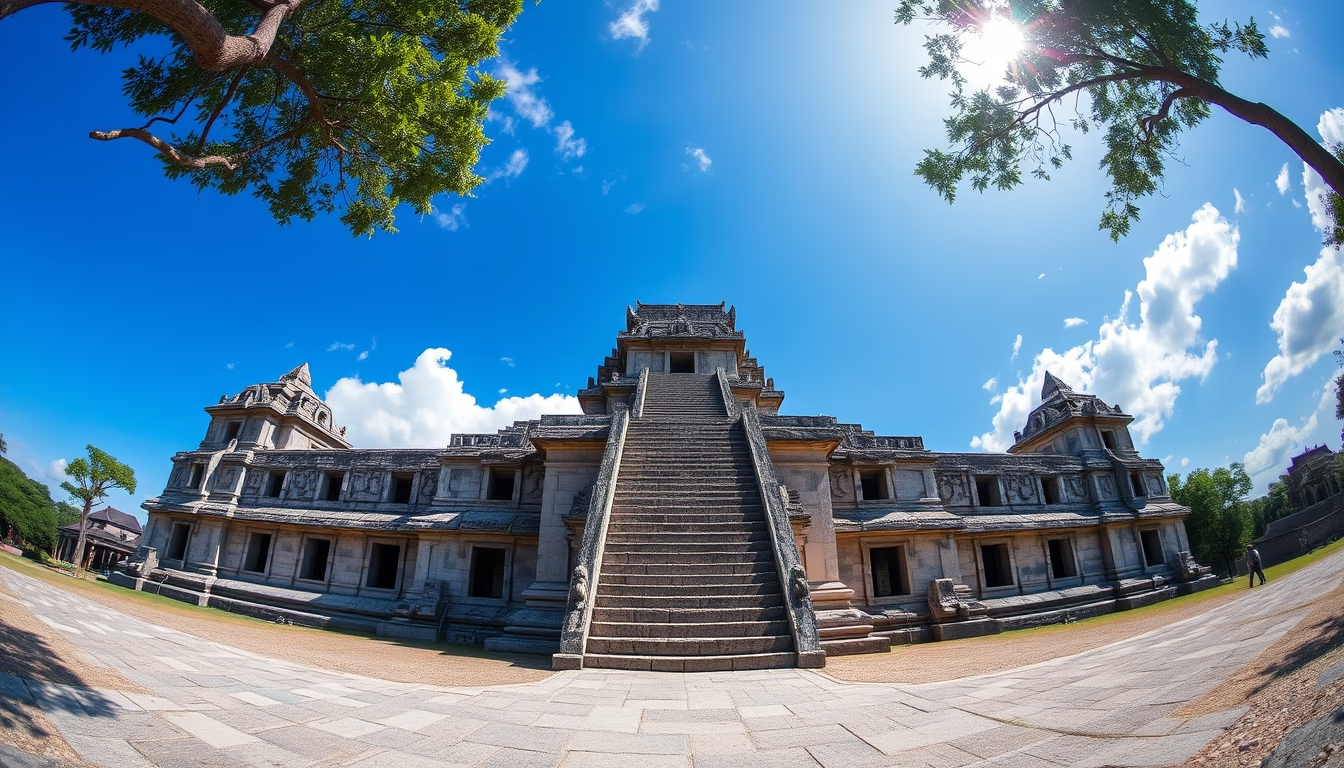
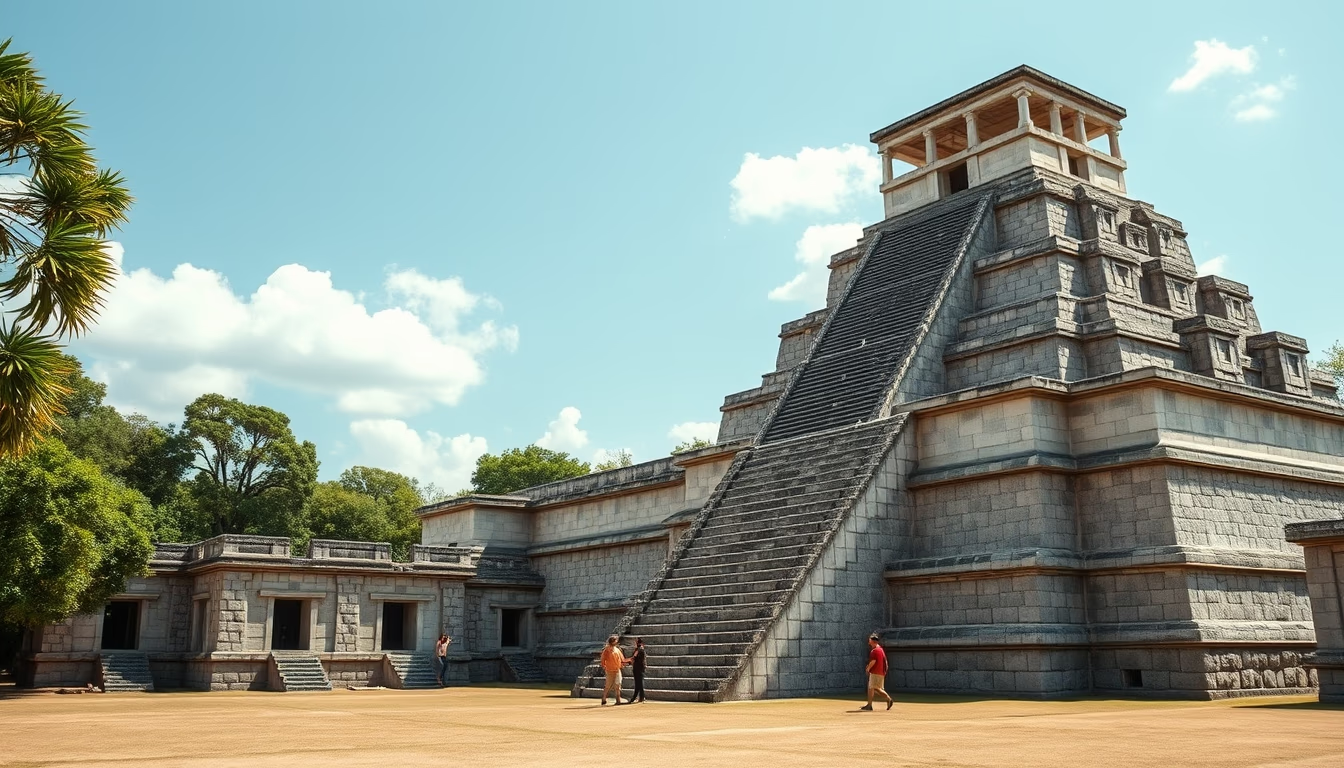
The Maya temple of Chichén Itzá in Mexico is one of the most iconic archaeological sites of the Maya civilization, famous for its Pyramid of Kukulcán.
About this subject
Chichén Itzá, located on the Yucatán Peninsula in Mexico, was one of the largest Maya cities, flourishing between the 7th and 10th centuries AD. The site is dominated by the Pyramid of Kukulcán (El Castillo), a 30-meter-high structure that served as a temple dedicated to the feathered serpent god. During the spring and autumn equinoxes, sunlight creates a serpent-like shadow descending the staircase, demonstrating the Maya's advanced astronomical knowledge. The city also houses the Temple of the Warriors, the Observatory (El Caracol), and the Sacred Cenote, a natural sinkhole used for rituals and sacrifices.
Chichén Itzá's architecture blends Maya and Toltec styles, resulting from cultural and commercial influences. The ball court, found in many Maya cities, is particularly impressive here, with carved murals depicting players and sacrifice scenes. The site was declared a UNESCO World Heritage Site in 1988 and, in 2007, was voted one of the New Seven Wonders of the World. Despite natural degradation from tourism, conservation efforts continue to preserve the limestone structures.
The Maya calendar is another legacy of Chichén Itzá. The Pyramid of Kukulcán has 365 steps representing the solar year, and 52 panels on its sides corresponding to the 52-year Maya calendar cycle. This mathematical and astronomical precision reflects the cultural sophistication of the Maya, who also developed a hieroglyphic writing system and advanced agricultural knowledge. Chichén Itzá remains a center for archaeological research and a symbol of Mesoamerican heritage.
Frequently Asked Questions
Why does the Pyramid of Kukulcán have 365 steps?
The 365 steps represent the days of the solar year, showcasing Maya astronomical knowledge. Each step symbolizes a day, and the overall structure reflects the solar calendar.
What is the significance of the Sacred Cenote at Chichén Itzá?
The Sacred Cenote was a natural sinkhole used for religious rituals and human sacrifices, especially during droughts. Artifacts of gold, jade, and human bones have been found at its bottom.
Was Chichén Itzá built only by the Maya?
Yes, but the city shows Toltec influence after invasions in the 10th century. Elements like serpent-shaped columns and the Temple of the Warriors reflect this cultural fusion.
Direct URL
https://pub-c7d6a6ea828543ac903a74a341ccb2e1.r2.dev/imagens/maya-temple-chichen-fish-eye-wide-angle-p4.avifHow to credit
Include a visible link back to UtilizAí. Copy one of the snippets below:
<a href="https://xn--utiliza-eza.com/en/midia/imagens/maya-temple-chichen-fish-eye-wide-angle-p4">Maya temple chichen</a> by <a href="https://xn--utiliza-eza.com">UtilizAí</a>, licensed under <a href="https://creativecommons.org/licenses/by/4.0/">CC BY 4.0</a>.
[Maya temple chichen](https://xn--utiliza-eza.com/en/midia/imagens/maya-temple-chichen-fish-eye-wide-angle-p4) by [UtilizAí](https://xn--utiliza-eza.com), CC BY 4.0
License: CC-BY-4.0