Maya temple chichen
1344×768 · AVIF · CC BY 4.0
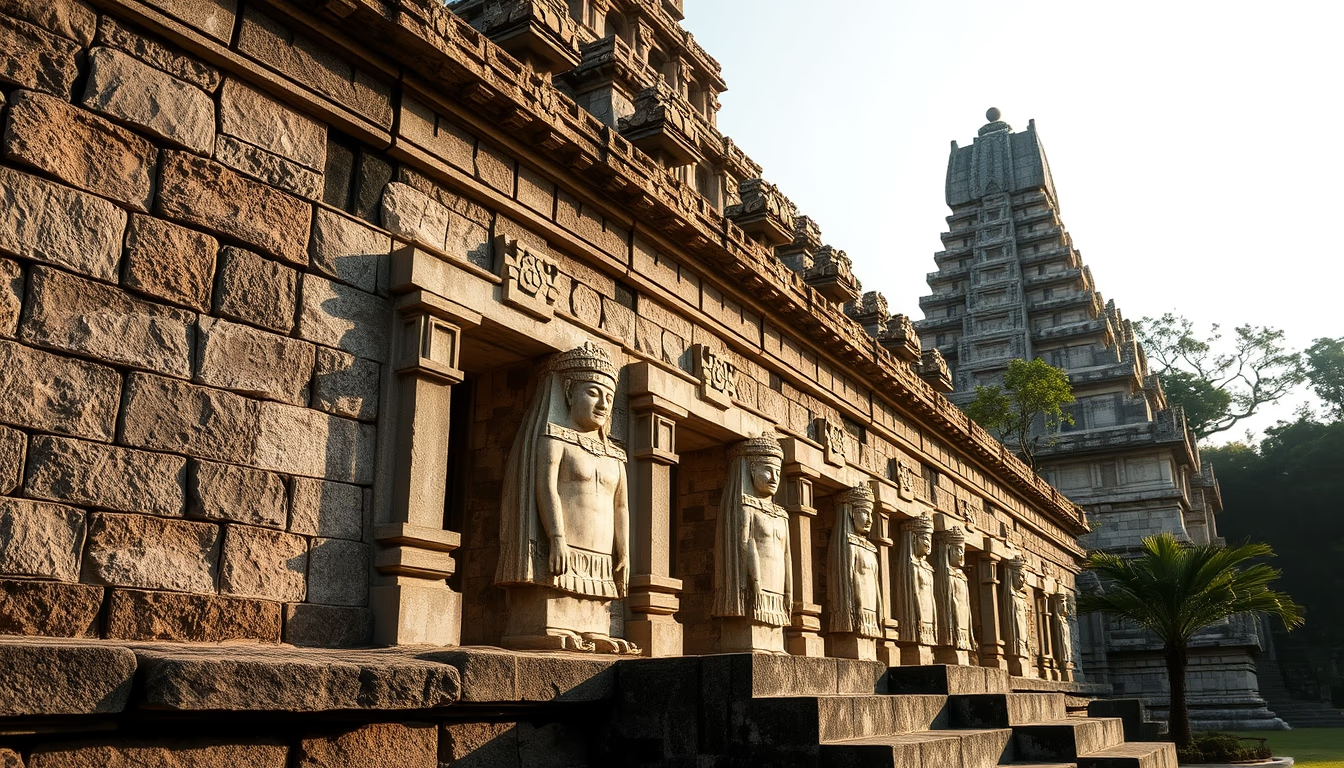
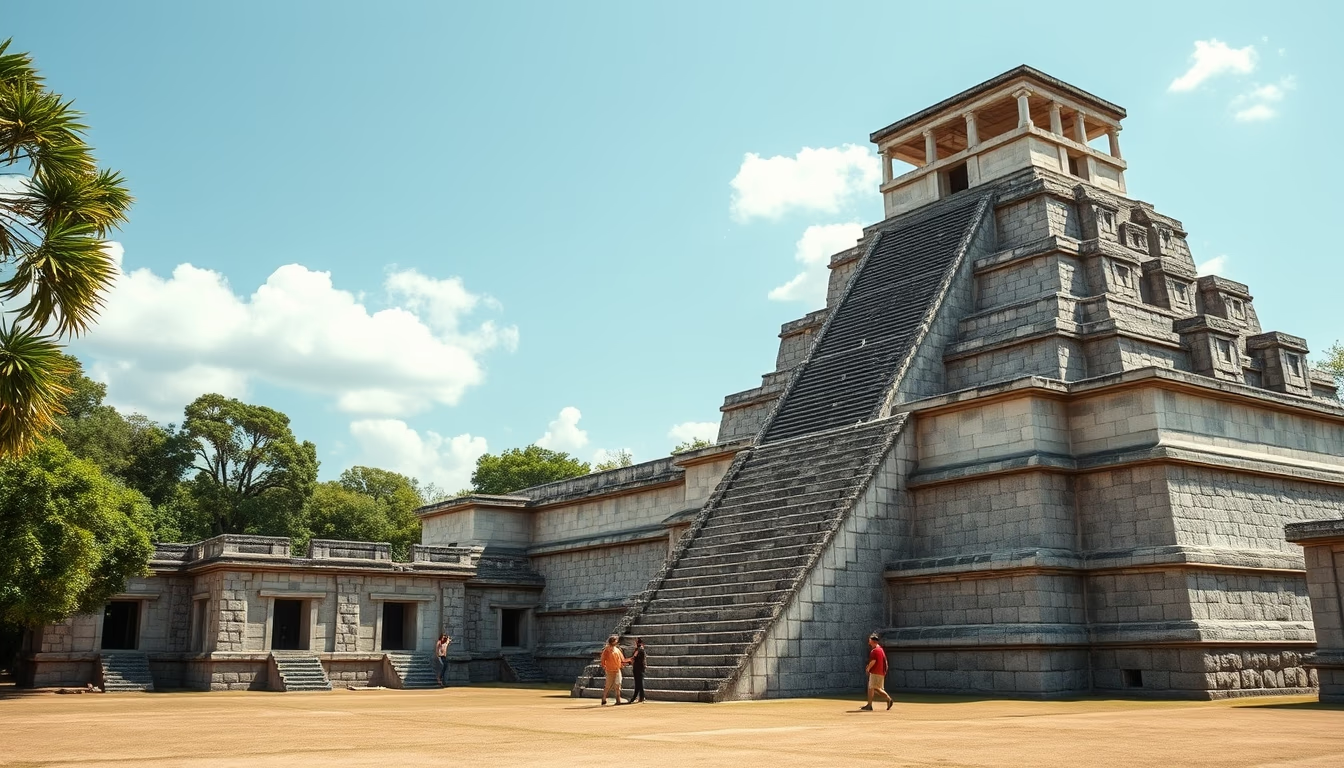
The Temple of Chichen Itza in Mexico is an icon of Maya civilization, blending astronomy, architecture, and spirituality.
About this subject
Chichen Itza is an archaeological site on Mexico's Yucatán Peninsula. It was a major ceremonial and political center of the Maya civilization between the 9th and 12th centuries AD. The most famous structure is El Castillo, also known as the Temple of Kukulkan, a 30-meter-high pyramid dedicated to the feathered serpent god. During the equinoxes, sunlight creates a shadow that resembles a serpent slithering down the staircase, demonstrating the Maya's astronomical knowledge.
The site also includes the Temple of the Warriors, the Observatory (El Caracol), and the largest ball court (tlachtli) in Mesoamerica, larger than Roman arenas. Toltec influence appears in serpent-shaped columns and reliefs of eagles devouring hearts. Chichen Itza was declared a UNESCO World Heritage Site in 1988 and one of the New Seven Wonders of the World in 2007.
The pyramid is believed to have been built over a subterranean cenote, explaining its location. Recent studies revealed that El Castillo contains two smaller inner pyramids, indicating it was expanded over time. The site's acoustics are remarkable: a clap at the base of the stairs produces an echo that mimics the song of the quetzal, a sacred Maya bird.
Visiting Chichen Itza offers insight into Maya social, religious, and scientific complexity. Preservation faces challenges such as mass tourism and erosion, but conservation efforts aim to balance public access with heritage protection.
Frequently Asked Questions
What is the significance of the Temple of Kukulkan for the Maya?
The Temple of Kukulkan was dedicated to the feathered serpent god, associated with wind, rain, and fertility. The pyramid served as an astronomical calendar, with 91 steps per side plus the platform totaling 365, representing the days of the year.
How did the Maya build such precise pyramids without modern technology?
The Maya used stellar alignment techniques, ropes, and stakes to mark positions. Stones were cut with obsidian and basalt tools, and transported using wooden rollers and human labor. Precision comes from astronomical observations accumulated over centuries.
Is Chichen Itza open to visitors? Do I need tickets?
Yes, the site is open daily to the public. Admission is paid, and it is recommended to buy tickets online in advance to avoid queues. Restrictions apply to climbing the pyramids for preservation purposes.
Direct URL
https://pub-c7d6a6ea828543ac903a74a341ccb2e1.r2.dev/imagens/maya-temple-chichen-documentary-photography-p6.avifHow to credit
Include a visible link back to UtilizAí. Copy one of the snippets below:
<a href="https://xn--utiliza-eza.com/en/midia/imagens/maya-temple-chichen-documentary-photography-p6">Maya temple chichen</a> by <a href="https://xn--utiliza-eza.com">UtilizAí</a>, licensed under <a href="https://creativecommons.org/licenses/by/4.0/">CC BY 4.0</a>.
[Maya temple chichen](https://xn--utiliza-eza.com/en/midia/imagens/maya-temple-chichen-documentary-photography-p6) by [UtilizAí](https://xn--utiliza-eza.com), CC BY 4.0
License: CC-BY-4.0