Maya temple chichen
1344×768 · AVIF · CC BY 4.0
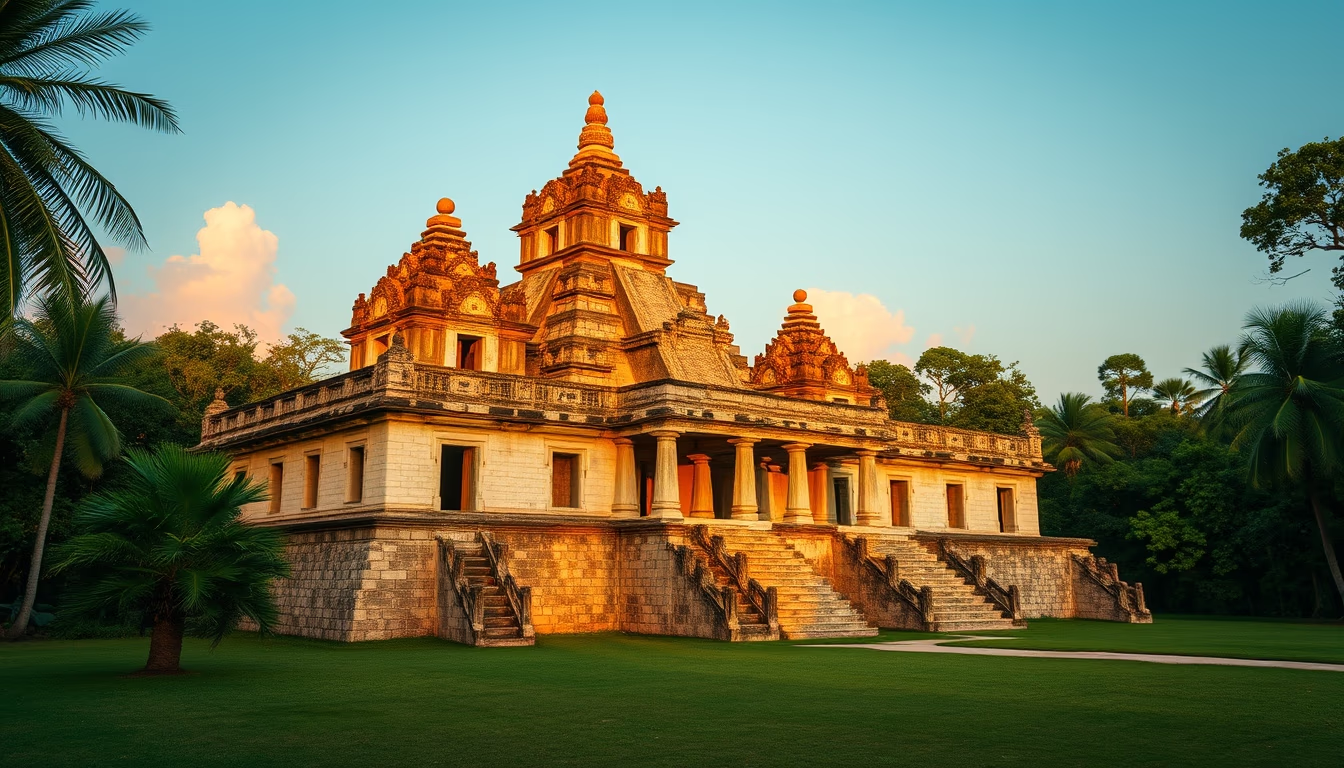
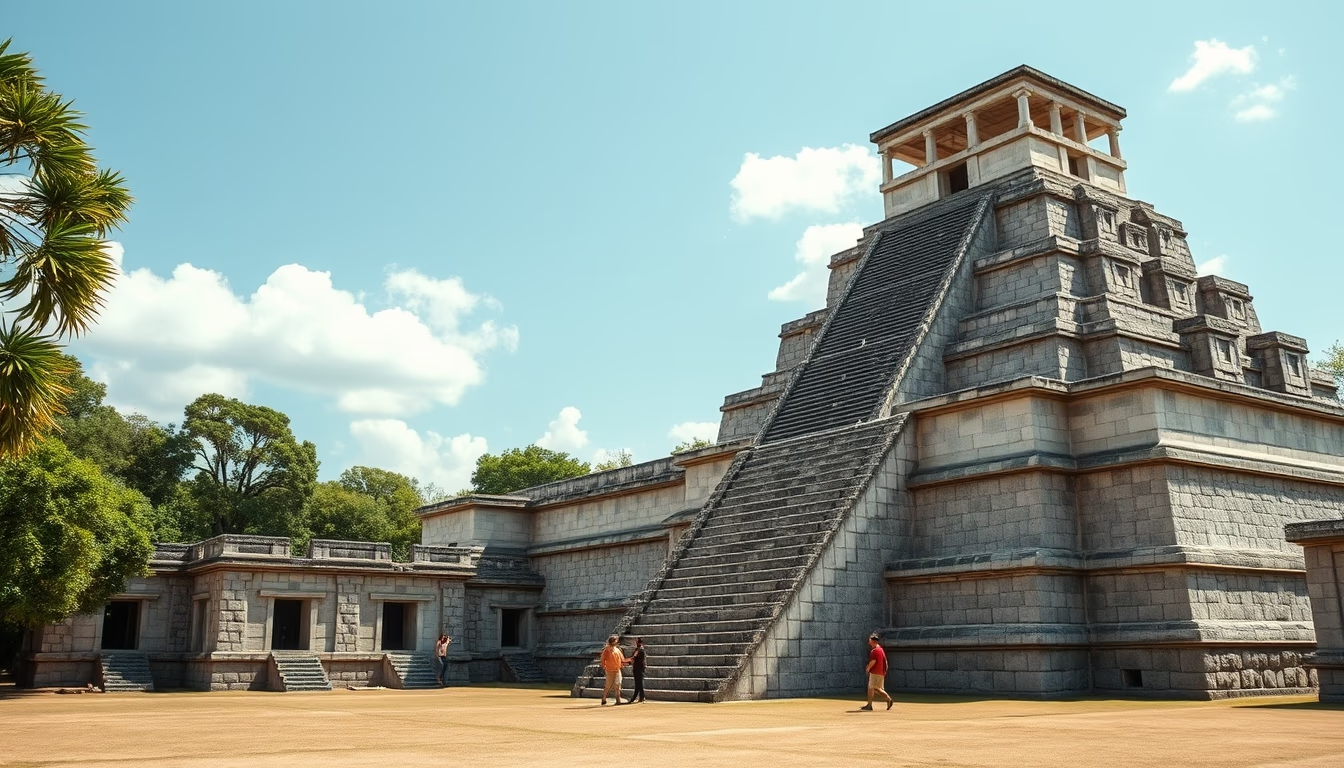
Chichen Itza in Mexico houses the Pyramid of Kukulcán, a Maya temple built between the 9th and 12th centuries that showcases advanced astronomical knowledge.
About this subject
Chichen Itza is one of the most emblematic archaeological sites of the Maya civilization, located on the Yucatán Peninsula in Mexico. Declared a UNESCO World Heritage site in 1988, the complex includes the Pyramid of Kukulcán, also known as El Castillo. This 30-meter-high structure was built between the 9th and 12th centuries, when Chichen Itza was a major political and economic center in the region. The pyramid has 91 steps on each of its four sides, totaling 365, matching the days of the solar year according to the Maya calendar. During the spring and autumn equinoxes, the shadow cast by the pyramid's edge forms a descending serpent, representing the feathered serpent deity Kukulcán. This phenomenon attracts thousands of visitors annually and highlights the Maya's mastery of mathematics and astronomy.
Beyond the main temple, the site features other notable structures, such as the El Caracol observatory, used to track the movements of Venus and other celestial bodies, and the Great Ball Court, the largest Mesoamerican ballgame court ever discovered. Chichen Itza also exhibits influences from other Mesoamerican cultures, such as the Toltecs, visible in architectural elements like serpent columns and skull platforms. The city flourished until the 13th century, when it declined, but it remained a pilgrimage and trade site until the Spanish arrival.
Conservation of Chichen Itza faces challenges, including the impact of mass tourism and the need to preserve fragile structures. Protection measures, such as visitor limits and periodic restorations, are implemented to ensure this Maya legacy continues to be studied and appreciated by future generations. The site is a symbol of pre-Columbian ingenuity and a testament to the complexity of Maya society, which developed a precise calendar and a system of hieroglyphic writing.
Frequently Asked Questions
What is the significance of the Pyramid of Kukulcán at Chichen Itza?
The Pyramid of Kukulcán, or El Castillo, was a temple dedicated to the feathered serpent god Kukulcán. Its architecture reflects the Maya calendar: each side has 91 steps, totaling 365 with the top platform, representing the days of the year. During equinoxes, shadows form a serpent descending the staircase.
Where is Chichen Itza located and why is it important?
Chichen Itza is on the Yucatán Peninsula, Mexico. It was a major Maya political, economic, and religious center from the 9th to 13th centuries. It is a UNESCO World Heritage site and one of the New Seven Wonders of the World, featuring structures like the El Caracol observatory and the Great Ball Court.
How did the Maya use astronomy at Chichen Itza?
The Maya built the El Caracol observatory to track Venus and other celestial bodies, and aligned the Pyramid of Kukulcán to create the serpent effect during equinoxes. This demonstrates their deep knowledge of celestial cycles, used for agriculture and rituals.
Direct URL
https://pub-c7d6a6ea828543ac903a74a341ccb2e1.r2.dev/imagens/maya-temple-chichen-cinematic-wide-shot-p7.avifHow to credit
Include a visible link back to UtilizAí. Copy one of the snippets below:
<a href="https://xn--utiliza-eza.com/en/midia/imagens/maya-temple-chichen-cinematic-wide-shot-p7">Maya temple chichen</a> by <a href="https://xn--utiliza-eza.com">UtilizAí</a>, licensed under <a href="https://creativecommons.org/licenses/by/4.0/">CC BY 4.0</a>.
[Maya temple chichen](https://xn--utiliza-eza.com/en/midia/imagens/maya-temple-chichen-cinematic-wide-shot-p7) by [UtilizAí](https://xn--utiliza-eza.com), CC BY 4.0
License: CC-BY-4.0