Mars surface red dust
1344×768 · AVIF · CC BY 4.0
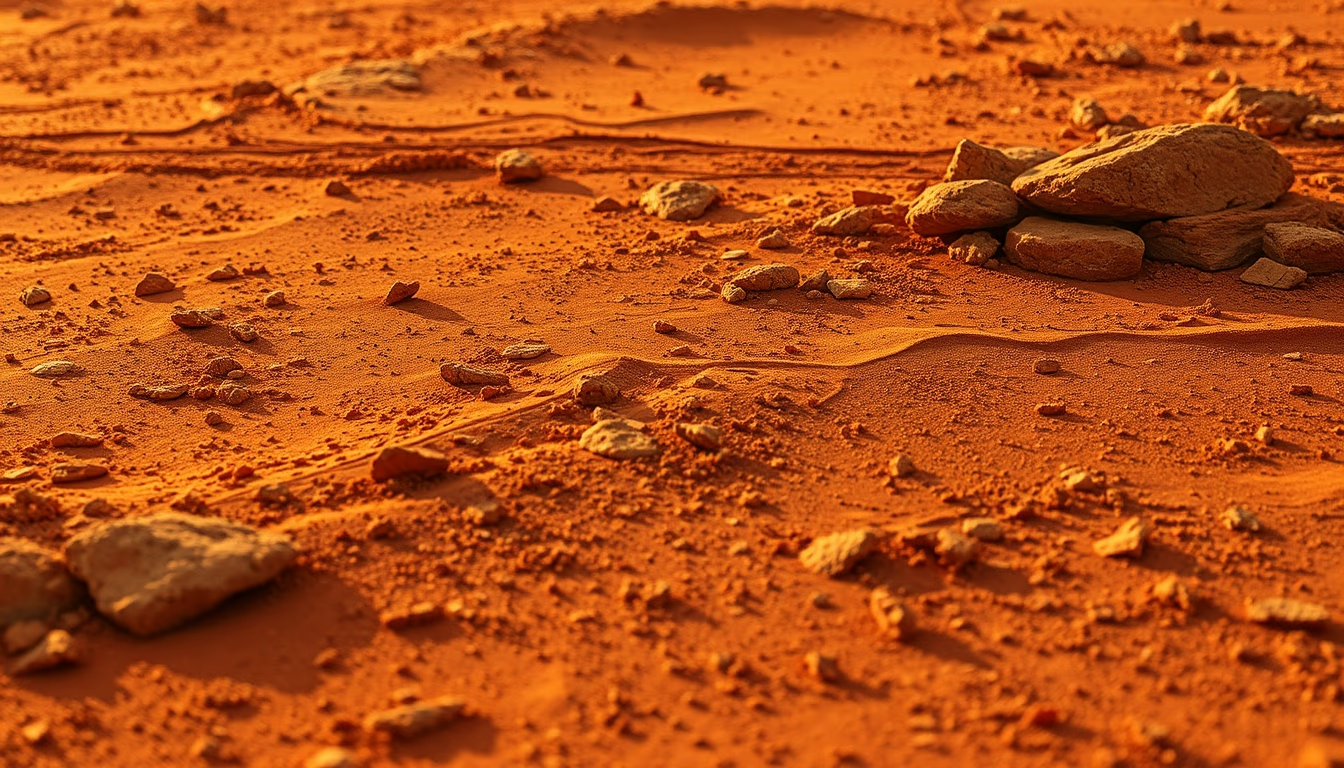
The Martian surface is covered by dust rich in iron oxide, responsible for the reddish hue that characterizes the planet.
About this subject
The red dust covering Mars is primarily composed of iron(III) oxide (Fe₂O₃), the same mineral that gives rust its color on Earth. This composition results from billions of years of oxidation of iron-bearing minerals on the Martian surface, without abundant liquid water to remove these compounds. The fine dust, with micrometer-sized particles, is constantly remobilized by seasonal winds and global dust storms that can envelop the entire planet.
The reddish hue is visible even to the naked eye from Earth, being one of the first features noted by ancient astronomers. The dust is also responsible for the orange or pinkish skies during the Martian day, due to sunlight scattering by these particles. During dust storms, the atmosphere can become so laden that it partially blocks sunlight, affecting the solar panels of robotic explorers like the Opportunity and Perseverance rovers.
From an exploration standpoint, dust poses technical challenges as it deposits on equipment, reduces solar panel efficiency, and can damage mechanical components. On the other hand, its study provides clues about Mars' geological and climatic history. Samples collected by missions such as Mars Pathfinder and Mars Science Laboratory have revealed the presence of minerals like hematite, which forms in the presence of water, indicating that the planet was once wetter in the past.
Interestingly, Martian dust is magnetic, due to the content of magnetite, another iron oxide. This was detected by rover instruments, which used magnets to collect particles. Understanding the composition and behavior of the dust is essential for future crewed missions, as inhaling these fine particles may pose health risks to astronauts, besides interfering with electronic and life-support systems.
Frequently Asked Questions
Why is the soil on Mars red?
The Martian soil is red due to the presence of iron oxide (rust) in the dust covering its surface. This mineral formed over billions of years by oxidation of iron-rich rocks, without large-scale liquid water to remove the deposits.
Is Martian dust dangerous for robotic explorers?
Yes, fine dust can accumulate on solar panels, reducing their efficiency, and can also cause wear on mechanical parts. Global dust storms have ended missions such as the Opportunity rover, when sunlight was blocked for extended periods.
Does Martian dust contain water?
Although the dust itself is dry, studies indicate it may contain small amounts of perchlorates, salts that absorb moisture from the atmosphere. Under specific conditions, dust can contribute to frost or fog formation, but no stable liquid water exists on the surface today.
Direct URL
https://pub-c7d6a6ea828543ac903a74a341ccb2e1.r2.dev/imagens/mars-surface-red-dust-travel-photography-p12.avifHow to credit
Include a visible link back to UtilizAí. Copy one of the snippets below:
<a href="https://xn--utiliza-eza.com/en/midia/imagens/mars-surface-red-dust-travel-photography-p12">Mars surface red dust</a> by <a href="https://xn--utiliza-eza.com">UtilizAí</a>, licensed under <a href="https://creativecommons.org/licenses/by/4.0/">CC BY 4.0</a>.
[Mars surface red dust](https://xn--utiliza-eza.com/en/midia/imagens/mars-surface-red-dust-travel-photography-p12) by [UtilizAí](https://xn--utiliza-eza.com), CC BY 4.0
License: CC-BY-4.0