Mars surface red dust
1344×768 · AVIF · CC BY 4.0
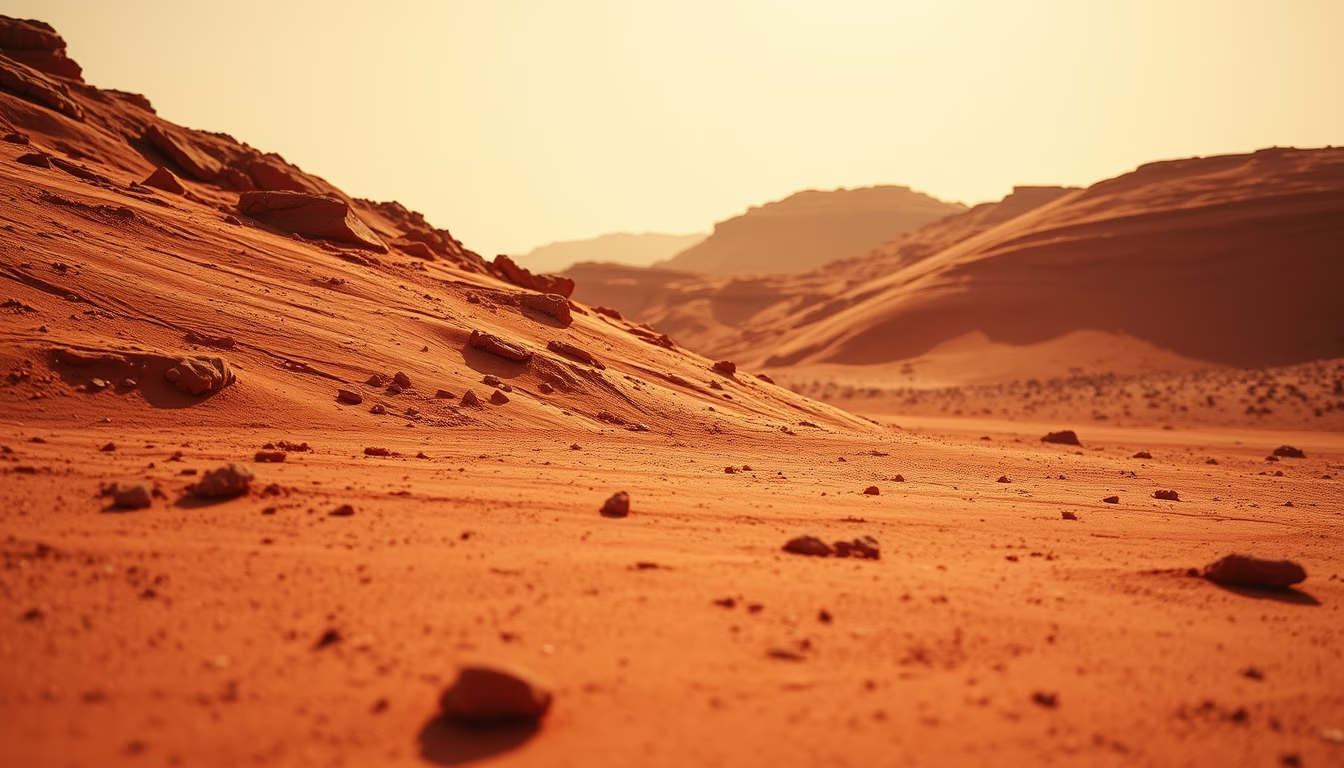
The surface of Mars is covered by reddish dust rich in iron oxide, revealing the planet's geological and climatic history.
About this subject
The surface of Mars is characterized by a reddish dust composed mainly of iron oxide, giving it the distinctive color known as the 'Red Planet'. This fine, highly oxidizing dust is the result of billions of years of wind erosion and chemical reactions with oxygen in the Martian atmosphere. Its thickness ranges from a few centimeters to several meters in regions like the northern plains.
Exact composition includes minerals such as hematite and magnetite, as well as clay minerals formed in the presence of liquid water in the past. Spectral analysis from rovers like Opportunity and Curiosity has revealed that Martian dust contains up to 20% iron oxide by mass, one of the highest in the Solar System. This oxidation is similar to terrestrial rust, but on Mars it occurred under acidic conditions and with no current water.
Dust plays a crucial role in the Martian climate, forming global storms that can cover the entire planet for months, as observed in 2018 and 2022. It also interacts with ultraviolet radiation to produce peroxides, making the soil toxic to terrestrial microorganisms. Sample studies indicate the presence of perchlorates, salts that lower water's freezing point and could complicate future human missions.
Interestingly, red dust is not exclusive to Mars: regions like the Grand Canyon on Earth show similar coloration due to iron oxide. However, the Martian scale is unique, with constant winds redistributing material across the entire surface. This fine dust layer is a major challenge for robotic exploration, as it can obstruct solar panels and cause equipment overheating.
Frequently Asked Questions
Why is Martian dust red?
Martian dust is red due to the presence of iron oxide, formed by oxidation of iron-rich minerals over billions of years, similar to rust on Earth.
Is Martian dust dangerous to human health?
Yes, the dust contains perchlorates and fine particles that can cause respiratory issues and is toxic. It also reacts with UV radiation to form harmful peroxides.
What is the typical thickness of dust on Mars?
The thickness ranges from centimeters to meters, depending on the region. In flat plains it can be several meters thick, while on rocky terrain it is thinner.
Direct URL
https://pub-c7d6a6ea828543ac903a74a341ccb2e1.r2.dev/imagens/mars-surface-red-dust-minimalist-composition-p8.avifHow to credit
Include a visible link back to UtilizAí. Copy one of the snippets below:
<a href="https://xn--utiliza-eza.com/en/midia/imagens/mars-surface-red-dust-minimalist-composition-p8">Mars surface red dust</a> by <a href="https://xn--utiliza-eza.com">UtilizAí</a>, licensed under <a href="https://creativecommons.org/licenses/by/4.0/">CC BY 4.0</a>.
[Mars surface red dust](https://xn--utiliza-eza.com/en/midia/imagens/mars-surface-red-dust-minimalist-composition-p8) by [UtilizAí](https://xn--utiliza-eza.com), CC BY 4.0
License: CC-BY-4.0