Mars surface red dust
1344×768 · AVIF · CC BY 4.0
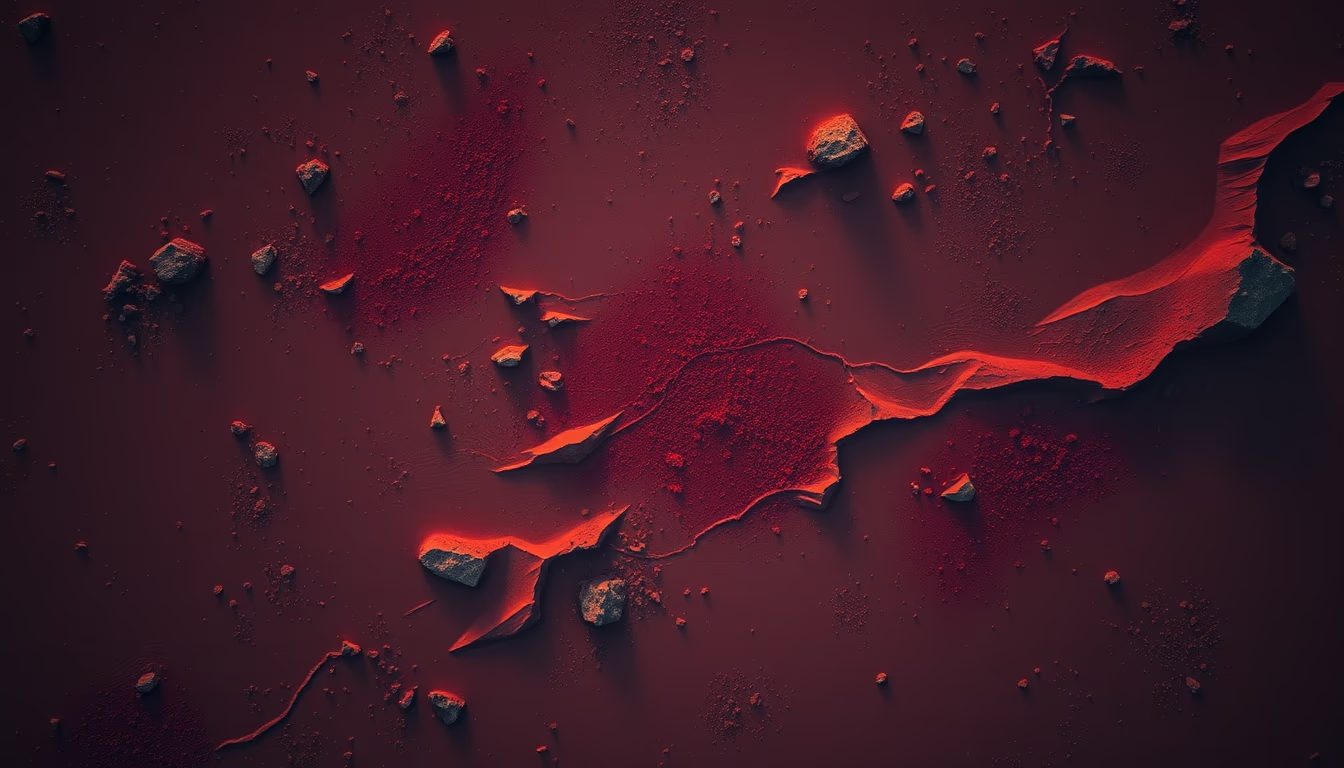
The surface of Mars is covered by a layer of reddish dust rich in iron oxide, which gives it its characteristic color and has intrigued scientists for centuries.
About this subject
The reddish color of Mars' surface, visible to the naked eye from Earth, is due to the widespread presence of iron oxide, or rust, in the dust and rocks. This mineral, called hematite, covers much of the planet, forming a fine regolith that is constantly stirred by global winds and dust storms that can last for months. The exact composition varies regionally: in the northern plains, gray hematite dominates, while in the southern highlands, red hematite is more common, indicating different geological histories and past exposure to water.
Martian dust is not only visually striking; it plays a crucial role in the planet's climate and geology. Fine particles suspended in the atmosphere affect temperature, cloud formation, and even the color of the Martian sky, which appears pinkish during the day. This dust also poses a challenge to robotic missions: it accumulates on solar panels, reducing the energy efficiency of vehicles like the Opportunity and Spirit rovers, and can cause mechanical issues in joints and sensitive instruments.
Spectroscopic studies by orbiters and rovers have revealed that the red dust contains not only hematite but also minerals like magnetite and clays, suggesting that in the distant past, Mars had abundant liquid water and milder conditions. Dust storms, which sometimes envelop the entire planet, are seasonal phenomena that occur mainly during the southern hemisphere summer. During these storms, dust can reach altitudes of up to 60 kilometers, heating the atmosphere and altering global wind patterns.
Mars' persistent red color inspired its name after the Roman god of war, due to its association with blood. Today, ongoing exploration aims to better understand the dust's composition and its impact on the planet's past or present habitability. Soil samples collected by the Perseverance rover may be brought to Earth in the next decade, allowing detailed analyses that will reveal secrets about Mars' geological and climatic evolution.
Frequently Asked Questions
Why is Mars' surface red?
The red color is due to iron oxide (rust) in the dust and rocks, mainly in the form of the mineral hematite. This material covers much of the planet and reflects sunlight with a reddish hue.
Is Martian dust dangerous for future crewed missions?
Yes, Martian dust is fine, abrasive, and contains perchlorates, which can be toxic. Prolonged exposure could cause respiratory issues and damage equipment. Therefore, spacesuits and habitats will need robust filtration systems.
Are there dust storms on Mars? How often do they occur?
Yes, dust storms are common on Mars, especially during spring and summer in the southern hemisphere. Some can become global, covering the entire planet for weeks or months. The largest occur every few Martian years (about 3 to 4 Earth years).
Direct URL
https://pub-c7d6a6ea828543ac903a74a341ccb2e1.r2.dev/imagens/mars-surface-red-dust-aerial-drone-shot-p6.avifHow to credit
Include a visible link back to UtilizAí. Copy one of the snippets below:
<a href="https://xn--utiliza-eza.com/en/midia/imagens/mars-surface-red-dust-aerial-drone-shot-p6">Mars surface red dust</a> by <a href="https://xn--utiliza-eza.com">UtilizAí</a>, licensed under <a href="https://creativecommons.org/licenses/by/4.0/">CC BY 4.0</a>.
[Mars surface red dust](https://xn--utiliza-eza.com/en/midia/imagens/mars-surface-red-dust-aerial-drone-shot-p6) by [UtilizAí](https://xn--utiliza-eza.com), CC BY 4.0
License: CC-BY-4.0