Mars rover surface red
1344×768 · AVIF · CC BY 4.0
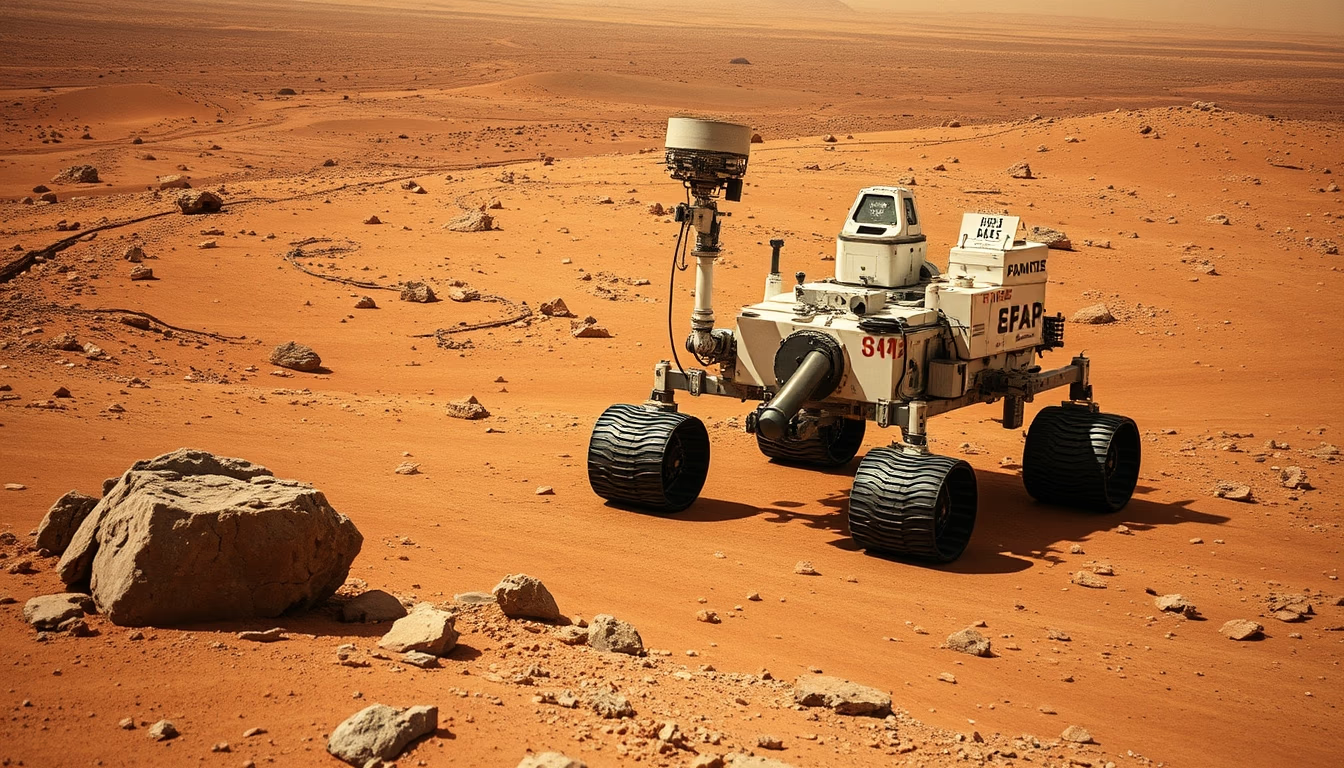
Robotic rovers like Perseverance and Curiosity explore the red surface of Mars, sending crucial data about geology and astrobiology since 2012.
About this subject
The surface of Mars, known as the Red Planet due to the abundance of iron oxide, has been home to NASA's Curiosity rover since 2012, which has traversed over 26 kilometers in Gale Crater. In 2021, the Perseverance rover landed in Jezero Crater, an ancient lakebed, aiming to collect soil samples for a future return-to-Earth mission. These robots are equipped with high-resolution cameras, spectrometers, and drills to analyze rocks. The film grain effect in some images is a stylistic nod to the visual record of the Viking missions in the 1970s, which pioneered robotic exploration of Mars.
Extreme conditions on the Martian surface, average temperature of -60°C, thin atmosphere of 95% CO₂, and global dust storms, challenge the equipment, which relies on solar or nuclear power. Perseverance carries the Ingenuity helicopter, which has completed over 50 controlled flights, proving that powered flight on other planets is possible. Both missions search for signs of past microbial life by examining sedimentary deposits and minerals that formed in the presence of liquid water.
Unlike traditional photographic film, modern images are transmitted via radio to NASA's Deep Space Network. The grainy texture (film grain) is sometimes added digitally for a retro aesthetic, but actual images have extremely high resolution, often 4K. The red hue of the soil is enhanced by the Martian sunset, which appears blue due to light scattering by fine dust particles.
Frequently Asked Questions
How many rovers are currently operating on Mars?
As of 2026, there are two active NASA rovers: Curiosity (since 2012) and Perseverance (since 2021). China's Zhurong rover entered hibernation in 2022 with uncertain status.
What causes the red color of the Martian surface?
The red color is due to widespread iron oxide (rust) in the soil and rocks. This mineral reflects red light, giving the planet its nickname.
Why do some images of Mars look grainy?
Graininess can result from data compression during transmission or be added artistically to evoke analog film. Raw images are very high resolution.
Direct URL
https://pub-c7d6a6ea828543ac903a74a341ccb2e1.r2.dev/imagens/mars-rover-surface-red-film-grain-authentic-p2.avifHow to credit
Include a visible link back to UtilizAí. Copy one of the snippets below:
<a href="https://xn--utiliza-eza.com/en/midia/imagens/mars-rover-surface-red-film-grain-authentic-p2">Mars rover surface red</a> by <a href="https://xn--utiliza-eza.com">UtilizAí</a>, licensed under <a href="https://creativecommons.org/licenses/by/4.0/">CC BY 4.0</a>.
[Mars rover surface red](https://xn--utiliza-eza.com/en/midia/imagens/mars-rover-surface-red-film-grain-authentic-p2) by [UtilizAí](https://xn--utiliza-eza.com), CC BY 4.0
License: CC-BY-4.0