Mars rover surface red
1344×768 · AVIF · CC BY 4.0
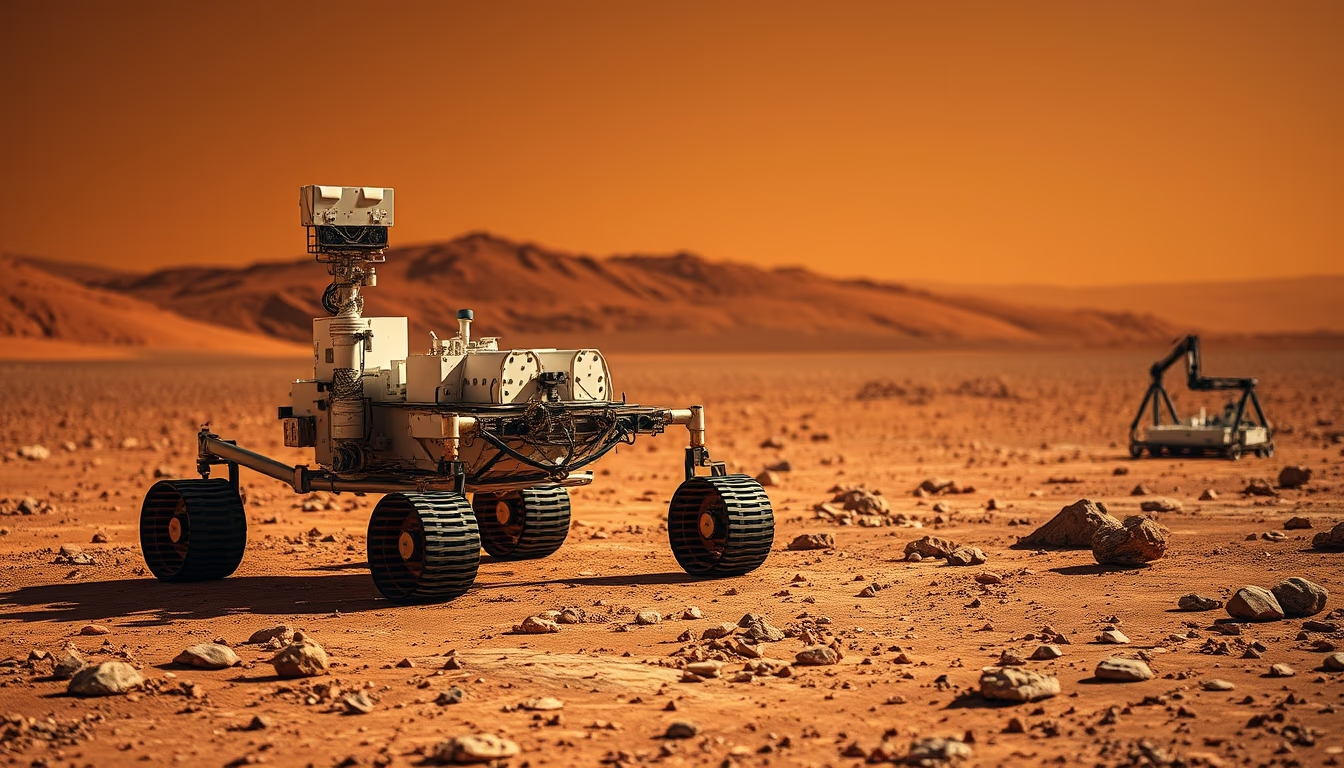
Mars rovers have revolutionized space exploration, unveiling the geology and history of the Red Planet since 1997.
About this subject
Since 1997, NASA has successfully sent five rovers to Mars. The first, Sojourner, traveled only 100 meters but proved robotic mobility was feasible. In 2004, Spirit and Opportunity arrived, with missions planned for 90 Martian sols. Opportunity exceeded all expectations, operating for nearly 15 years and covering over 45 kilometers, uncovering evidence of ancient aqueous environments. Spirit discovered silica deposits, indicating hot springs, possible habitats for microbial life.
The Curiosity rover, launched in 2011, is a car-sized mobile laboratory. It found complex organic molecules and seasonal methane variations, suggesting geological or biological processes. Curiosity also drilled into sedimentary rocks in Gale Crater, an ancient lakebed, confirming that Mars had conditions suitable for microbial life for extended periods.
In 2021, the Perseverance rover landed in Jezero Crater, an ancient river delta. Its primary mission is to collect rock and soil samples for future return by the Mars Sample Return campaign. Perseverance also carries the Ingenuity helicopter, which completed over 70 flights, demonstrating the viability of aircraft on Mars. Together, these rovers reveal a dynamic planet with a complex geological history and potential for life.
Frequently Asked Questions
Which rover lasted the longest on Mars?
Opportunity operated for nearly 15 years (2004, 2018), far beyond its planned 90 days. It traveled over 45 km and made key discoveries about past water.
What are the main discoveries of Mars rovers?
Rovers found evidence of ancient lakes and rivers, water-formed minerals, organic molecules, and methane variations. These suggest Mars once had conditions suitable for life.
How are rovers controlled from Earth?
Rovers receive commands via radio waves, which take 4 to 24 minutes to travel between Earth and Mars. They have some autonomy for navigation and obstacle avoidance using cameras and sensors.
Direct URL
https://pub-c7d6a6ea828543ac903a74a341ccb2e1.r2.dev/imagens/mars-rover-surface-red-documentary-photography-p4.avifHow to credit
Include a visible link back to UtilizAí. Copy one of the snippets below:
<a href="https://xn--utiliza-eza.com/en/midia/imagens/mars-rover-surface-red-documentary-photography-p4">Mars rover surface red</a> by <a href="https://xn--utiliza-eza.com">UtilizAí</a>, licensed under <a href="https://creativecommons.org/licenses/by/4.0/">CC BY 4.0</a>.
[Mars rover surface red](https://xn--utiliza-eza.com/en/midia/imagens/mars-rover-surface-red-documentary-photography-p4) by [UtilizAí](https://xn--utiliza-eza.com), CC BY 4.0
License: CC-BY-4.0