Mars rover surface red
1344×768 · AVIF · CC BY 4.0
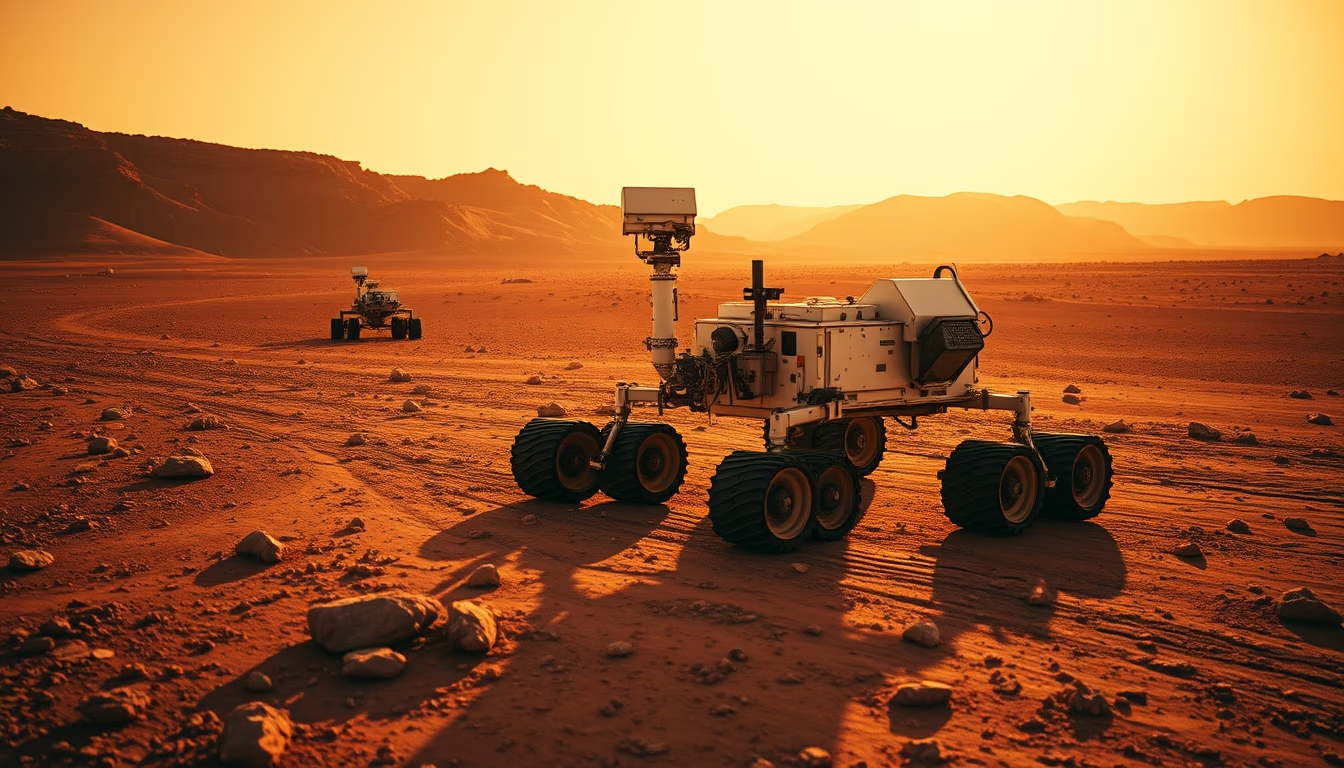
Rovers explore the red surface of Mars, unveiling geological and astrobiological secrets of the neighboring planet.
About this subject
Since 1997, when Sojourner landed on Mars, rovers have been humanity's eyes and arms on the Red Planet. Subsequent missions Spirit, Opportunity, Curiosity, and Perseverance have transformed our understanding of the planet. Each rover was designed to study Mars' geology, climate, and past habitability. The characteristic red color of Martian soil comes from iron oxidation, forming oxides such as hematite, which covers much of the surface.
The rovers have traversed hundreds of kilometers, analyzing rocks and sediments. Opportunity, for instance, operated for over 14 years, far beyond its planned 90-day lifespan. It found evidence of ancient aquatic environments, such as lake and riverbeds. Curiosity, which landed in 2012, discovered complex organic molecules and seasonal methane variations, indicating possible biological or geological processes.
Perseverance, arriving in 2021, focuses on astrobiology: collecting soil and rock samples for potential return to Earth by the future Mars Sample Return campaign. It also tests technologies like the Ingenuity helicopter and oxygen production from Martian CO2. Rovers operate in extreme conditions, with temperatures dropping to -125°C at night, and rely on solar or radioisotope power.
Robotic exploration of Mars is a crucial step toward future crewed missions. Each discovery about the planet's geological and climatic history helps us understand whether Mars ever harbored life and how we might one day live there. High-resolution images and scientific data sent by rovers continue to fuel both imagination and science, revealing a distant world that grows ever more familiar.
Frequently Asked Questions
How many rovers have successfully landed on Mars?
As of 2024, five rovers have successfully landed on Mars: Sojourner (1997), Spirit and Opportunity (2004), Curiosity (2012), and Perseverance (2021). Opportunity operated the longest, over 14 years.
Why is the soil on Mars red?
The Martian soil contains large amounts of iron oxide, mainly hematite. This compound, formed by iron oxidation in contact with water and oxygen in the past, gives the surface its characteristic reddish color.
What have rovers discovered about the possibility of life on Mars?
Rovers have found evidence of ancient water environments, organic molecules, and methane variations. Although they have not detected life directly, these findings suggest that Mars once had conditions favorable for microbial life.
Direct URL
https://pub-c7d6a6ea828543ac903a74a341ccb2e1.r2.dev/imagens/mars-rover-surface-red-cinematic-wide-shot-p5.avifHow to credit
Include a visible link back to UtilizAí. Copy one of the snippets below:
<a href="https://xn--utiliza-eza.com/en/midia/imagens/mars-rover-surface-red-cinematic-wide-shot-p5">Mars rover surface red</a> by <a href="https://xn--utiliza-eza.com">UtilizAí</a>, licensed under <a href="https://creativecommons.org/licenses/by/4.0/">CC BY 4.0</a>.
[Mars rover surface red](https://xn--utiliza-eza.com/en/midia/imagens/mars-rover-surface-red-cinematic-wide-shot-p5) by [UtilizAí](https://xn--utiliza-eza.com), CC BY 4.0
License: CC-BY-4.0