Mars rover surface red
1344×768 · AVIF · CC BY 4.0
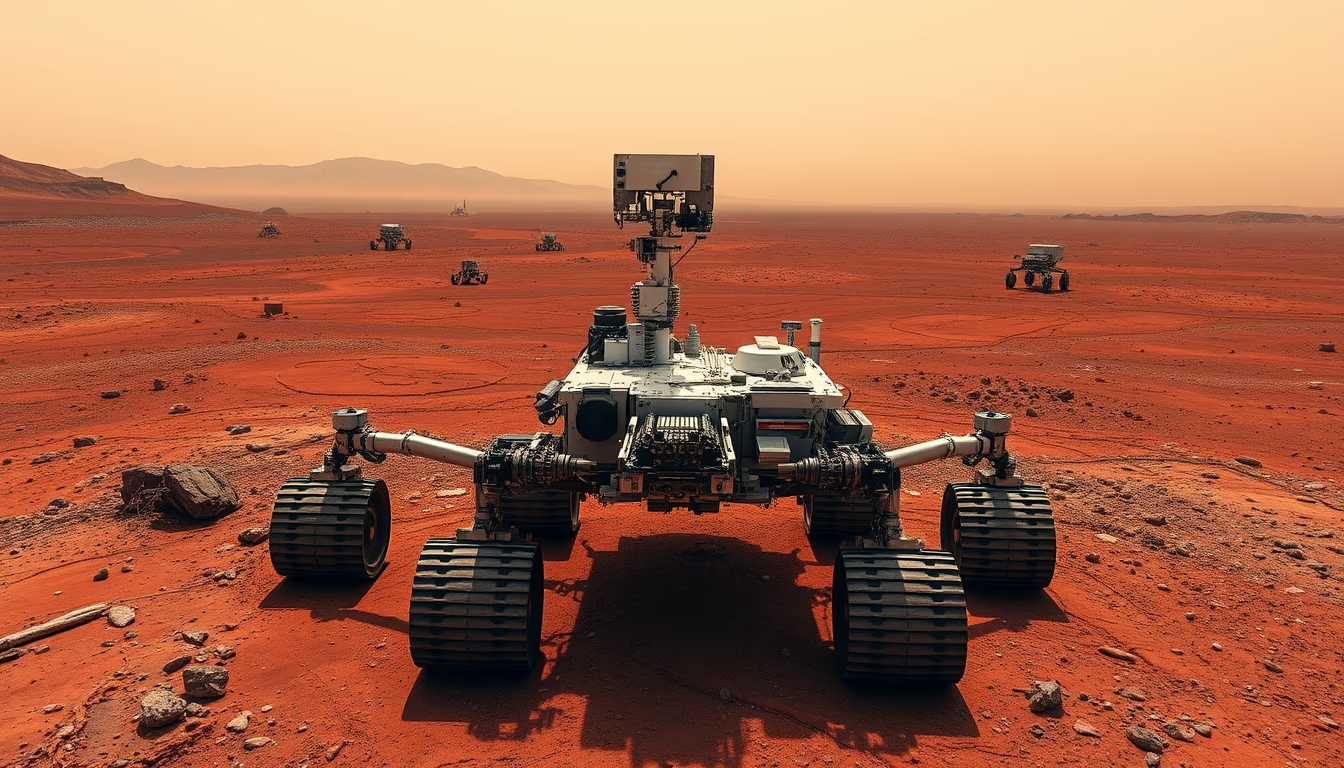
Robotic rovers explore the red surface of Mars, unveiling geological and atmospheric secrets of our neighboring planet.
About this subject
Since the early 21st century, NASA and other space agencies have sent a series of rovers to Mars, revolutionizing our understanding of the Red Planet. Early vehicles like Sojourner (1997), Spirit and Opportunity (2004) demonstrated the feasibility of mobile exploration in harsh terrains. More recently, Curiosity (2012) and Perseverance (2021) expanded scientific capabilities, equipped with miniaturized laboratories, high-resolution cameras, and instruments to detect organic compounds. The Martian surface, rich in iron oxide, gives it a characteristic reddish hue, the result of billions of years of oxidation. This fine dust covers plains, craters, and mountains, challenging engineers to design robust mobility systems, such as rocker-bogie suspensions and titanium-coated wheels. The primary goals of these missions are to search for evidence of past or present life, study the climate, and prepare for future crewed expeditions. Perseverance, for instance, collects soil samples that will be returned to Earth by future missions. Each new rover incorporates lessons from its predecessors: more autonomous software, long-life batteries, and thermal insulation to withstand extreme temperature swings, which can drop to -90°C at night. The architecture of these vehicles combines cutting-edge aerospace engineering with functional design, where every angle and material is optimized to resist micrometeorite impacts and cosmic radiation. In 2022, China's Zhurong rover joined the fleet, exploring plain-like regions with ground-penetrating radar. International competition accelerates technological progress, and images of the red surface with metallic robots in the foreground have become icons of the space age. Although no rover has survived more than 14 years (like Opportunity), the tracks left in the Martian regolith are testaments to human ingenuity. The coming decades promise even more complex rovers, capable of drilling up to 10 meters deep and analyzing samples with mass spectrometers.
Frequently Asked Questions
How many rovers have successfully landed on Mars?
As of 2025, six rovers have operated on the Martian surface: Sojourner (1997), Spirit and Opportunity (2004), Curiosity (2012), Perseverance (2021), and Zhurong (2022). All were successful, although Spirit and Opportunity have ended their missions.
Why is the surface of Mars red?
The reddish color is due to the high concentration of iron oxide (rust) in the Martian regolith. This mineral formed over billions of years as iron in the rocks oxidized, exposed to the thin atmosphere and radiation.
What is the main difference between the Curiosity and Perseverance rovers?
Perseverance is more advanced, with instruments for sample collection (to be returned to Earth), a supporting helicopter (Ingenuity), and the ability to produce oxygen from atmospheric CO2. Curiosity focuses on geology and habitability, without sample return.
Direct URL
https://pub-c7d6a6ea828543ac903a74a341ccb2e1.r2.dev/imagens/mars-rover-surface-red-architectural-photography-p1.avifHow to credit
Include a visible link back to UtilizAí. Copy one of the snippets below:
<a href="https://xn--utiliza-eza.com/en/midia/imagens/mars-rover-surface-red-architectural-photography-p1">Mars rover surface red</a> by <a href="https://xn--utiliza-eza.com">UtilizAí</a>, licensed under <a href="https://creativecommons.org/licenses/by/4.0/">CC BY 4.0</a>.
[Mars rover surface red](https://xn--utiliza-eza.com/en/midia/imagens/mars-rover-surface-red-architectural-photography-p1) by [UtilizAí](https://xn--utiliza-eza.com), CC BY 4.0
License: CC-BY-4.0