Maritime signal flags
1344×768 · AVIF · CC BY 4.0
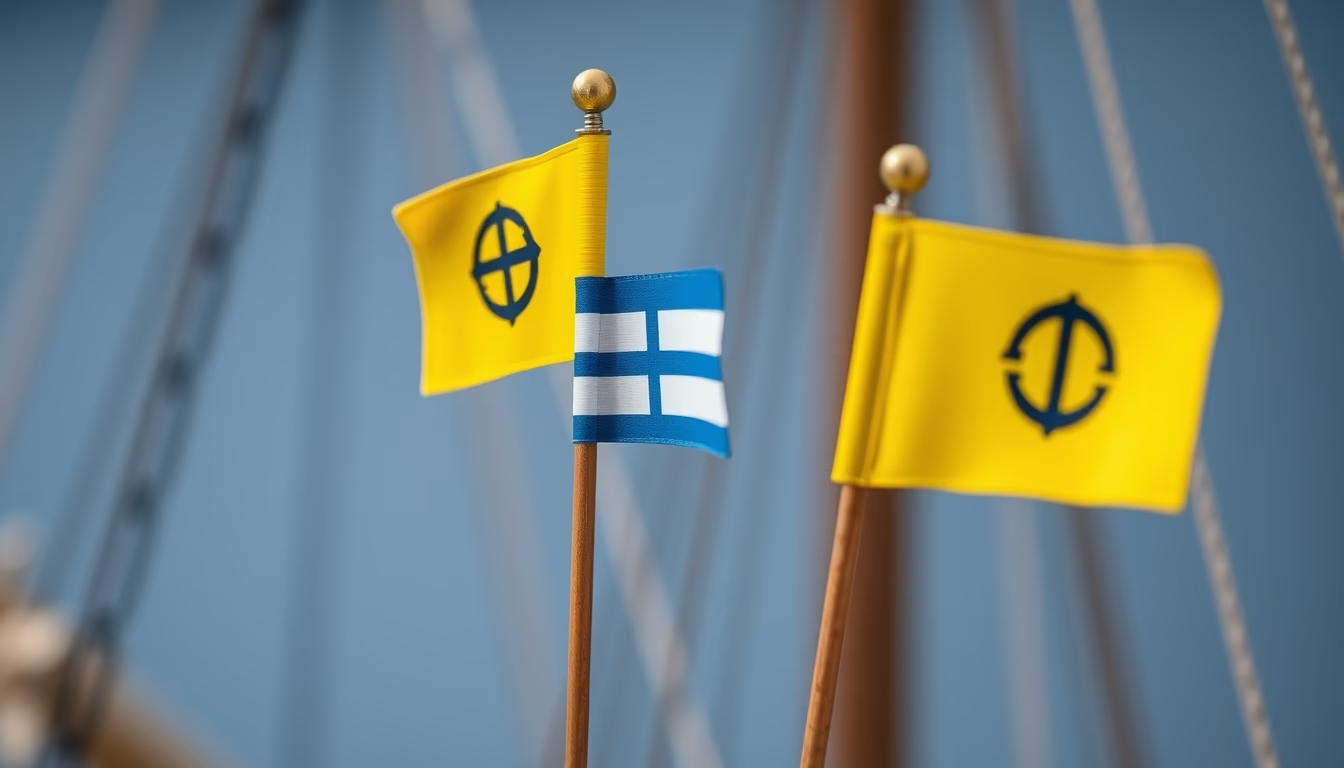
Maritime signal flags constitute an international visual communication code between ships, used for centuries to transmit standardized messages even at a distance.
About this subject
Maritime signal flags are part of the International Code of Signals (ICS), established in 1931 and currently maintained by the International Maritime Organization (IMO). The system comprises 26 alphabetical flags (A to Z), 10 numeral flags (0 to 9), three repeaters, and one code flag. Each flag has a specific meaning when flown alone, such as the A (Alpha) flag meaning 'I have a diver down; keep well clear' or the H (Hotel) flag meaning 'I have a pilot on board'.
Originally developed to overcome language barriers, the code allows combinations of two, three, or four flags to convey complex messages. For instance, 'NC' signals immediate danger, while 'GQ' requests medical assistance. In sailboat racing, specific flags signal starts, postponements, or course changes, being essential for safety and competition organization.
Historically, flags evolved from British and French naval systems in the 18th century. The modern version was standardized after the Titanic disaster in 1912, highlighting the need for unambiguous communication at sea. Although radio and satellite have reduced routine use, flags remain a mandatory backup for electronic equipment failure, as per SOLAS (Safety of Life at Sea) regulations.
Interestingly, the 'Z' (Zulu) flag means 'I require a tug', but in popular culture it is associated with the 1964 film 'Zulu'. The 'Q' (Quebec) flag indicates 'my ship is healthy and I request free pratique', used in quarantines. The system is also adopted by yachts and recreational boats, often hoisting flags on halyards at masts for identification or courtesy.
Frequently Asked Questions
How does the maritime signal flag system work?
Each flag represents a specific letter, number, or message. Hoisted alone or in combinations, they form standardized messages according to the International Code of Signals (ICS), enabling visual communication between ships of different nationalities.
How many flags are in the international code?
There are 26 alphabetical flags (A to Z), 10 numeral flags (0 to 9), three repeaters, and one code flag, totaling 40 flags. Repeaters allow repeating a letter or number in combinations.
What does the Q (Quebec) flag mean?
The Q (Quebec) flag means 'My ship is healthy and I request free pratique'. It is used to signal that the vessel has no contagious diseases on board and requests permission to dock or interact with the port.
Direct URL
https://pub-c7d6a6ea828543ac903a74a341ccb2e1.r2.dev/imagens/maritime-signal-flags-tilt-shift-miniature-fresh14.avifHow to credit
Include a visible link back to UtilizAí. Copy one of the snippets below:
<a href="https://xn--utiliza-eza.com/en/midia/imagens/maritime-signal-flags-tilt-shift-miniature-fresh14">Maritime signal flags</a> by <a href="https://xn--utiliza-eza.com">UtilizAí</a>, licensed under <a href="https://creativecommons.org/licenses/by/4.0/">CC BY 4.0</a>.
[Maritime signal flags](https://xn--utiliza-eza.com/en/midia/imagens/maritime-signal-flags-tilt-shift-miniature-fresh14) by [UtilizAí](https://xn--utiliza-eza.com), CC BY 4.0
License: CC-BY-4.0