Maritime signal flags
1344×768 · AVIF · CC BY 4.0
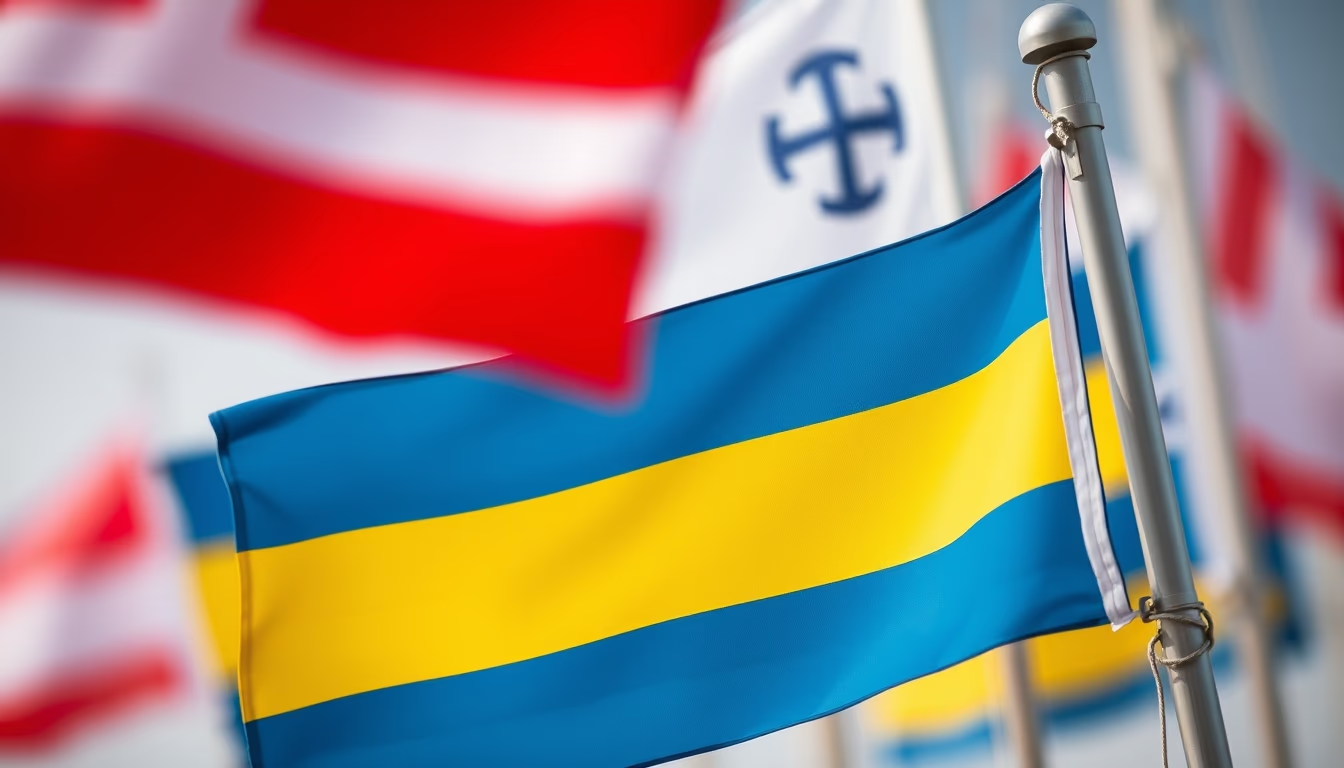
Maritime signal flags are an international visual communication system between ships and ports, essential for nautical safety.
About this subject
Maritime signal flags, also known as the International Code of Signals (ICS) flags, form a standardized visual communication system used by ships and port authorities worldwide. Each flag represents a letter of the alphabet or a specific meaning, and combinations of flags form coded messages. The system was developed in the 19th century to overcome language barriers and allow rapid exchange of information about safety, navigation, and emergencies. In 1855, the British Board of Trade published the first commercial code, which evolved into the current ICS, managed by the International Maritime Organization. Today, there are 40 flags: 26 letters, 10 numerals, 3 substitutes, and one answering pennant. Each features distinct colors and shapes for easy recognition even at long distances. Flags are hoisted on specific ship masts or signal halyards. Beyond formal communications, some flags have popular meanings: the 'Q' flag (yellow) indicates the ship is disease-free and requests free pratique (permission to enter port). The 'H' flag means a pilot is on board. Interestingly, the system is also used in sailing regattas to signal starts, protests, or requests for assistance. Despite advances in radio and digital systems, signal flags remain a mandatory visual communication method for vessels under the International Regulations for Preventing Collisions at Sea (COLREGs) and the Global Maritime Distress and Safety System (GMDSS). They are especially useful when electronic communications fail or in emergency situations.
Frequently Asked Questions
What is the origin of maritime signal flags?
The modern system began with the Commercial Code of Signals of the British Royal Navy in 1855, but antecedents exist from the 16th and 17th centuries with nationality and homage flags. The current International Code of Signals was adopted in 1969 by the International Maritime Organization.
How are maritime signal flags interpreted?
Each individual flag has a standard meaning, such as letters or messages; for example, the 'A' flag means 'I have a diver down; keep well clear at slow speed'. Combinations of two or more flags form words or numeric codes. The 'International Code of Signals' book contains all meanings.
Are signal flags still mandatory today?
Yes, for commercial and passenger vessels, the use of signal flags is required by SOLAS (Safety of Life at Sea) and COLREGs for visual communication, especially in emergencies or when radios are inoperative.
Direct URL
https://pub-c7d6a6ea828543ac903a74a341ccb2e1.r2.dev/imagens/maritime-signal-flags-macro-closeup-fresh0.avifHow to credit
Include a visible link back to UtilizAí. Copy one of the snippets below:
<a href="https://xn--utiliza-eza.com/en/midia/imagens/maritime-signal-flags-macro-closeup-fresh0">Maritime signal flags</a> by <a href="https://xn--utiliza-eza.com">UtilizAí</a>, licensed under <a href="https://creativecommons.org/licenses/by/4.0/">CC BY 4.0</a>.
[Maritime signal flags](https://xn--utiliza-eza.com/en/midia/imagens/maritime-signal-flags-macro-closeup-fresh0) by [UtilizAí](https://xn--utiliza-eza.com), CC BY 4.0
License: CC-BY-4.0