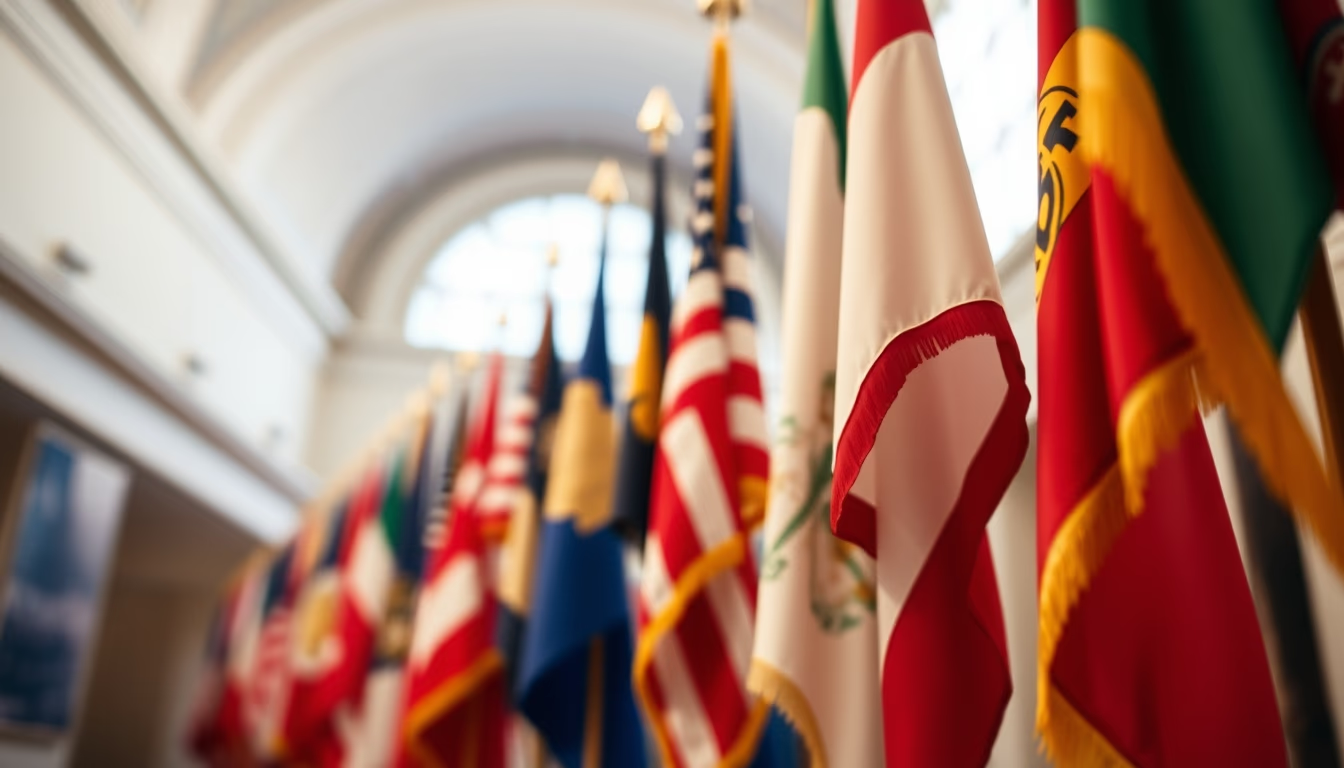
Maritime signal flags
1344×768 · AVIF · CC BY 4.0
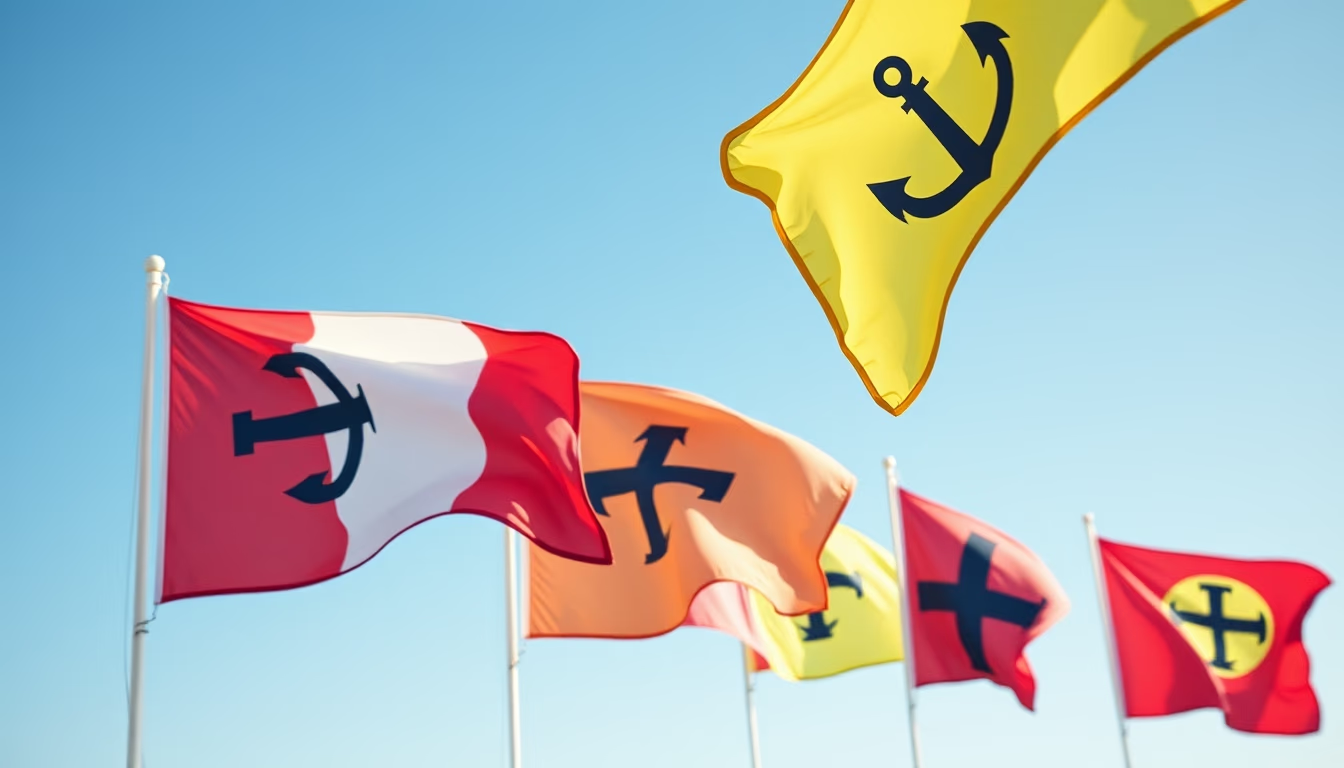
Maritime signal flags form an international visual communication code between vessels, essential for safe navigation.
About this subject
Maritime signal flags, also known as the International Code of Signals flags, are a visual communication system used by ships and boats to transmit messages to each other or to coastal stations. Each flag represents a letter of the alphabet, a numeral, or a specific meaning, such as emergency or warning. This system allows crucial information to be exchanged without radio or electronic devices, being especially useful in breakdown situations or remote areas.
The International Code of Signals was developed during the 19th century and internationally adopted in 1855, with later revisions to standardize maritime communication. Today, the code comprises 26 letter flags, 10 numeral pendants, and 3 substitute (repeater) flags. Flags are hoisted on halyards (lines) on masts in combinations that form messages, either a single flag (e.g., flag "A" means "I have a diver down; keep well clear at slow speed") or sequences for full words.
Despite the advancement of telecommunications, signal flags are still actively used on sailboats, yachts, and in sailing competitions, where visual communication is quick. In regattas, flags indicate starting sequences, protests, or course changes. On military and merchant ships, they are also used in ceremonies and to show nationality (courtesy flag). The most famous combination is flag "N" over flag "C" ("NC"), signaling "I am in distress and require immediate assistance."
Culturally, maritime flags inspired the NATO Phonetic Alphabet (Alpha, Bravo, Charlie...), now used in aviation and radio. Individual flags have historical names and meanings: flag "Q" (yellow) means "my vessel is healthy" (free of disease) and is hoisted in ports to request free pratique. Learning these flags is a mandatory part of sailor and boater training, connecting nautical tradition to modern safety.
Frequently Asked Questions
What is the origin of maritime signal flags?
The system was standardized in the 19th century, with the first International Code of Signals adopted in 1855. Before that, each navy used its own codes, causing confusion at sea.
How many flags are in the International Code of Signals?
There are 26 letter flags (A to Z), 10 numeral pendants (0 to 9), and 3 substitute (repeater) flags, totaling 39 distinct flags. Substitutes allow repeating letters without having multiple sets.
Are signal flags still used today?
Yes, mainly on sailboats, yachts, and in regattas, as well as on military and merchant ships for quick visual communication. They are also required for navigation license exams.
Direct URL
https://pub-c7d6a6ea828543ac903a74a341ccb2e1.r2.dev/imagens/maritime-signal-flags-lo-fi-disposable-camera-fresh9.avifHow to credit
Include a visible link back to UtilizAí. Copy one of the snippets below:
<a href="https://xn--utiliza-eza.com/en/midia/imagens/maritime-signal-flags-lo-fi-disposable-camera-fresh9">Maritime signal flags</a> by <a href="https://xn--utiliza-eza.com">UtilizAí</a>, licensed under <a href="https://creativecommons.org/licenses/by/4.0/">CC BY 4.0</a>.
[Maritime signal flags](https://xn--utiliza-eza.com/en/midia/imagens/maritime-signal-flags-lo-fi-disposable-camera-fresh9) by [UtilizAí](https://xn--utiliza-eza.com), CC BY 4.0
License: CC-BY-4.0