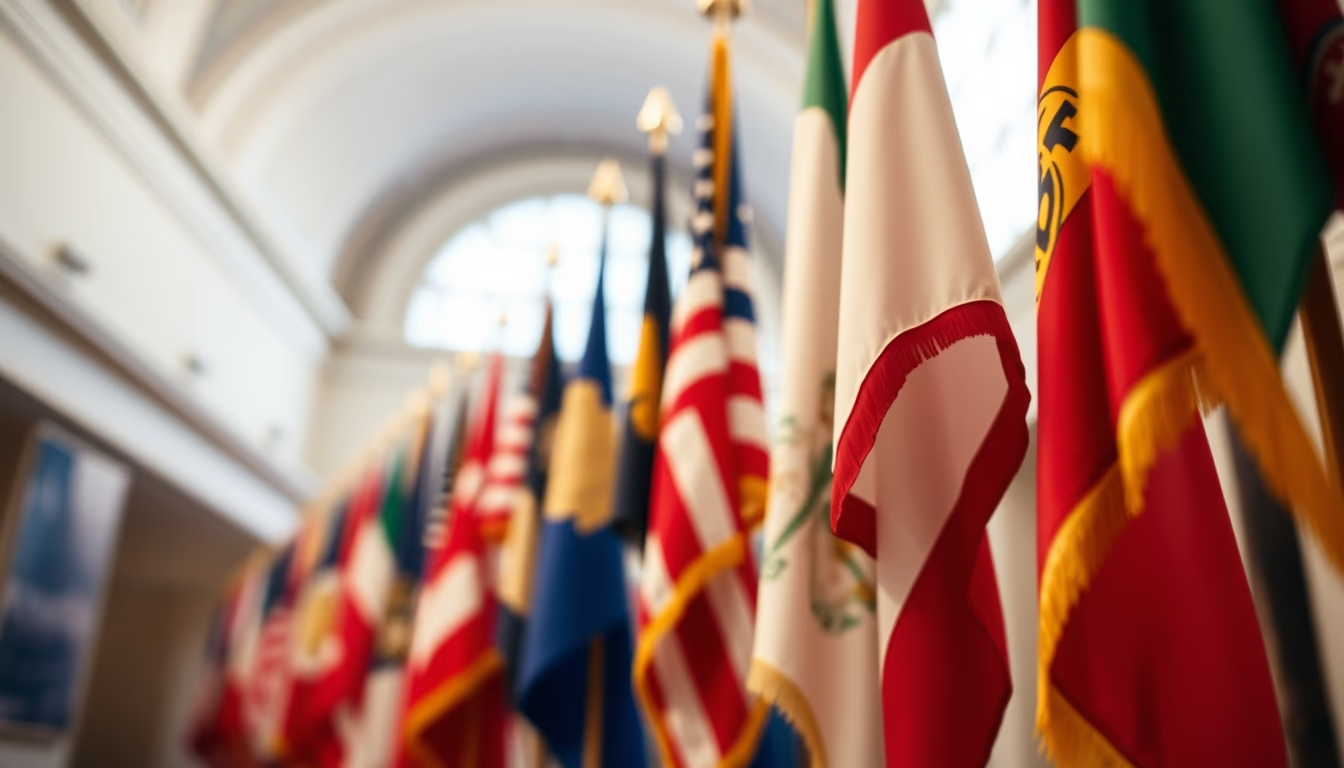
Maritime signal flags
1344×768 · AVIF · CC BY 4.0
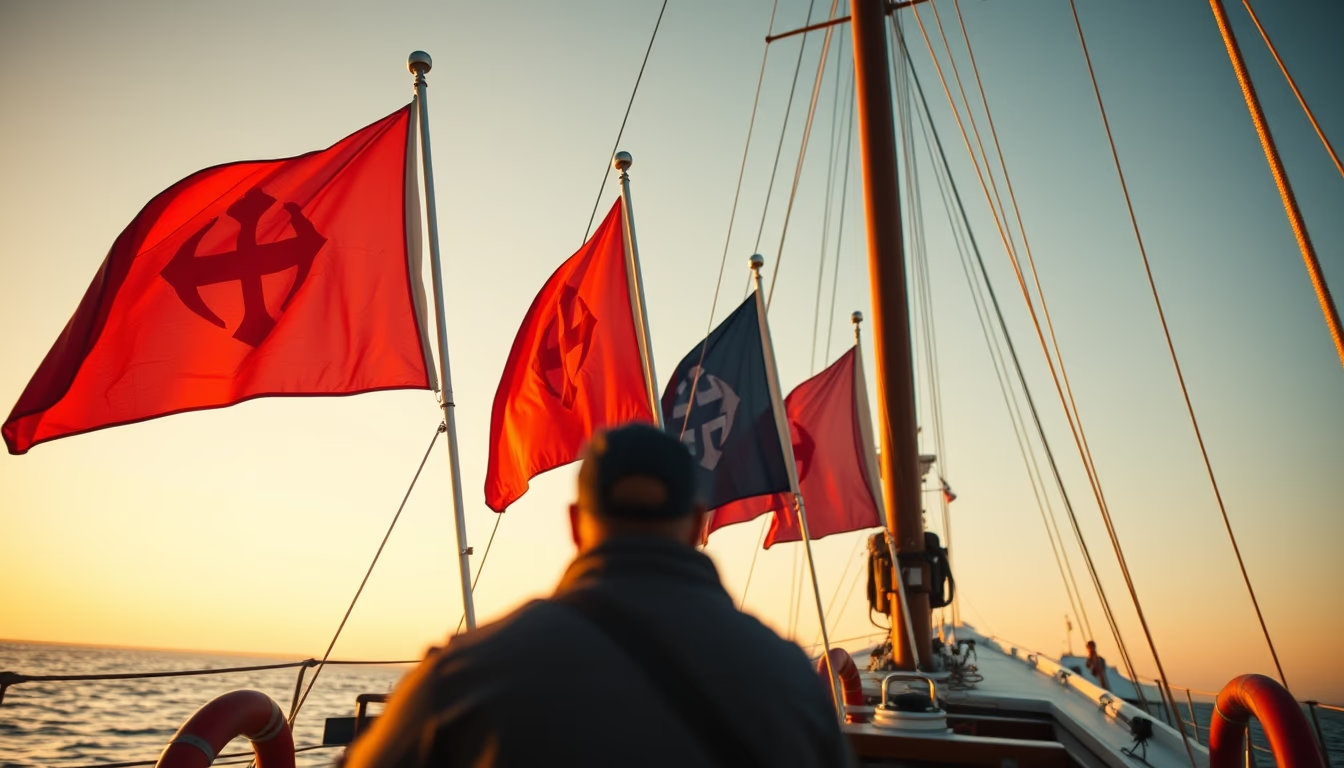
Maritime signal flags are an international system of visual communication used by ships to transmit standardized messages at sea.
About this subject
Maritime signal flags, also known as International Code of Signals (ICS) flags, were established in 1855 and revised in 1931 to standardize communication between ships of different nationalities. Each of the 40 flags represents a letter of the alphabet (A to Z), a number (0 to 9), or a substitute signal. For example, the 'A' flag (Alpha) means 'I have a diver down; keep well clear at slow speed', while the 'B' flag (Bravo) indicates 'I am carrying, discharging, or transporting dangerous goods'. These flags can be combined into two, three, or four-letter signals to convey complex messages such as emergencies, requests for assistance, or weather information.
The ICS system is globally recognized by the International Maritime Organization (IMO) and is used by commercial, military, and recreational vessels. Each flag is square or rectangular, with vibrant contrasting colors to ensure visibility from a distance. Flags are hoisted on masts or stays, typically read from bow to stern. Although radio and digital systems have reduced daily use, flags remain essential in radio silence situations, equipment failure, or ports where visual communication is preferred.
Historically, signal flags played a crucial role in navigation before the invention of the telegraph. In naval battles, commanders used flags to coordinate maneuvers between ships without revealing plans to the enemy. Today, flags are also used in sailing regattas to signal starts, penalties, and course conditions. Additionally, special flags like 'Quebec' (yellow flag) indicate quarantine, while 'Mike' (blue flag with a white cross) signals 'my vessel is stopped and making no way through the water'.
Interestingly, the system includes three substitute flags (first, second, third substitute) that allow repeating letters in a signal without needing multiple identical flags. Each flag has a standardized phonetic name by NATO: Alpha, Bravo, Charlie, Delta, etc. The 'Zulu' flag (Z) is famous for meaning 'I require a tug', but is also used in military contexts to indicate 'mission accomplished'. Collectors and naval enthusiasts often study the flags, and official guides are published by the IMO and the U.S. Coast Guard.
Frequently Asked Questions
How many flags make up the International Code of Signals?
The code consists of 40 flags: 26 representing letters (A to Z), 10 representing numbers (0 to 9), 3 substitute flags, and 1 answering pennant (code flag).
What does the 'Alpha' (A) flag mean?
The 'Alpha' flag means 'I have a diver down; keep well clear at slow speed'. It is used to alert other vessels about the presence of divers in the water.
Are signal flags still used today?
Yes, though less common due to radio, they are still used in radio silence situations, equipment failure, sailing regattas, and ports that prefer visual communication.
Direct URL
https://pub-c7d6a6ea828543ac903a74a341ccb2e1.r2.dev/imagens/maritime-signal-flags-cinematic-wide-shot-fresh17.avifHow to credit
Include a visible link back to UtilizAí. Copy one of the snippets below:
<a href="https://xn--utiliza-eza.com/en/midia/imagens/maritime-signal-flags-cinematic-wide-shot-fresh17">Maritime signal flags</a> by <a href="https://xn--utiliza-eza.com">UtilizAí</a>, licensed under <a href="https://creativecommons.org/licenses/by/4.0/">CC BY 4.0</a>.
[Maritime signal flags](https://xn--utiliza-eza.com/en/midia/imagens/maritime-signal-flags-cinematic-wide-shot-fresh17) by [UtilizAí](https://xn--utiliza-eza.com), CC BY 4.0
License: CC-BY-4.0