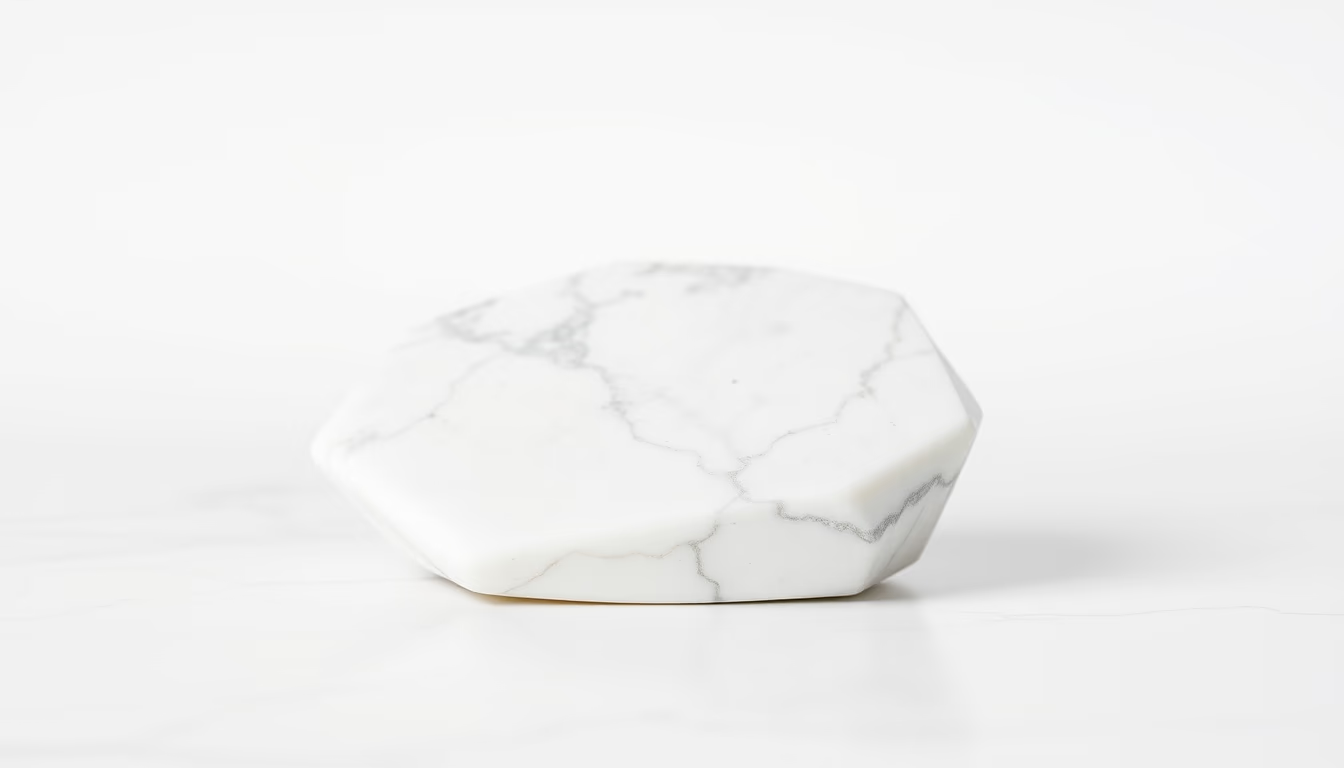
Marble white veined
1344×768 · AVIF · CC BY 4.0

White veined marble is a metamorphic rock composed of recrystallized calcite, widely used in architecture and sculpture since Classical Antiquity.
About this subject
White veined marble forms when limestone undergoes high temperature and pressure deep underground, recrystallizing calcium carbonate grains and creating the characteristic veins. These lines are usually composed of mineral impurities such as clay, sand, iron oxides, or organic material that filled cracks during metamorphism. Each quarry yields a unique pattern: Carrara marble in Italy shows gray-blue veins; Grecian White has nearly invisible veins; Macchia Vecchia displays golden or brown veins.
White veined marble was the preferred material of renowned sculptors like Michelangelo, who carved David from a block of Carrara white marble. In ancient Rome, columns and temples used marble from Mount Pentelicus near Athens. Today, besides Italy, major producers include Turkey, India, Brazil, and Greece. Brazil has notable deposits in Minas Gerais and Espírito Santo, such as Branco Primavera marble.
In contemporary design, white veined marble is used for kitchen countertops, flooring, wall cladding, and furniture. Its durability is moderate: being porous, it stains easily with acids (wine, lemon), requiring periodic sealing. The 2026 trend points toward natural finishes and more expressive veins, moving away from homogeneous minimalism. In fashion and editorial design, marble-vein patterns are popular on magazine covers and textiles.
Interestingly, white marble is also used in unconventional applications: as filler in paper manufacturing, in cosmetics (marble powder in exfoliating creams), and even in correcting acidic soils in agriculture. Despite its cold appearance, marble has low thermal conductivity, making it a good natural insulator. However, extraction causes significant environmental impacts: fine waste generation, water consumption, and landscape damage, which encourages recycling of marble workshop residues.
Frequently Asked Questions
How are the veins in white marble formed?
Veins form during limestone metamorphism: mineral impurities such as clay, sand, or iron oxides fill fractures in the rock, creating linear patterns after recrystallization.
What is the most famous type of white marble in the world?
Carrara marble, quarried in Tuscany, Italy, is the most renowned, used by Michelangelo and other masters for its purity and subtle veins.
Does white veined marble require special maintenance?
Yes, because it is porous, it must be sealed regularly and avoid contact with acidic substances (wine, lemon, vinegar) to prevent permanent stains.
Direct URL
https://pub-c7d6a6ea828543ac903a74a341ccb2e1.r2.dev/imagens/marble-white-veined-magazine-editorial-p4.avifHow to credit
Include a visible link back to UtilizAí. Copy one of the snippets below:
<a href="https://xn--utiliza-eza.com/en/midia/imagens/marble-white-veined-magazine-editorial-p4">Marble white veined</a> by <a href="https://xn--utiliza-eza.com">UtilizAí</a>, licensed under <a href="https://creativecommons.org/licenses/by/4.0/">CC BY 4.0</a>.
[Marble white veined](https://xn--utiliza-eza.com/en/midia/imagens/marble-white-veined-magazine-editorial-p4) by [UtilizAí](https://xn--utiliza-eza.com), CC BY 4.0
License: CC-BY-4.0