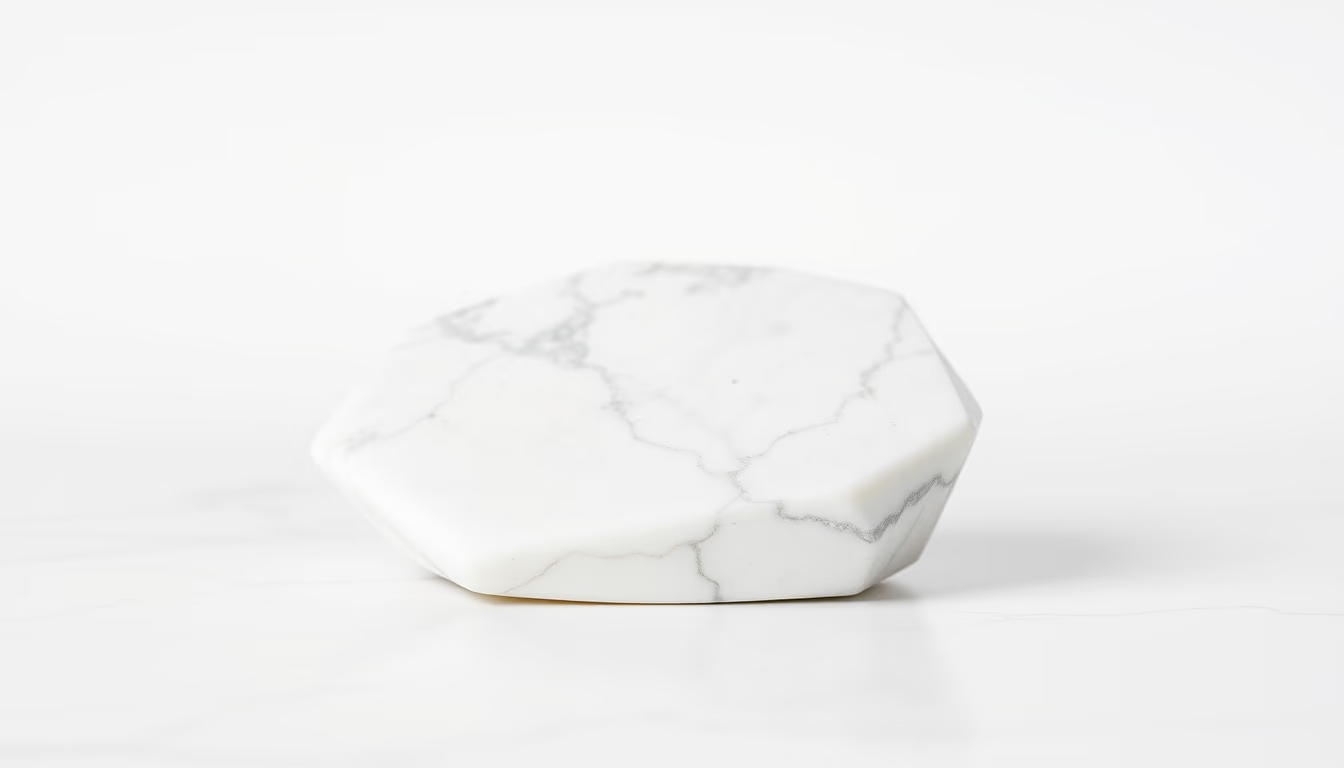
Marble white veined
1344×768 · AVIF · CC BY 4.0

White veined marble, a metamorphic rock of timeless beauty, widely used in iconic sculptures and buildings since antiquity.
About this subject
White veined marble is a metamorphic rock derived from limestone, composed mainly of calcium carbonate. The characteristic veins are formed by mineral impurities such as clay, iron oxides, or graphite that crystallize during metamorphism. The most famous deposits are in Carrara, Italy, where marble has been quarried for over two thousand years.
In the history of art and architecture, white veined marble holds a central place. Greeks and Romans used it in temples and statues, such as the Parthenon and the Pantheon. During the Renaissance, Michelangelo sculpted the David from a Carrara block, highlighting the material's translucency and texture. To this day, marble is a symbol of luxury and sophistication, present in palaces, monuments, and homes.
In fine art photography, white veined marble is a recurring subject due to its abstract patterns and interplay of light. Photographers explore the undulating lines and soft contrasts to create compositions that evoke movement and depth. The trend for 2026 points towards valuing organic forms and natural textures, with marble serving as inspiration for minimalist and contemplative works.
Beyond aesthetics, marble offers durability and heat resistance, being used in countertops and cladding. However, its extraction raises environmental concerns, encouraging the use of waste materials and synthetic alternatives as sustainable options. Still, the fascination with white veined marble remains unwavering, merging tradition and innovation.
Frequently Asked Questions
What is the origin of white veined marble?
White veined marble is formed from limestone subjected to high pressure and temperature inside the Earth. The main quarries are in Carrara (Italy), but there are also deposits in Greece, Turkey, and Brazil.
Why is white marble so widely used in sculptures?
Due to its translucency, uniform texture, and ease of polishing, white marble allows fine details and a smooth finish. Additionally, its durability ensures the preservation of artworks for centuries.
How to identify high-quality marble?
High-quality marble has fine grain, few fissures, and regular veins. Uniformity of color and absence of stains indicate purity. The acid test (vinegar) can help, as marble effervesces when reacting.
Direct URL
https://pub-c7d6a6ea828543ac903a74a341ccb2e1.r2.dev/imagens/marble-white-veined-fine-art-photography-p3.avifHow to credit
Include a visible link back to UtilizAí. Copy one of the snippets below:
<a href="https://xn--utiliza-eza.com/en/midia/imagens/marble-white-veined-fine-art-photography-p3">Marble white veined</a> by <a href="https://xn--utiliza-eza.com">UtilizAí</a>, licensed under <a href="https://creativecommons.org/licenses/by/4.0/">CC BY 4.0</a>.
[Marble white veined](https://xn--utiliza-eza.com/en/midia/imagens/marble-white-veined-fine-art-photography-p3) by [UtilizAí](https://xn--utiliza-eza.com), CC BY 4.0
License: CC-BY-4.0