Manta ray swimming
1344×768 · AVIF · CC BY 4.0
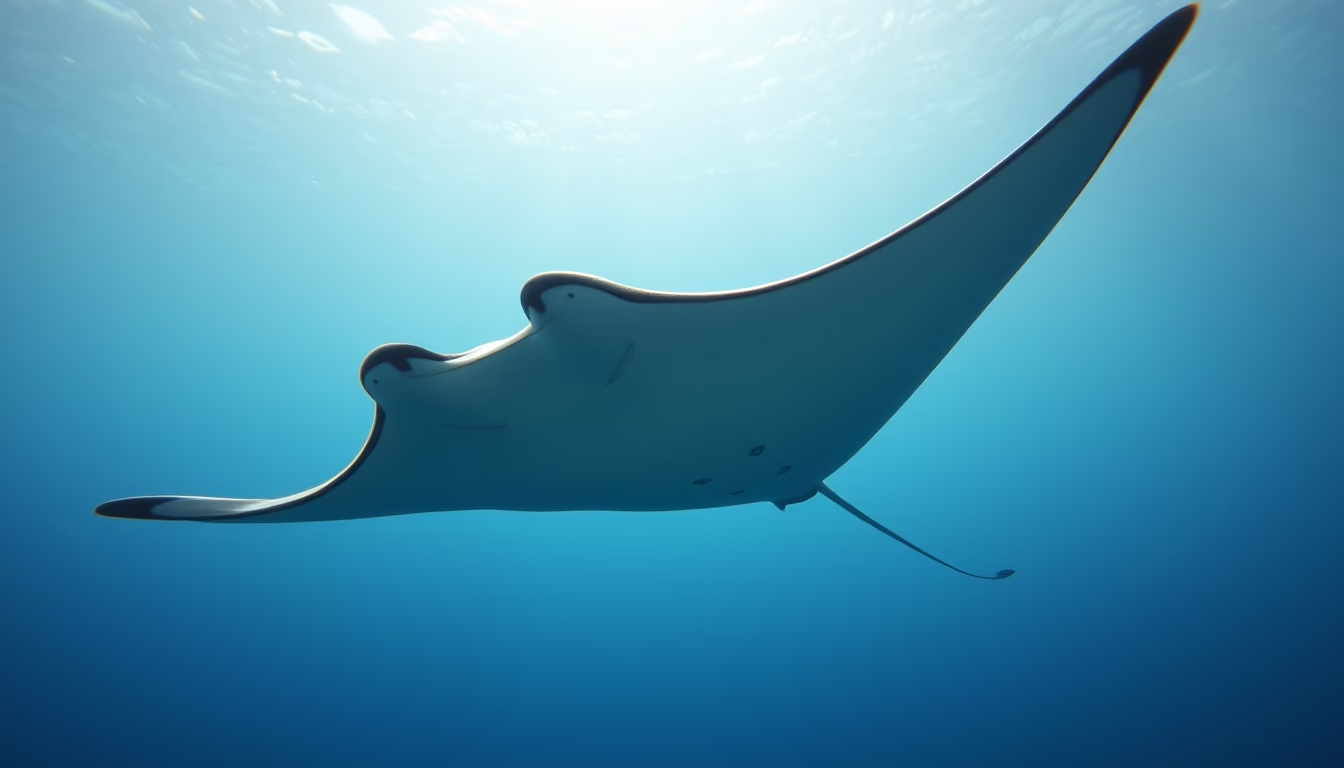
Manta rays are large pelagic rays, known for their intelligence and migratory patterns in tropical seas.
About this subject
Manta rays belong to the genus Manta, family Mobulidae, and are the largest species of ray in the world, reaching up to 7 meters in wingspan and weighing over two tons. Unlike other rays, they lack a stinging barb on their tail. They are filter feeders: they open their mouths while swimming and use specialized gill rakers to trap plankton, crustaceans, and small fish.
These animals are found in all tropical and subtropical oceans, often near coral reefs and upwelling areas, such as the Fernando de Noronha Archipelago in Brazil and the Maldives. Studies show they can travel hundreds of kilometers in search of food and breeding sites. Individuals visit cleaning stations on reefs, where cleaner fish remove parasites from their bodies.
Manta rays are considered highly intelligent. They have the largest brain-to-body ratio among fish, with regions associated with memory and problem-solving. Behaviors such as leaping out of the water, spinning, and interacting with divers indicate curiosity and recognition abilities. Unfortunately, populations are threatened by bycatch and the trade of their gill plates, used in traditional Chinese medicine.
Reproduction is slow: females give birth to a single pup every two or three years, with a gestation of about 12 months. This low reproductive rate makes the species vulnerable. In many regions, including Brazil, hunting is prohibited, and organizations monitor their migrations through photo-identification to promote conservation.
Frequently Asked Questions
What is the difference between a manta ray and a stingray?
Manta rays do not have a stinging barb on their tail; they are filter feeders that consume plankton, and they have large cephalic fins in front of their mouths.
Where can I see manta rays in Brazil?
Best spots are Fernando de Noronha, São Pedro e São Paulo Archipelago, and Rocas Atoll. Sightings also occur off the coasts of São Paulo and Rio de Janeiro.
Do manta rays attack humans?
No. They are gentle and curious. They may approach divers but pose no threat. Only accidental injury can occur if the animal feels cornered.
Direct URL
https://pub-c7d6a6ea828543ac903a74a341ccb2e1.r2.dev/imagens/manta-ray-swimming-minimalist-composition-p4.avifHow to credit
Include a visible link back to UtilizAí. Copy one of the snippets below:
<a href="https://xn--utiliza-eza.com/en/midia/imagens/manta-ray-swimming-minimalist-composition-p4">Manta ray swimming</a> by <a href="https://xn--utiliza-eza.com">UtilizAí</a>, licensed under <a href="https://creativecommons.org/licenses/by/4.0/">CC BY 4.0</a>.
[Manta ray swimming](https://xn--utiliza-eza.com/en/midia/imagens/manta-ray-swimming-minimalist-composition-p4) by [UtilizAí](https://xn--utiliza-eza.com), CC BY 4.0
License: CC-BY-4.0