Manga panels black white
1344×768 · AVIF · CC BY 4.0
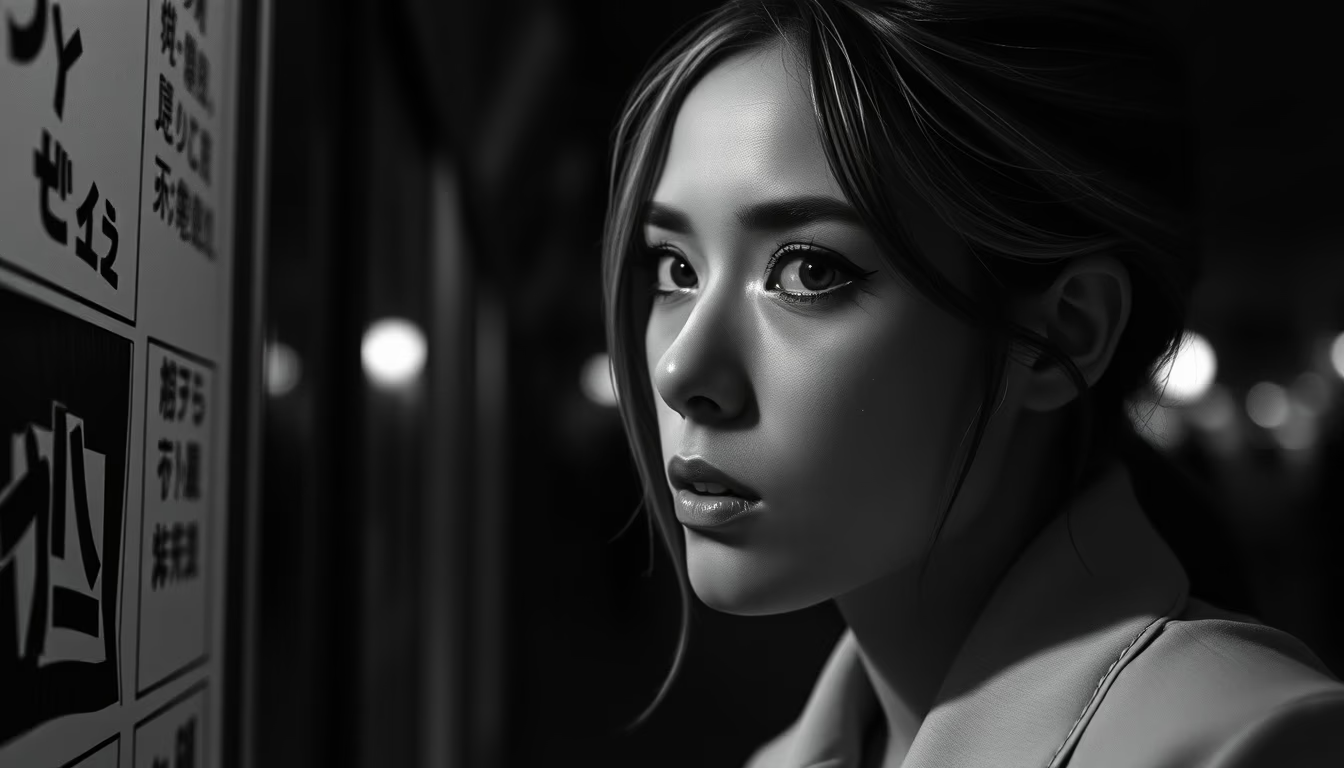
Black-and-white manga panels are the core of Japanese visual storytelling, blending minimalist art with expressive action.
About this subject
Manga is traditionally published in black and white for both economic and artistic reasons. Since Osamu Tezuka, Japanese artists have developed a visual style that maximizes the contrast between black ink and white paper. The use of hatching, stippling, and screentones allows them to create textures and shadows without the cost of color printing. Moreover, the absence of color forces readers to mentally fill in details, making the experience more immersive.
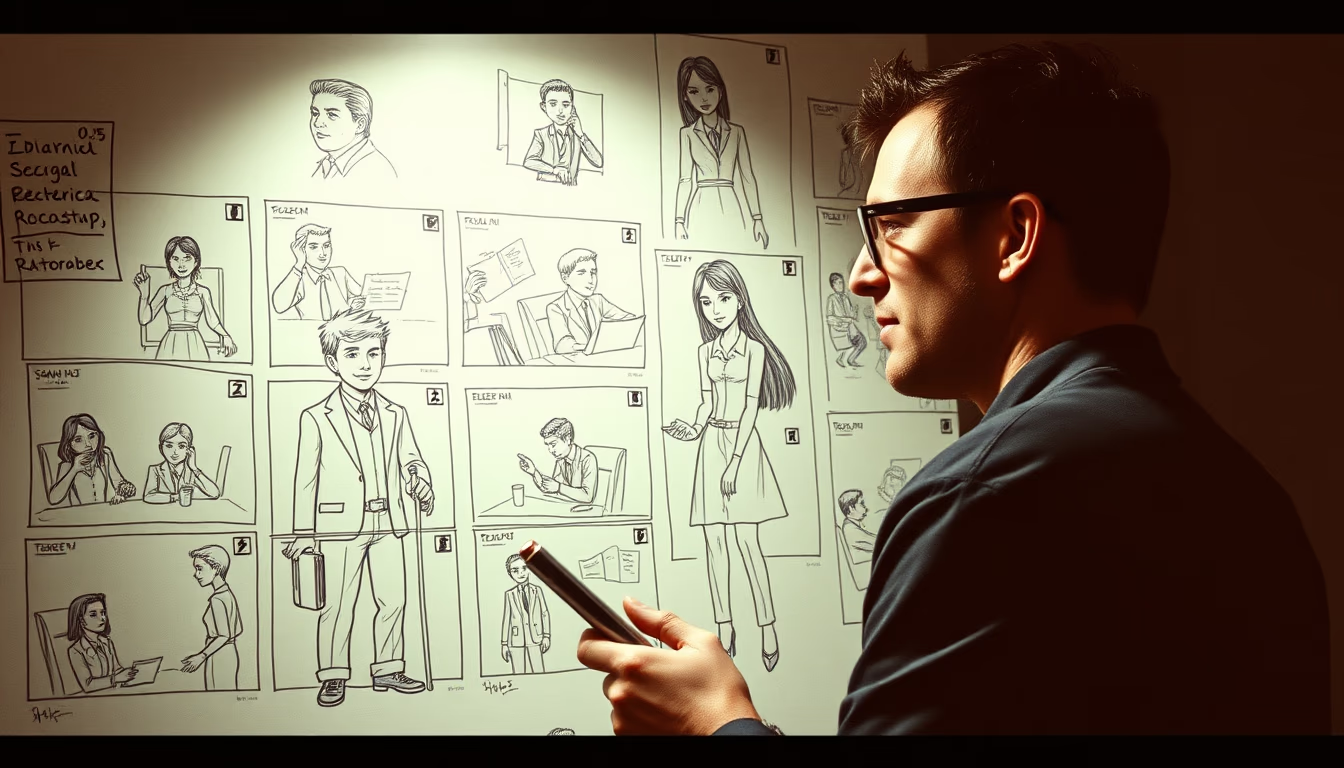
The structure of manga panels is a sophisticated visual language. Unlike Western comics, mangakas use fluid layouts that guide the reader's eye through the action. Panels of different sizes and shapes indicate rhythm and emphasis. For example, wide open panels are used for landscapes or breathing moments, while small, tight panels accelerate the pace in fight scenes. Reading is done from right to left, requiring cultural adaptation.
Black and white also allows artists to explore dramatic contrasts. In works like Katsuhiro Otomo's "Akira," the use of solid blacks and cut-out lights creates a cinematic atmosphere. Horror manga, such as "Junji Ito Collection," use black to generate feelings of claustrophobia and discomfort. The absence of color is not a limitation but an aesthetic choice that defines the medium.
Furthermore, manga has globally influenced sequential art. Western artists often adopt the black-and-white style to honor this tradition. In Brazil, the culture of fanzines and distinctive line work frequently draws inspiration from manga. The persistence of black-and-white in mainstream manga demonstrates its narrative effectiveness, even with technological advances that allow cheap colorization.
Frequently Asked Questions
Why are most manga published in black and white?
For economic reasons: color printing is more expensive and slower. Additionally, black and white is an artistic choice that allows greater contrast and focus on the story.
How do manga artists create the illusion of shadow and texture without using colors?
They use techniques like screentones (adhesive sheets with dot patterns), hatching, and stippling. These resources create gray gradients and textures that simulate shadows and volumes.
What is the importance of panels in reading manga?
Panels organize the flow of the story and control the rhythm. Different sizes and shapes indicate emphasis, timing, and action, guiding the reader through the narrative dynamically.
Direct URL
https://pub-c7d6a6ea828543ac903a74a341ccb2e1.r2.dev/imagens/manga-panels-black-white-lo-fi-disposable-camera-fresh1.avifHow to credit
Include a visible link back to UtilizAí. Copy one of the snippets below:
<a href="https://xn--utiliza-eza.com/en/midia/imagens/manga-panels-black-white-lo-fi-disposable-camera-fresh1">Manga panels black white</a> by <a href="https://xn--utiliza-eza.com">UtilizAí</a>, licensed under <a href="https://creativecommons.org/licenses/by/4.0/">CC BY 4.0</a>.
[Manga panels black white](https://xn--utiliza-eza.com/en/midia/imagens/manga-panels-black-white-lo-fi-disposable-camera-fresh1) by [UtilizAí](https://xn--utiliza-eza.com), CC BY 4.0
License: CC-BY-4.0