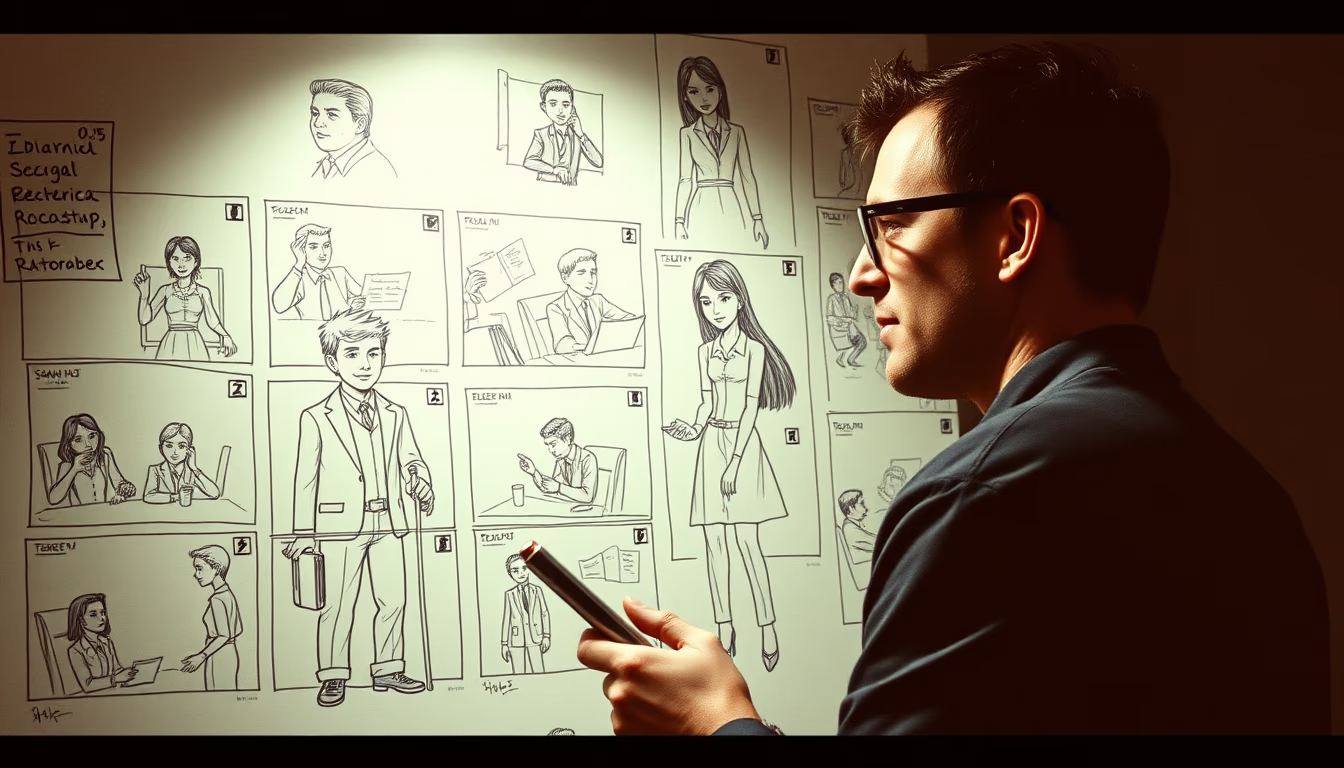
Manga panels black white
1344×768 · AVIF · CC BY 4.0
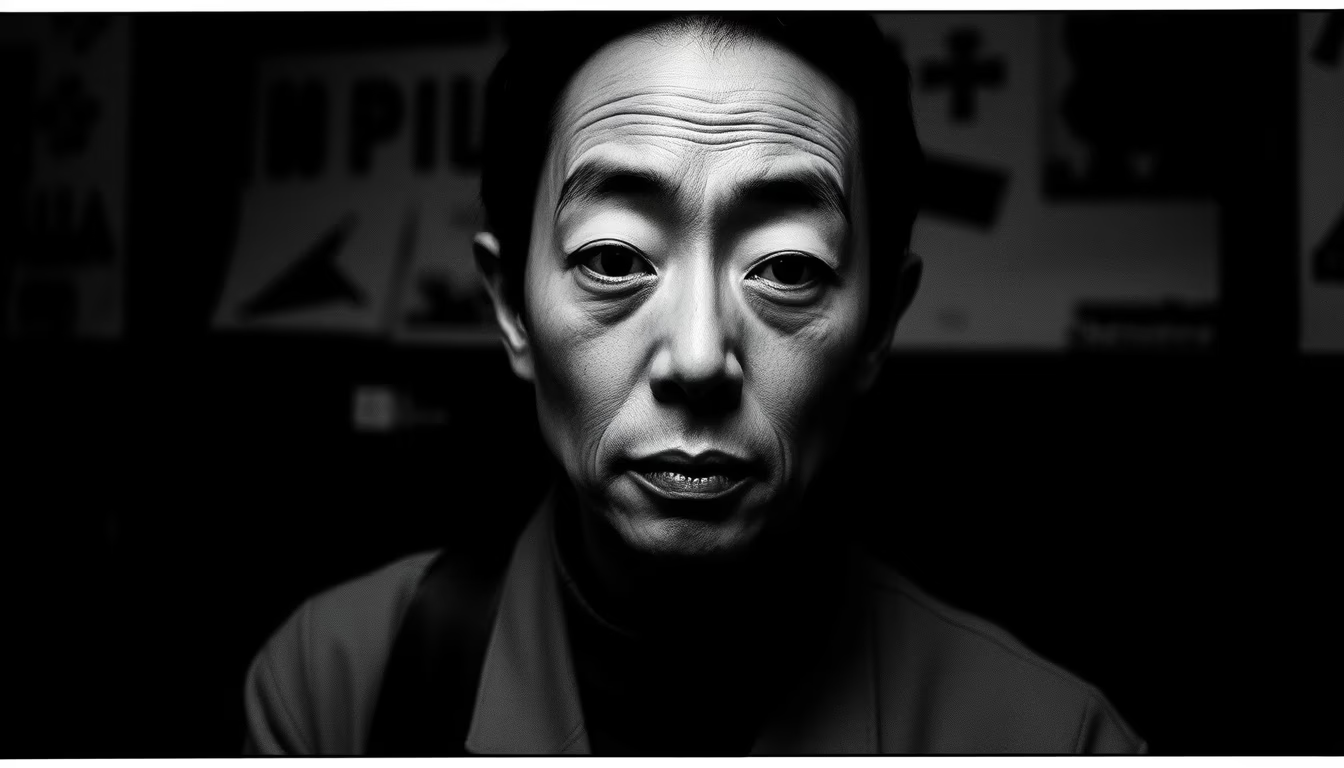
Black and white manga panels, a hallmark of Japanese comic art, use expressive linework and screentones to craft unique visual narratives.
About this subject
Manga is traditionally published in black and white, an aesthetic and economic choice dating back to the 1940s when Osamu Tezuka popularized the format. Pages are composed of panels arranged for right-to-left reading, guiding the reader's eye through motion lines, hatching, and screentones. These elements replace color and shading, creating contrasts that highlight emotions and actions.
Techniques such as solid blacks for drama, cross-hatching for texture, and screentones for gradients are essential. Artists like Katsuhiro Otomo in 'Akira' and Junji Ito in 'Uzumaki' explore these tools to build dense atmospheres. Black and white forces focus on composition and rhythm, making every line deliberate.
Culturally, manga is read from right to left, and panels vary in shape to suggest timing and action. The absence of color does not limit expressiveness; instead, it encourages readers to imagine hues. This also reduces printing costs, enabling long-running series like 'One Piece' and 'Naruto'.
Remarkably, many mangaka still draw in black and white even with digital tools, preserving a tradition that influences film and animation. The style has gained global fans and is celebrated in conventions and academic studies of pop culture.
Frequently Asked Questions
Why are mangas in black and white?
The main reason is economic: black and white production reduces printing costs and speeds up publication, especially for long series. Also, the tradition dates back to Osamu Tezuka, who established the format as standard in Japan in the 1940s.
What are screentones in manga?
Screentones are adhesive sheets with patterns of dots, lines, or textures that artists apply over drawings to create shading, gradients, or visual effects. They are a classic resource in black and white manga.
How do you read a manga correctly?
Manga are read from right to left and top to bottom, starting from what would be the back cover in the West. Panels follow this order, and speech bubbles also. The cover is usually at what we consider the back of the book.
Direct URL
https://pub-c7d6a6ea828543ac903a74a341ccb2e1.r2.dev/imagens/manga-panels-black-white-film-grain-authentic-fresh0.avifHow to credit
Include a visible link back to UtilizAí. Copy one of the snippets below:
<a href="https://xn--utiliza-eza.com/en/midia/imagens/manga-panels-black-white-film-grain-authentic-fresh0">Manga panels black white</a> by <a href="https://xn--utiliza-eza.com">UtilizAí</a>, licensed under <a href="https://creativecommons.org/licenses/by/4.0/">CC BY 4.0</a>.
[Manga panels black white](https://xn--utiliza-eza.com/en/midia/imagens/manga-panels-black-white-film-grain-authentic-fresh0) by [UtilizAí](https://xn--utiliza-eza.com), CC BY 4.0
License: CC-BY-4.0