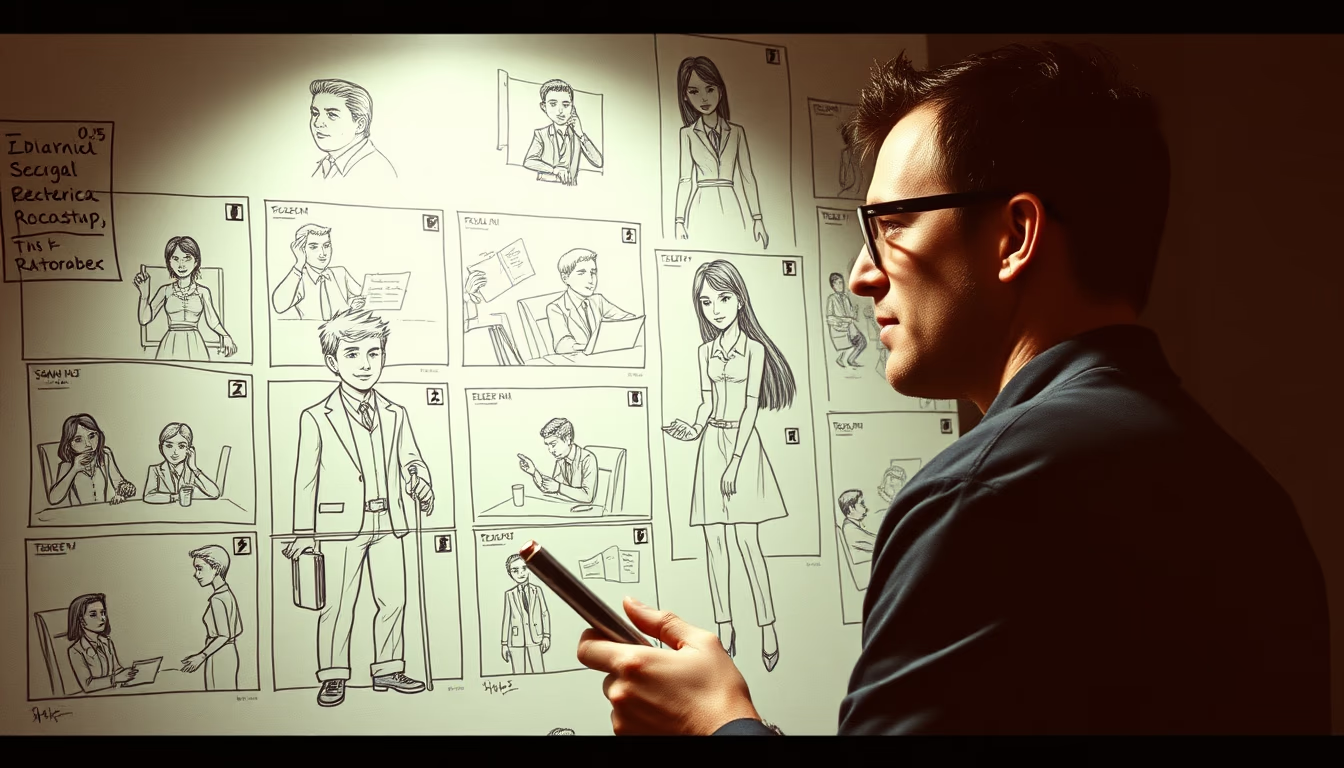
Manga panels black white
1344×768 · AVIF · CC BY 4.0
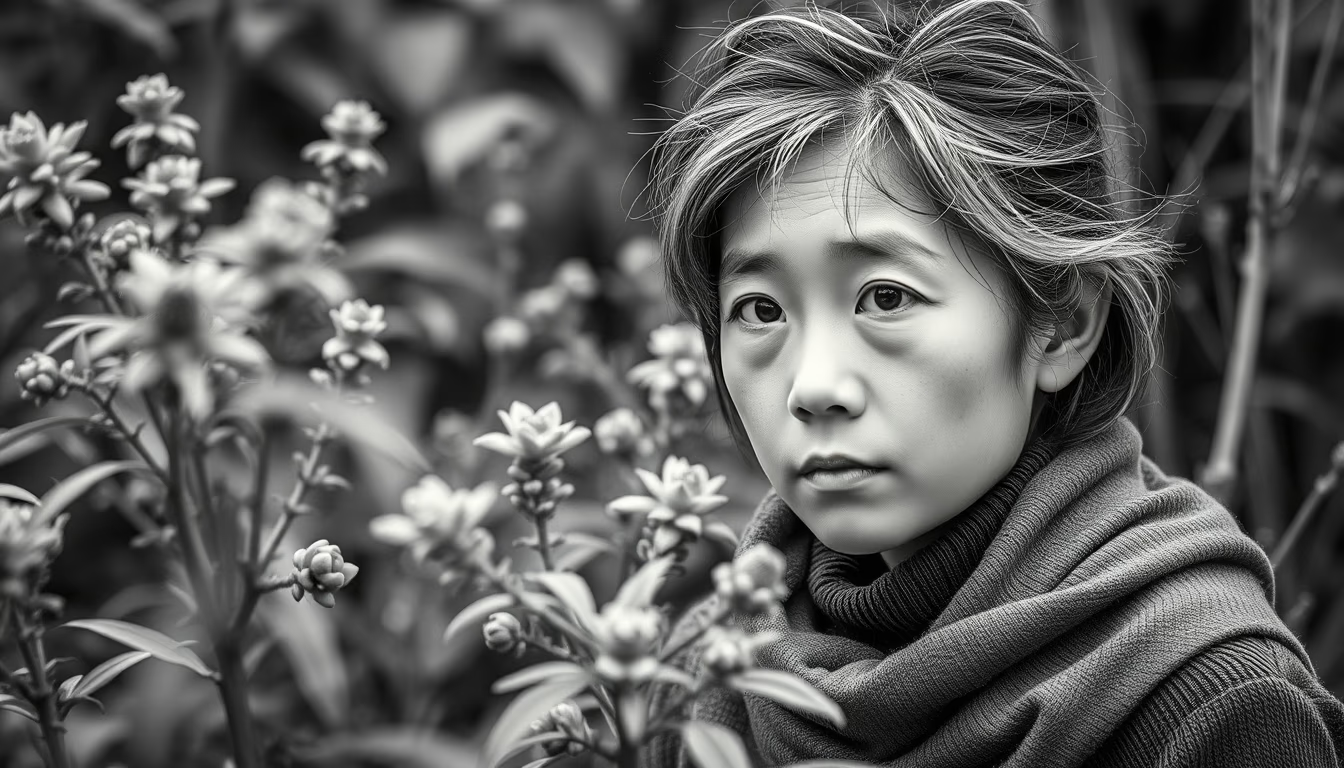
Explore the art of black and white manga panels, an iconic style defining Japanese visual storytelling and influencing artists worldwide.
About this subject
Black and white manga panels are the backbone of Japanese visual storytelling. Since early 20th century publications like Osamu Tezuka's influential Shin Takarajima, the absence of color was not a limitation but an aesthetic and practical choice. Mass production of weekly magazines like Shonen Jump demanded speed and cost-efficiency, and black and white allowed artists to produce hundreds of pages without color costs. Moreover, the contrast between black ink and white paper creates dramatic impact, guiding the reader's eye through dynamic lines, hatching, and textures that convey emotion and movement.
Culturally, black and white manga reflects the Japanese tradition of sumi-e (ink painting) and calligraphy, where emptiness is as expressive as the stroke. Mangakas like Akira Toriyama (Dragon Ball) and Rumiko Takahashi (InuYasha) mastered contrast to represent light, shadow, and depth. Gray scales are achieved through screen tones, but many artists prefer hand-drawn techniques, like Katsuhiro Otomo in Akira, who used detailed lines to create a dystopian atmosphere. This style influenced not only other mangakas but also Western comics and cinema, as seen in Frank Miller's Sin City.
Interestingly, the black and white format allows readers to focus on narrative without chromatic distraction, and many fans argue that color can even hinder reading rhythm. Studies show that the human brain processes monochromatic sequences faster, ideal for manga's fast pace. In Brazil, where manga is extremely popular, publishers like JBC and Panini preserve the black and white tradition in translations, respecting artists' original intent. For aspiring mangakas, mastering black and white is a rite of passage, requiring control of value (brightness) and composition without color's support.
Frequently Asked Questions
Why are most manga in black and white?
For economic and historical reasons. Producing weekly color magazines would be too expensive and time-consuming. Also, black and white allows faster reading rhythm and focus on narrative.
What techniques are used to create shadows in black and white manga?
Artists use hatching (parallel lines), stippling, adhesive screen tones, and varying line thickness. Full black fill (kabe) is also common for strong contrasts.
Has black-and-white manga influenced other media?
Yes, it influenced Western comics like Sin City and black-and-white films such as The Night of the Scarecrow. It also inspired art styles in video games and animations.
Direct URL
https://pub-c7d6a6ea828543ac903a74a341ccb2e1.r2.dev/imagens/manga-panels-black-white-documentary-nature-style-fresh17.avifHow to credit
Include a visible link back to UtilizAí. Copy one of the snippets below:
<a href="https://xn--utiliza-eza.com/en/midia/imagens/manga-panels-black-white-documentary-nature-style-fresh17">Manga panels black white</a> by <a href="https://xn--utiliza-eza.com">UtilizAí</a>, licensed under <a href="https://creativecommons.org/licenses/by/4.0/">CC BY 4.0</a>.
[Manga panels black white](https://xn--utiliza-eza.com/en/midia/imagens/manga-panels-black-white-documentary-nature-style-fresh17) by [UtilizAí](https://xn--utiliza-eza.com), CC BY 4.0
License: CC-BY-4.0