Manga panels black white
1344×768 · AVIF · CC BY 4.0
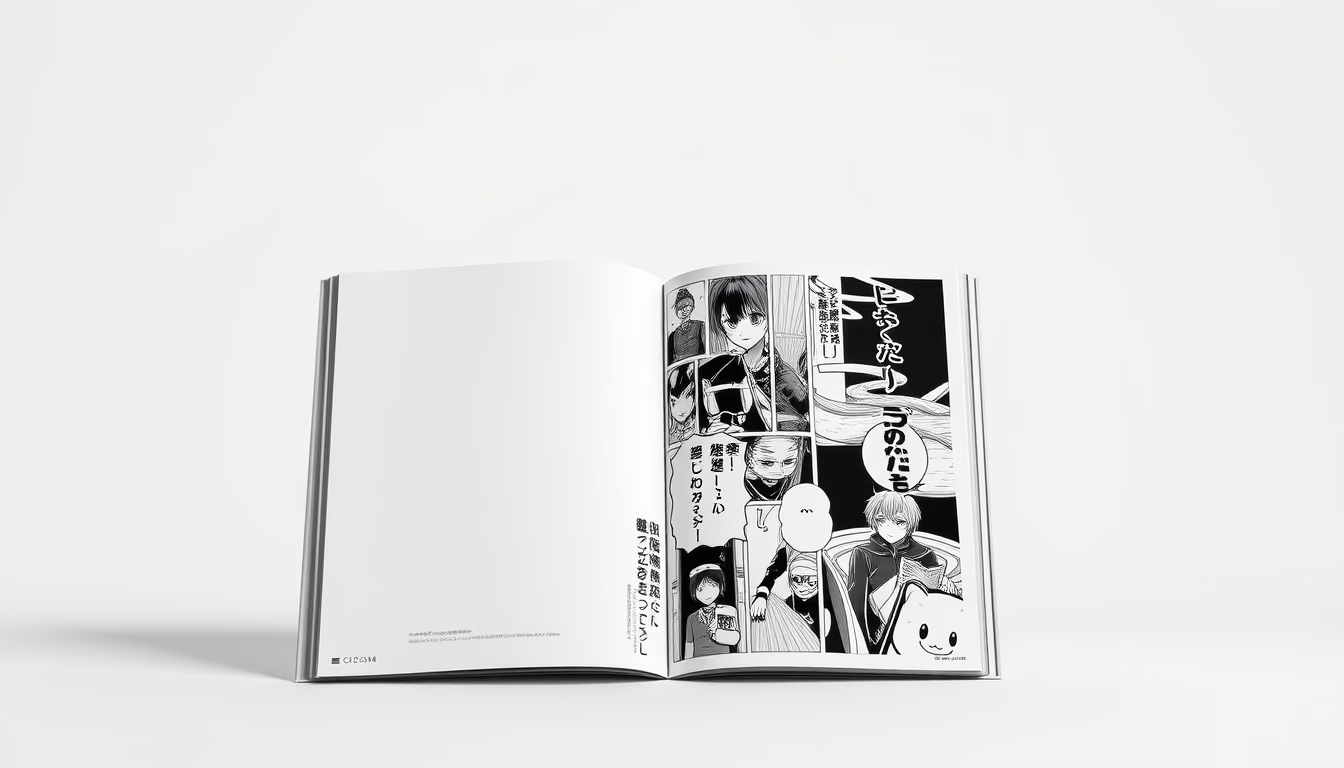
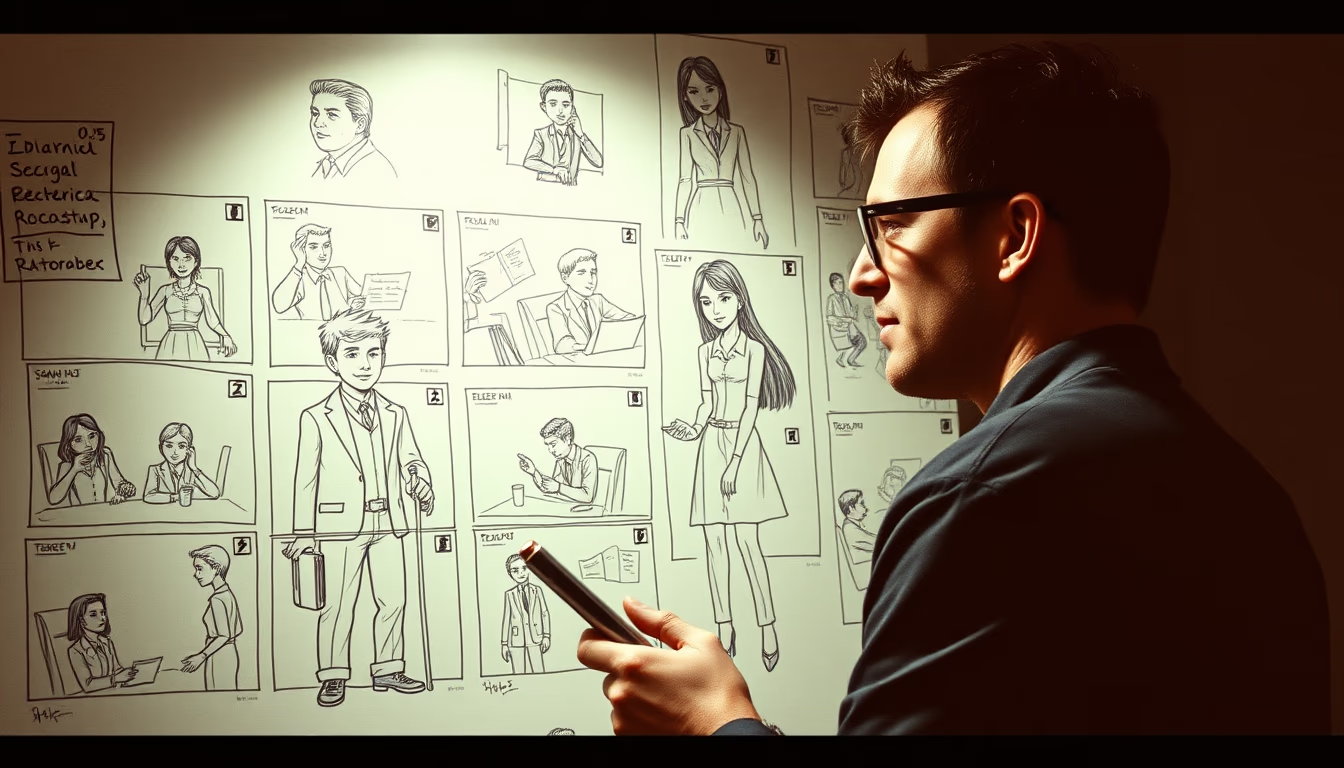
Black and white manga panels are a hallmark of Japanese pop culture, combining efficient visual storytelling with low production costs.
About this subject
Since the post-war period, manga has adopted monochrome art as a standard, largely due to economic reasons. Grayscale printing drastically reduces production costs, allowing weekly magazines like Shonen Jump to publish hundreds of pages per issue. Osamu Tezuka, considered the father of modern manga, solidified this style by simplifying lines and using dynamic panels to maintain narrative rhythm, influencing generations of artists.
The technique of screentones (adhesive halftone patterns) is essential for creating textures and shadows without losing readability. These patterns of dots, lines, or special effects are applied manually or digitally, enabling gray tones to be simulated even without ink variation. Meanwhile, the use of negative space and action lines guides the reader's eye, compensating for the lack of color. Masters like Akira Toriyama and Kentaro Miura explored these tools to build immersive worlds.
The black-and-white format also reinforces focus on storytelling and draftsmanship. Every line must convey expression, movement, and emotion without chromatic distractions. Various genres, from shonen to seinen, use this aesthetic to emphasize dramatic contrasts or intense action scenes. Today, the style influences Western comics and webcomics, demonstrating the versatility of monochrome.
Frequently Asked Questions
Why are most manga in black and white?
The main reason is economic: grayscale printing is much cheaper than color, allowing manga magazines to be sold at affordable prices and published weekly with hundreds of pages.
What are screentones and how are they used?
Screentones are adhesive sheets with dot patterns or textures that artists apply over the drawing to create shadows, gradients, and visual effects, mimicking gray tones without needing multiple inks.
What are the artistic advantages of black and white in manga?
The absence of color forces the artist to master contrast, composition, and linework, resulting in clearer and more dynamic visual narratives. It also facilitates fast-paced reading and emphasizes emotion through facial expressions and action.
Direct URL
https://pub-c7d6a6ea828543ac903a74a341ccb2e1.r2.dev/imagens/manga-panels-black-white-commercial-product-photography-fresh16.avifHow to credit
Include a visible link back to UtilizAí. Copy one of the snippets below:
<a href="https://xn--utiliza-eza.com/en/midia/imagens/manga-panels-black-white-commercial-product-photography-fresh16">Manga panels black white</a> by <a href="https://xn--utiliza-eza.com">UtilizAí</a>, licensed under <a href="https://creativecommons.org/licenses/by/4.0/">CC BY 4.0</a>.
[Manga panels black white](https://xn--utiliza-eza.com/en/midia/imagens/manga-panels-black-white-commercial-product-photography-fresh16) by [UtilizAí](https://xn--utiliza-eza.com), CC BY 4.0
License: CC-BY-4.0