Malachite green pattern
1344×768 · AVIF · CC BY 4.0
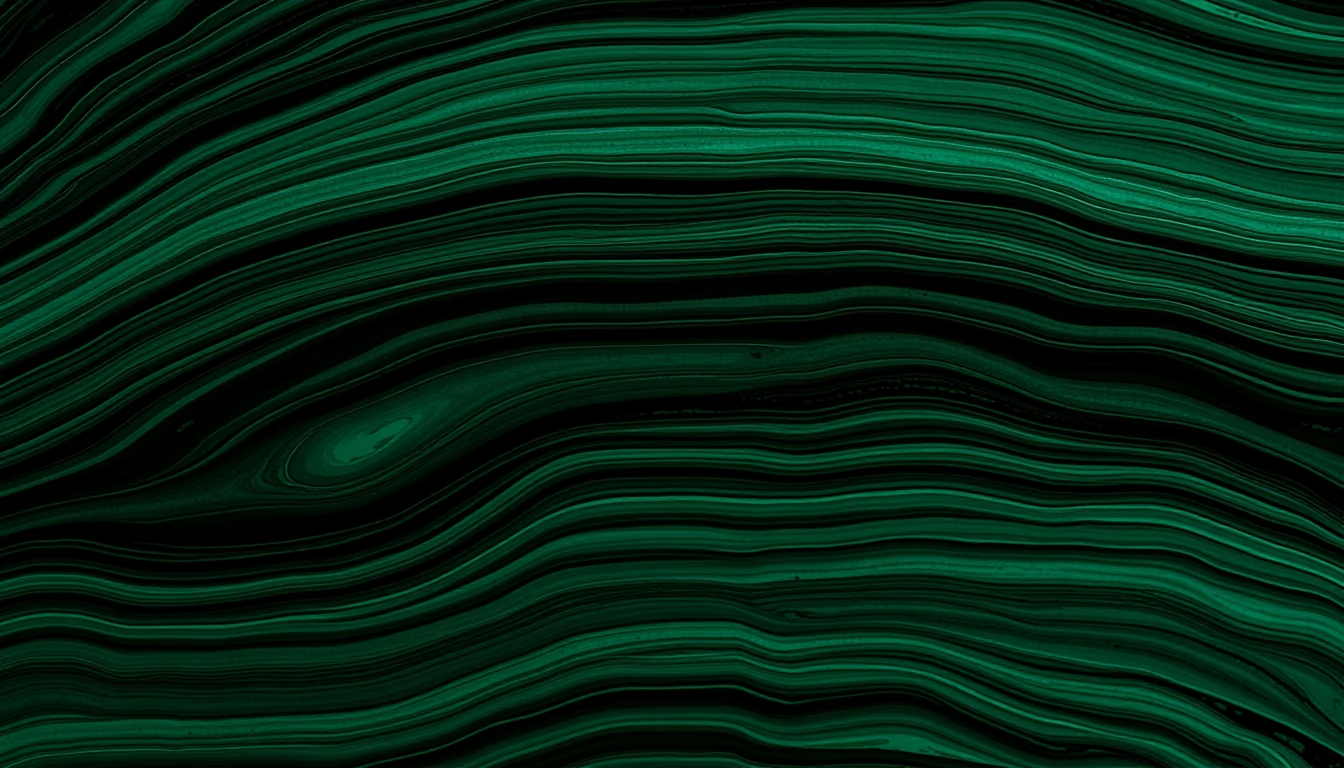
Malachite, a vibrant green mineral formed from copper carbonate, is known for its intricate concentric patterns and historical use in jewelry and pigments.
About this subject
Malachite is a copper carbonate mineral with the chemical formula Cu₂CO₃(OH)₂, famous for its vivid green color and characteristic concentric banding patterns. It forms in the oxidation zones of copper deposits, often associated with azurite, a blue copper mineral. The color comes from copper ions in its crystal structure.
Historically, malachite has been used as an ornamental gemstone since ancient Egypt, where it was carved into amulets and scarabs. In Tsarist Russia, large blocks of malachite were used to veneer palace halls, such as the Malachite Room in the Winter Palace in Saint Petersburg. It was also ground into green pigment for Renaissance paintings, though it is sensitive to acids and light.
The most famous malachite deposits are in the Ural Mountains (Russia), the Democratic Republic of the Congo, Chile, and the United States (Arizona). In Brazil, malachite occurs in copper mines like Camaguã (Rio Grande do Sul) and Carajás (Pará). Extraction must be careful because malachite is relatively soft (hardness 3.5-4 on the Mohs scale) and can be damaged by heat or chemicals.
Besides its ornamental use, malachite has modern applications as a catalyst in chemical reactions and historically was used in copper production. In popular culture, it is believed to bring protection and healing energy, though not scientifically proven. Its unique patterns make it one of the most photographed and collected minerals.
Frequently Asked Questions
What causes the banded patterns in malachite?
The concentric and banded patterns result from rhythmic deposition of copper carbonate during formation, usually in cavities or fractures, with variations in crystallization conditions.
What is the difference between malachite and azurite?
Malachite is green and a hydrated copper carbonate, while azurite is blue with formula Cu₃(CO₃)₂(OH)₂. They often occur together in oxidized copper deposits.
Is malachite toxic?
Yes, malachite contains copper, which is toxic if ingested or inhaled as dust. Therefore, it should be handled with care and not used in jewelry that contacts the mouth.
Direct URL
https://pub-c7d6a6ea828543ac903a74a341ccb2e1.r2.dev/imagens/malachite-green-pattern-fine-art-photography-p5.avifHow to credit
Include a visible link back to UtilizAí. Copy one of the snippets below:
<a href="https://xn--utiliza-eza.com/en/midia/imagens/malachite-green-pattern-fine-art-photography-p5">Malachite green pattern</a> by <a href="https://xn--utiliza-eza.com">UtilizAí</a>, licensed under <a href="https://creativecommons.org/licenses/by/4.0/">CC BY 4.0</a>.
[Malachite green pattern](https://xn--utiliza-eza.com/en/midia/imagens/malachite-green-pattern-fine-art-photography-p5) by [UtilizAí](https://xn--utiliza-eza.com), CC BY 4.0
License: CC-BY-4.0