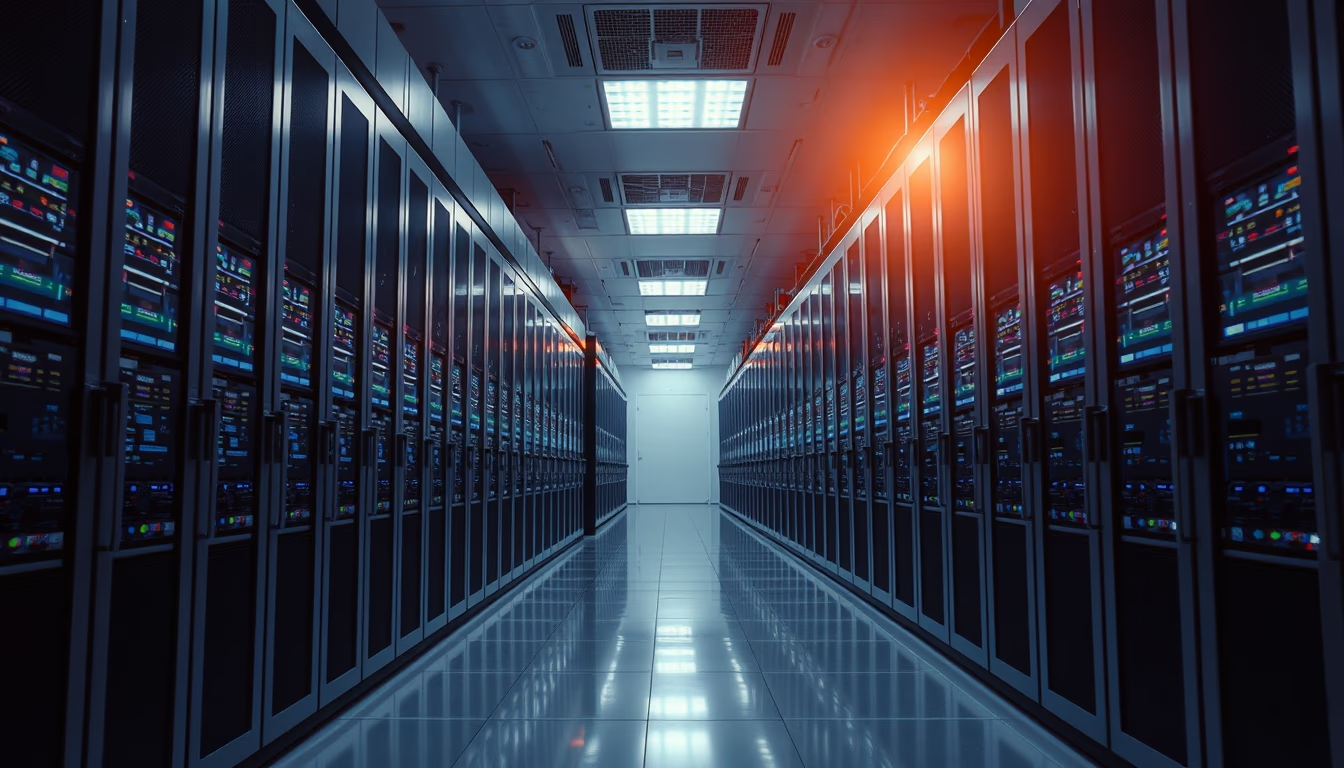
Mainframe computer ibm
1344×768 · AVIF · CC BY 4.0

Explore the history of IBM mainframes, from the System/360 to the modern z16, the heart of global corporate systems.
About this subject
IBM mainframes have been the backbone of enterprise computing since the 1960s. The IBM System/360, launched in 1964, was a milestone for introducing a compatible architecture across different models, allowing companies to upgrade without reprogramming applications. This innovation solidified IBM's leadership and set standards that persist today.
Over the decades, mainframes evolved dramatically. From transistors to integrated circuits and high-speed chips, they gained massive processing power and advanced virtualization. The z/OS operating system, combined with Linux support, enables running thousands of workloads simultaneously with full isolation. Built-in security, including AES-256 encryption and dedicated hardware modules, protects data against cyber threats.
Today, IBM mainframes are critical for vital sectors. An estimated 70% of global financial transactions pass through these machines, including credit card operations, currency exchanges, and stock exchanges. Major banks, insurers, and airlines rely on them to process millions of transactions per second with 99.999% uptime.
The future of mainframes includes native hybrid cloud integration, AI acceleration, and quantum-safe cryptography. IBM continues innovating with systems like the z16, which combines transaction processing with on-chip AI inference, ensuring mainframes remain essential in an increasingly digital world.
Frequently Asked Questions
What is an IBM mainframe?
It is a large computer designed to process high volumes of transactions with extreme reliability and security. Examples include the IBM zSeries and the IBM z16.
Why are mainframes still used?
They process millions of transactions per second with 99.999% uptime, making them essential for banks, airlines, and governments that cannot tolerate downtime.
What is the difference between a mainframe and a standard server?
Mainframes offer total redundancy, native virtualization, and the ability to handle critical loads with high scalability. Standard servers are more flexible for smaller tasks but lack the same level of reliability.
Direct URL
https://pub-c7d6a6ea828543ac903a74a341ccb2e1.r2.dev/imagens/mainframe-computer-ibm-fine-art-photography-p12.avifHow to credit
Include a visible link back to UtilizAí. Copy one of the snippets below:
<a href="https://xn--utiliza-eza.com/en/midia/imagens/mainframe-computer-ibm-fine-art-photography-p12">Mainframe computer ibm</a> by <a href="https://xn--utiliza-eza.com">UtilizAí</a>, licensed under <a href="https://creativecommons.org/licenses/by/4.0/">CC BY 4.0</a>.
[Mainframe computer ibm](https://xn--utiliza-eza.com/en/midia/imagens/mainframe-computer-ibm-fine-art-photography-p12) by [UtilizAí](https://xn--utiliza-eza.com), CC BY 4.0
License: CC-BY-4.0